
Personal Info
Known For
Gender
Birthday
Place of Birth
Daniel Rabinovich
Biography
Known for

Tiempo final

Algo habrán hecho
Algo habrán hecho is a documentary film for television that narrates the history of Argentina. It was created by the argentine historian Felipe Pigna, who acted as presenter. In the first two seasons Mario Pergolini was a co-presenter of it, but after giving up on all works on television his role in the documentary was taken by Juan Di Natale. Di Natale and Pergolini were by that time co-presenters of the talk show Caiga quien caiga. Di Natale pointed that he wasn't meant to act as if he was Pergolini, but the script writers wrote instead the scripts based on his own personality. The first season, aired in 2005 on Canal 13, narrates the history of Argentina from the british invasions of the Río de la Plata to the fall of Juan Manuel de Rosas during the Battle of Caseros. The second season, aired in 2006 on Telefé, resumes the narration from that point and continues up to the suicide of Leandro N. Alem in 1896. The third one, aired in 2008 on Telefé, resumes as well from the end of previous season and ends with the meeting of Juan Domingo Perón and Eva Duarte at the Luna Park during a fund-raising to help after the San Juan earthquake.

Tato's Argentina
In a mockumentary format, led by the personage represented by Leonardo Sbaraglia, in 2499 the research is presented - carried out by scientists from the University of Heidelberg, Germany, whose exposition is in charge of Helmut Strasse, founder of the first school of Argentinology - about the remote existence of Argentina, an unknown country of great potential inexplicably disappeared from the face of the Earth.
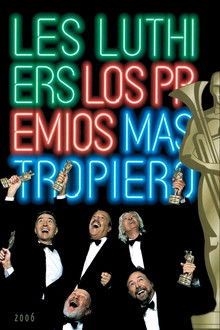
Los premios Mastropiero
The Mastropiero Awards is a musical humor theatrical show by the Argentine ensemble of informal instruments Les Luthiers, in which the classic format of their previous shows is not repeated. In this show, the group simulates an award ceremony for various artists from the fields of cinema, theater, television and music. During the ceremony, works and compositions by Johann Sebastian Mastropiero himself are performed. The play premiered at the Astengo Theater in Rosario, Argentina, on July 29, 2005
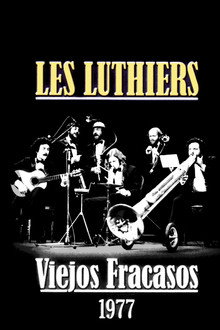
Viejos fracasos
Les Luthiers is a comedy-musical group from Argentina, very popular also in several other Spanish-speaking countries such as Paraguay, Peru, Chile, Ecuador, Spain, Colombia, Mexico, Uruguay and Venezuela. They were formed in 1967 by Gerardo Masana, during the height of a period of very intense Choral Music activity in Argentina's state universities.

Viegésimo aniversario
Les Luthiers is an Argentine comedy-musical group, very popular also in several other Spanish-speaking countries such as Paraguay, Guatemala, Peru, Chile, Ecuador, Spain, Colombia, Mexico, Uruguay, Bolivia, Cuba and Venezuela. They were formed in 1967 by Gerardo Masana, during the height of a period of very intense Choral Music activity in Argentina's state universities. Their outstanding characteristic is the home-made musical instruments (hence the name luthiers, French for "musical instrument maker"), some of them extremely sophisticated, which they skillfully employ in their recitals to produce music and texts full of high class and refined humor. From 1977 until his death in 2007, they worked together with Roberto Fontanarrosa, a renowned Argentine cartoonist and writer.

Luthierías
Grandes hitos
Les Luthiers is a comedy-musical group from Argentina, very popular also in several other Spanish-speaking countries such as Paraguay, Peru, Chile, Ecuador, Spain, Colombia, Mexico, Uruguay and Venezuela. They were formed in 1967 by Gerardo Masana, during the height of a period of very intense Choral Music activity in Argentina's state universities.
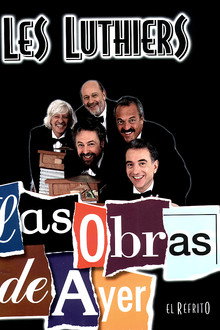
Las obras de ayer
Les Luthiers is a comedy-musical group from Argentina, very popular also in several other Spanish-speaking countries such as Paraguay, Peru, Chile, Ecuador, Spain, Colombia, Mexico, Uruguay and Venezuela. They were formed in 1967 by Gerardo Masana, during the height of a period of very intense Choral Music activity in Argentina's state universities.

Les Luthiers: Recital Sinfónico 86
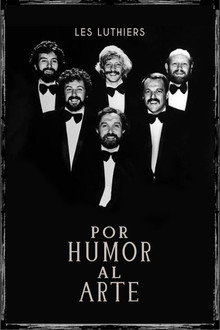
Por humor al arte
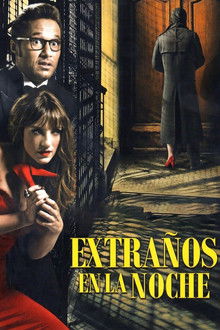
Strangers in the Night
When Martín and Sol try to solve the enigma of a missing neighbor, they will discover that nothing is what it seems, that your hearing can trick you just like your imagination and that your heart is a double-edged weapon.
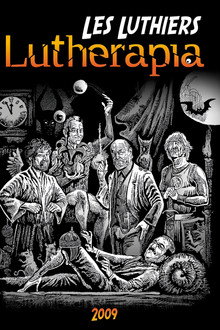
Lutherapia
A musical comedy show by the Argentine informal instrument ensemble Les Luthiers which revolves around a psychoanalytic therapy session, and the conversation between the two gives rise to the numbers that make up the show.
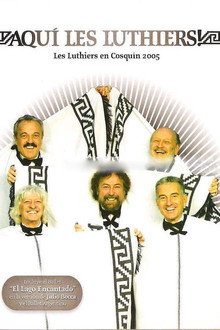
Aquí Les Luthiers
Here Les Luthiers is a recital of the Argentine group of informal musical instruments Les Luthiers, made especially for the 45th edition of the Cosquín Folk Festival. It was presented for the only time on January 28, 2005, at the Plaza Prosper Molina in the city of Cosquín, Córdoba, Argentina, traditional venue of the festival.1
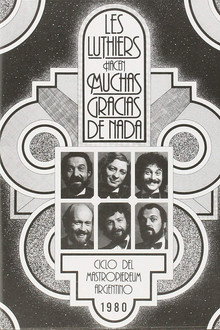
Hacen muchas gracias de nada
'Muchas Gracias de Nada', is a show premiered on June 15, 1979 at the Coliseo Theater in the City of Buenos Aires by the Argentinean ensemble of informal instruments, Les Luthiers. Recorded live between October 24th and 25th, 1980 at the same theater. PROGRAM: 1. La Campana Suonerá; 2. El Rey Enamorado; 3. Sinfonía Interrumpida; 4. La Tanda; 5. Canción para Moverse; 6. La Gallina Dijo Eureka; 7. Trío Op. 115; 8. Cartas de Color; 9. Tango Op. 11. In this show 'Antenor' made its first appearance, an advanced robot (for the time it was built - 1979) that weighed 80 kilos and was equipped with several motors that allowed it to move around the stage, turn its head, etc. The robot caught fire during the last performance of this play (Palacio de Bellas Artes, Mexico - 1980) in the middle of the stage and before the astonished gaze of all those who were there.