
Personal Info
Known For
Gender
Birthday
Place of Birth
Marília Pêra
Biography
Known for

The Trapalhões
Os Trapalhões was a Brazilian comedy group and also a Brazilian television series created by Wilton Franco. Its members were Dedé Santana, Zacarias, Mussum and their leader Didi Mocó, that was played by Renato Aragão. The name Trapalhões is derived from the Portuguese verb atrapalhar, which means the opposite of helping, to do something the wrong way or to Those that confuse. The name is translated "Tramps" in English DVD subtitles. It was aired by Rede Globo from 1977 to 1999. On March 18, 1990, Zacarias died due to respiratory failure, but the group and the series didn't come to an end until July 29, 1994, when Mussum died due to an unsuccessful heart transplant.

Zorra Total
Zorra Total is a Brazilian television comedy broadcast by Globo Network. It was launched on March 25, 1999 and has aired on Saturdays, at 10p.m., ever since May 1999. The show is a sketch comedy show. It is the audience leader on its slot.

Chico Anysio Show
Chico Anysio Show

Celebrity
A successful businesswoman in the music industry sees her life fall apart after a young and mysterious woman starts work as her secretary. The scheming girl is totally obsessed by the famous businesswoman and she tries to steal everything from her, including her career.

Snakes & Lizards
Is it possible that in a world ruled by appearance, there is room for loyalty, ethics, true love, honesty and solidarity? Is it possible, today, when unrelenting consumption is a way of life, to find someone who equates more value to being rather than having? Cobras & Lagartos is an urban tragic comedy, modern and humanist, that deals with two increasingly different worlds: one which values loyalty and solidarity and the other, where the seduction of superfluity and the power of money reign.

Albert, the Rockefeller
Albert, the Rockefeller is a Brazilian telenovela produced by TV Tupi and aired from November 4, 1968 to November 30, 1969. It was created by Cassiano Gabus Mendes, written by Bráulio Pedroso and directed by Lima Duarte and Walter Avancini.

Top Model
Maria Eduarda "Duda" Pinheiro is a successful top model. After being hired to model Covery brand clothes, she meets the Kundera brothers, Alex and Gaspar, owners of the company. Gaspar, a former beatnik, is over 40 but still practices surfing, lives in a beach-side house and raises five children: Elvis (named after Elvis Presley), Ringo (Starr), Jane (Fonda), Olívia (Newton-John) and (John) Lennon, all from different mothers who left them with him. Anastácia "Naná" Passos, Duda's friend and mentor, loves him platonically, and rivalizes with Mariza Borges over him. Alex by contrast is a yuppie. He and their mother Morgana have a love-hate relationship and rivalry with his brother over Morgana's attention and the company. Alex begins to love Duda, however she falls in love with Lucas, a graffiti artist who is on the run from the São Paulo police due to his involvement in a crime there. He is also searching for his real father, and thinks it's either Alex or Gaspar.

Começar de Novo
Children of arch-enemy families in the city of Ouro Negro and separated as teenagers, Miguel and Letícia meet again 30 years later, without knowing who the other is.

Shades of Sin
A Maranhense young woman and a carioca tourist photographer fall for each other and get separated by destiny and a woman obsessed with his family's fortune.

Rainha da Sucata
Maria do Carmo becomes wealthy through her father's business dealings and becomes a successful businesswoman, but she retains the habits of her humble past.

Casseta & Planeta, Urgente!
Casseta & Planeta is a Brazilian group of comedians who run a TV show named Casseta & Planeta Urgente, broadcast by Rede Globo. The humour featured on the show is mostly satirical, relating to religious or ethical groups, and minorities. The group founded a company called Toviassu Produções Artísticas, whose name is an acronym composed of syllables from the phrase "Todo viado é surdo" – "Every gay is deaf"; which is the ending of a widely known Brazilian practical joke. Each one of the seven members has a specific function within the company. They present their TV show at Rede Globo and publish a website and many books, among other products, for example the "Machobol". Originally a magazine named Casseta Popular and a humour newspaper called O Planeta Diário, the two teams joined forces and were hired by Rede Globo to become writers for the network's comedy shows, starting with TV Pirata in 1988. A few years later, they starred in their own show.

My Sweetheart
The plot revolves around the romantic conflict involving four young people who have known each other since childhood. Antônio Mourão, an orphan raised by Father Ovídio, has two dreams in life: to graduate in Medicine – he has just passed the entrance exam – and to marry Rebeca, one of the daughters of his godfather, the Protestant pastor Bilac. Antônio and Rebeca end up separated thanks to the interference of Lívia, the youngest daughter of Pastor Bilac. Sensual and deceitful, she dreams of abandoning her life in São Tomás de Trás, working as a lacemaker and attending her father's church services, to live in the big city. She sees in Antônio a chance to fulfill her desire and, even knowing about the romance between the young man and her sister, she orchestrates a situation to seduce him and manages to get pregnant by him. The two are then forced to marry and move to the capital.
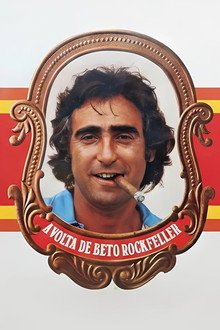
The Return Of The Rockefeller
The big shot Albert returns after three years, reuniting with his family — his parents and his sister. And he gets in touch with some acquaintances, such as his old friend Vitório and a decadent high society woman. And once again Albert, the Rockefeller gets involved with millionaires and opportunists.

Two Faces
In the past, as Adalberto Rangel, he met and seduced Maria Paula. With a calculated coldheart, he married her, stole her fortune, then abandoned her, unaware she was pregnant at the time. Ten years later, accompanied by her son Renato, Maria Paula plots to recover her dignity and to find justice by getting revenge against the indignities done to her.