Personal Info
Known For
Gender
Birthday
Place of Birth
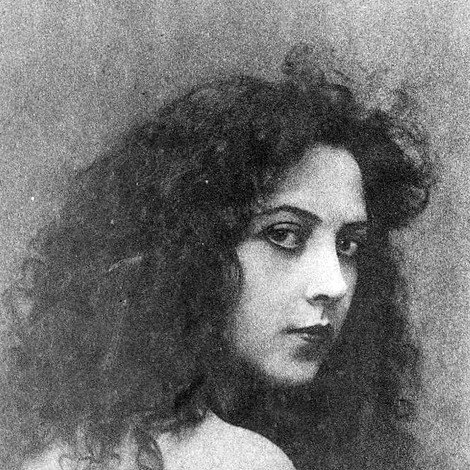
Musidora
Biography
Known for


Les chacals

Judex
When an unscrupulous banker ruins his family, a young man swears to bring him to justice, so he adopts a new identity, the mysterious Judex, and ominously disguised and sunk into the muddy path of vengeance, punishes the crooks and protects the innocents. (Originally a twelve-part epic serial.)

Severo Torelli
Pisa, 1494. Young Severo, who has sworn to stab the tyrant in his town, learns that it is his own father.
The Other Victory
This 1914 War patriotic melodrama tells the story of reconciliation between the remarried woman and her son.
Jeunes filles d'hier et d'aujourd'hui
The Great Breath
The patriotic melodrama, set during WWI, revolves around a thief played by René Navarre.

Musidora, the Tenth Muse
Patrick Cazals’ film, La Dixième Muse, brings Musidora to life for the second time. The first occasion was the publication of his earlier book on the same subject with Henri Veyrier in 1978. The latter remains an essential work of reference because its author was the first person since Francis Lacassin to have surveyed Musidora’s career as a pioneering filmmaker and total artist. It includes previously undiscovered documents that are no longer accessible in their original form. This film too contains many previously unknown images found and selected by Patrick Cazals. Above all, it offers the animated image of a beauty in a close-fitting black suit, and her voice that speaks directly to us, alongside the voices of all those the director has brought together to establish a subtle bond with Musidora and bring her into our own age.

The Vampires or, The Arch Criminals of Paris
Paris is prey to an invisible terror against which the police can do nothing: a sinister organization that sows chaos and death. The intrepid journalist Philippe Guérande and his partner embark on a long crusade to put an end to the crimes of the Great Vampire and Irma Vep, his dangerous accomplice. (A ten episode movie serial.)
The Story of Midinette
During the WWI, Jeannette (Musidora) finds refuge in the South France, among other women. She starts the correspondence with a soldier of the front line and sends him a parcel.

For Don Carlos
Pour Don Carlos was the biggest production by Société des Films Musidora (est. December 10, 1919). Based on a novel by Pierre Benoît, Musidora’s first creatively autonomous work is set during the conflict between Carlists and Bourbons in late 19th century Spain. Benoît insisted that Jacques Lasseyne, a Spanish grandee who put money into the production, should co-direct. The film was shot in 1920, in the Spanish Basque Country. It represents a turning point in Musidora’s career, sparking her passionate love affair with a country and a culture that welcomed her as a great star. Above all, though, she encountered Antonio Cañero, a bullfighter who acted as her technical adviser on the film. Because of him, she did all she could to ensure that her succeeding productions, until 1926, were shot in Spain. Pour Don Carlos was released in Paris and in Madrid in December 1921, in a shortened version because its original, three-hour length made it impossible to release in the market of the time.

Le furoncle