Personal Info
Known For
Gender
Birthday
Place of Birth
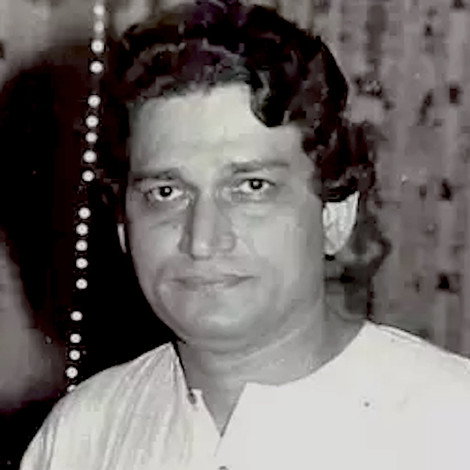
Shafi Inamdar
Biography
Known for

Aap Ki Adalat
The host invites various personalities who must defend themselves in light of their recent controversies and against the accusations levied on them by the public.

Mirza Ghalib
The story of the most admired poet in the History of Urdu and Persian writings, Mirza Ghalib.

Such is Life
Yeh Jo Hai Zindagi was a popular comedy sitcom on Indian television, aired for the first time in 1984. It was written by comedy writer Sharad Joshi and directed by Kundan Shah, S. S. Oberoi and Raman Kumar. It was one of the first sitcoms and one of the biggest hit shows on Indian television after the state owned television, Doordarshan, started sponsoring its programs. The episodes revolved around funny happenings in the lives of Ranjit Verma and Renu Verma, who play a married couple along with Renu's unmarried and unemployed younger brother Raja and then Chachi's daughter who plays the character of Rashmi. Other characters were Ranjit's boss, his Bengali neighbours.

Party
Celebrities arrive at an extravagant party in Bombay to honour Divakar for his contributions to arts and cinema. However, gossip, uninvited guests and a dead body show up to mar the celebrations.


Mahaguru
Subhash, a young man, returns to his village only to find it in miserable conditions due to two tyrannical rulers. When he tries to help the villagers, the rulers send a henchman to deal with him.
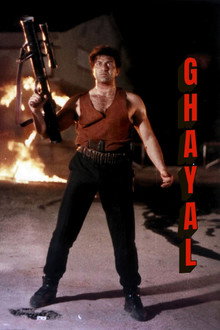
Ghayal
Ajay is framed by Balwant Rai for his brother's murder and sent to prison. Later, he befriends three convicts and sets out to seek revenge against Balwant Rai.

Akele Hum Akele Tum
Rohit and wealthy Kiran Dayal meet each other and fall in love. They intend to marry, but Kiran's parents will not permit her to marry beneath her class. Kiran is adamant, and the marriage goes through without the blessings of the Dayals. They live in harmony for months, even after Kiran gives birth to Sunil. Then they start to have differences, which are minor at present, and then snowball...

Andha Yug
"Andha Yug"—literally 'Age of Blindness'—is an allegorical play written in the aftermath of the Partition of India by Shri Dharamvir Bharti. Rooted in the epic Mahabharata, this landmark 1989 Delhi performance was staged for the Nehru Shatabdi Samaroh Festival and has since been preserved by the Natya Shodh Sansthan, Kolkata (NSS). Set on the final day of the Kurukshetra war, the narrative chronicles the end of the Dvapara Yuga and the immediate descent into the dark Kali Yuga, triggered by Lord Krishna's demise. This five-act masterpiece explores the moral collapse, cycles of revenge, and psychological trauma of war. It depicts the pyrrhic reality of the Kali Yuga—the worst, shortest, and darkest of the four cosmic ages—in which recursive violence degrades the fabric of civilization, blinding individuals to reason as they are forced to reckon with the devastation's fallout.


Phool Bane Angaray
Dutta babu is standing for elections against a cunning, corrupt, & established gangster, Bishamber Prasad, who is also powerful and influential enough to swing the election his way, as well as have Dutta killed. Inspector Ranjit Singh gets evidence about Bishamber's involvement in Dutta's death, but his superior officer, DSP Ravi Khanna, prevents him from taking any action. Ranjit then meets with beautiful Namrata, and both get married. As Ranjit continues to be a thorn on Bishamber's side, he is killed, leaving behind a sorrowing Namrata and two children. Namrata pledges to avenge his death, but the question is when a police inspector failed, how can she succeed?

Krantiveer
Lack-lustred and alcoholic Pratap Narayan Tilak is given a rude awakening when he meets with journalist Megha Dixit, and decides to instill some sense of justice and fair play within his community, and get them to assertively defend their rights and freedom. He is met with strong resistance, both from within his very own community, the police, and some very powerful and influential politicians. Unable to bear the injustice, and frustrated at his community to act proactively, Pratap decides to take the law into his own hands, resulting in chaos, violence, and uncertainty for everyone, and a path to his own grave.

Dahleez
Dahleez is a 1986 Indian Bollywood film directed by Ravi Chopra and produced by B.R. Chopra. It stars Jackie Shroff, Raj Babbar, Meenakshi Sheshadri and Smita Patil in pivotal roles.

Ikke Pe Ikka
Kailashnath is a wealthy widower, who lives in a palatial house with three grown sons, Randhir, Rajiv, Rishi, and a younger school-going son. He manages the business on his own, but would like his sons to also take an interest, in vain though, as all three have their own interest at heart (being a Bollywood actor, singing, and boxing) and no interest whatsoever in running a business or seeking employment. To add to this, Kailashnath must now contend with a new neighbor named Kaushalya, a widow, with three daughters (Komal, Kavita and Kanchan) and a rather plump maid-servant by the name of Guddi. It so happens that the daughters have similar interests as Kailashnath's sons. So the six match-up, romance, have fun, and would like to get married. Kailashnath refuses to permit his sons to get married until and unless they establish themselves and are able to stand on their respective feet...

Yeshwant
After arresting a drug dealer during an undercover operation, police officer Yeshwant Lohar is framed for murder and imprisoned by his corrupt supervisor, Salim Shaikh, who is involved in distributing narcotics. Determined to prove her husband's innocence, wife Ragini resists Salim's attempts to intimidate or bribe her. Salim then releases false photos of Ragini having an affair with police officer Atul, shaking Yeshwant's faith in his wife.