Personal Info
Known For
Gender
Birthday
Place of Birth
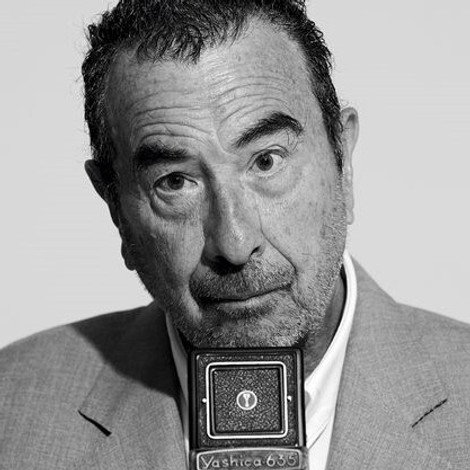
José Luis Garci
Biography
Known for

¡Qué grande es el cine!
TVE broadcasted this program on the occasion of the first centenary of the history of cinema, a feature film was broadcast weekly that, due to its characteristics, was of interest within the cinematographic world, directed and moderated by José Luis Garci, with the assistance of three experts , belonging to the world of cinema and literature, which debated following the screening of the chosen film.

Eloy de la Iglesia: Film Addict
A dauntless film director, an enfant terrible in his early days, confrontational with censorship, always pushing the boundaries of freedom of expression, chronicler of the darkest corners of the transition, De la Iglesia will fall into the clutches of drug addiction, being forgotten and sometimes repudiated for more than a decade before eventually shaking off the ostracism to make films once again, that habit he could never kick.


Miguel Velázquez. El catedrático del ring

Vida conyugal sana
Enrique is a thirty-year-old lawyer who is married to Ana. Apparently he is a normal man who has only one obsession: the commercials. He feels a real passion for the erotic world of the ads either in billboards, trash cans, public transport, magazines or television. The continuous publicity bombardment ends up leading him towards a neurosis that changes his personality.

Summers el rebelde
Winner of the Silver Shell for Best Director for his debut film, Del rosa... al amarillo, Manolo Summers was the great revelation of Spanish cinema. Over time, he became a very popular figure, while criticism of him intensified. Now we will get to know his personality through his own words, as well as what his films tell us about him. And with the help of film critics, directors, professionals, and his family, we will discover Summers the rebel.

Directors Talks

The Night of the Sunflowers
Two speleologists, Esteban and Pedro, travel to a mountainous area located in northern Spain, near a small village, to study a newly discovered cave and determine if it is of scientific interest, while Gabi, Esteban's wife, awaits their return on a lonely road at the foot of the mountain.

Viva la clase media
Drama based on the true life of a group of middle class and members of the Communist Party of Spain, who were involved in clandestine political activities during the sixties.

Samuel: Hollywood vs Hollywood
The epic story of a great man of cinema, Samuel Bronston, as recounted by those who knew him. Bronston created a parallel Hollywood in Spain that was much larger than the one in California, and this provoked the wrath of an industry that ultimately devoured him.

Operación Palace
Finally, 33 years later, the whole truth behind the attempted coup d'état that shook Spain on the afternoon of February 23, 1981, is revealed by those who lived through those dreadful hours; a deep look behind the heavy curtain which hides the real mastermind, waiting to be unmasked.

La noche de los cien pájaros
The young Enrique leaving to study at the University and is married to Juana. One day he meets a painter who takes Enrique into another life and confused begin to think about taking some drastic measures.

El crack dos
Private detective Germán Areta el Piojo investigates the life of a gay man who has apparently abandoned his partner. When they both turn up dead, it seems one killed the other before committing suicide, but Areta is not convinced.

Enrique Herreros
The story of Enrique Herreros (1903-1977), cartoonist, advertiser, poster designer, talent manager, actor, producer and filmmaker, and the most daring of mountaineers; the man who, along with his companions from the so-called “other Generation of '27,” brought Hollywood to Madrid's Gran Vía, turning a grey and sinister post-war city into the capital of an incipient and ambitious cultural industry.

Olea… ¡Más alto!
An account of the life and work behind the camera of Spanish filmmaker Pedro Olea, whose very personal viewpoint, interested in all kinds of subjects, approached in very different ways, but always with a very characteristic style, has analyzed the social and political life of Spain for more than five decades.