Personal Info
Known For
Gender
Birthday
Place of Birth
Shivraj
Biography
Known for

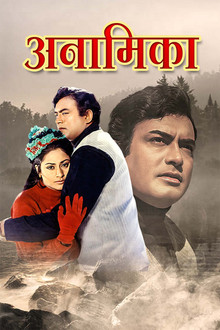
Anamika
A self proclaimed misogynistic writer rescues an injured woman who suffers from amnesia but claims to be his wife. In the process of finding out her real identity, he falls in love with her.

Naughty Boy
A man is devastated when his beloved is seemingly killed in a train crash, so his colleagues suggest he goes for a picnic to cheer himself up.

Baadbaan
An orphaned boy from a fishing village, adopted and educated by a wealthy family, must choose between his sophisticated wife and a new love in his rural birthplace as he dedicates his life to uplifting his long-lost community.

Rakhi
Siblings Rakhi and Raju are orphaned at a young age but grow up to become successful entrepreneurs. However, petty differences over their earned wealth and property threaten to ruin their bond.

House No. 44
Film about a small-time hood running afoul of a bigtime gangster. Starring Dev Anand, Kalpana Kartik and K.N. Singh.

Hum Se Badkar Kaun
Four young boys tragically separated from their parents and each other grow up to become four different men with divergent values and conflicting methods. Fate eventually sets their paths for a head on collision.

Humse Na Jeeta Koi
Sunder Singh lives with his wife, Lajwanti, and three sons, Bheema, Kishan, and Vijay, in a small town in India. His two elder sons are slackers and up to mischief and wrestling. They find they can better their lives if they buy a tractor to till the land. Lajwanti comes up with jewelery and the brothers recover the rest of the money on hold with Lala Bhagwandas, and set forth to buy a tractor. They re-locate to the city and team up with their police inspector brother Vijay. Watch as hilarious events unfold that will encompass the trio in crime, romance, and jail-time, as they try to diligently fulfill their parents' wishes.

Deewaangee
Shekhar is a poor orphan who along with his trusted lieutenant Birju runs a garage. Shekhar dislikes women, has lost his faith in God and enjoys to spend time with his friends Bill and Harry. One night, When Birju introduces him to Kanchan, a runaway, he refuses to have to do anything with her, but when he finds out that her uncle, Shivraj, has offered a reward for her return, he decides to befriend her and both fall in love. The two get married and are blessed with a son. Their harmonious life enters trouble when Shekhar is given a suitcase by his friend, Bill, who eventually ends up dead. Shekhar finds stolen diamonds inside the suitcase and decides to keep them, much to Kanchan's displeasure. After being betrayed by one of his own in pursuit of the diamonds, Shekar finds out that two gangs, headed by Munne Khan and George Shekhar have abducted Kanchan and his son. How far will Shekhar go to set things right and rescue his family?
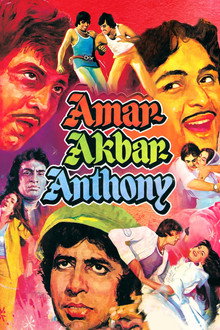
Amar Akbar Anthony
Three brothers, each raised in different religious households, reunite after many years in a chance encounter. They set out to take revenge on those responsible for separating them.

Maa Aur Mamta
Father Henry (Rehman) entrusts a newly-born infant in the care of an unwed Maya (Nutan), leaving her to explain the presence of the child. She is literally thrown out of the village and runs away to Bombay. There she is taken care of by a kind-hearted Muslim taxi-driver (Jayant). Years later, the child grows up to be called Ram (Jeetendra), but the question haunting everyone's mind is who is Ram's biological father?

Dil Hi To Hai
Children are exchanged by greedy aunt and uncle in childhood and they live undeserved lives.

Naya Din Nai Raat
Sushma believes that she is too young to get married, but her father, Lalla Banarsilal insists, and she runs away. Her adventures take her to a lonely wealthy widower with a cute daughter named Guddi; a drunken lout in a brothel; Dr. Kruparam, a psychiatrist, who admits her in his mental hospital; a dreaded bandit who has killed his tormentor, cut him into pieces and fed them to birds, and who still on a killing spree; Pandit Gorakhnath who lives a double life - as a priest and as a smuggler; a leper Dhanraj, who once was a very wealthy man, but is now shunned by everyone; a transvestite stage actor; and a hunter who saves Sushma's life by shooting dead a man-eating lion. As things spiral out of control for Sushma, there is yet one more male she has to meet, and it is this meeting that will change her life even more.

Our Struggle
A stridently nationalistic story of India’s freedom struggle, presented through the experiences of a Bengali family from 1885, when the Indian National Congress was established, to 1947. Important events incorporated into the plot were Gandhi’s satyagraha (1920), the Simon Commission (1928), Vallabhbhai Patel’s Bardoli satyagraha (1928) and the 1942 Quit India agitations. Krishan Chander’s script, Sachin Shankar’s choreography and the acting styles owed much to the IPTA theatre of the 40s. The film, made at Bombay Talkies, was produced by the distributors of the Chicago Radio PA systems label. Kishore Kumar plays the militant hero of this quasi-documentary. Motwane included old documentary footage purchased from Kohinoor and Krishna Film, as well as a shot of Rabindranath Tagore singing his Jana Gana Mana composition, one of India’s national anthems (Arunkumar Roy’s Of Tagore and Cinema, 1994, traces this footage to Ufa, shot when Tagore visited Munich)

Doli
Amar and Prem, college friends, and Asha and Shobana form friendships. Marriages are arranged, but dowry demands a US ticket. Prem returns, becomes office predator, and Asha endures harassment to pay off debts.