Personal Info
Known For
Gender
Birthday
Place of Birth
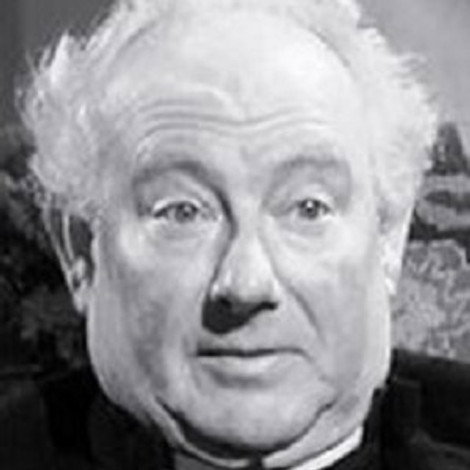
George Woodbridge
Known for

Omnibus
Omnibus was an arts-based BBC television documentary series, broadcast mainly on BBC1 in the United Kingdom. The programme was the successor to the long-running arts-based series 'Monitor'. It ran from 1967 until 2003, usually being transmitted on Sunday evenings. During its 35-year history, the programme won 12 Bafta awards. Among the series' best remembered documentaries are Cracked Actor, a profile of David Bowie, and Rene Magritte, a graduate film by David Wheatley, 'Madonna: Behind the American dream', a film produced by Nadia Hagger, and a profile of the British film director Ridley Scott. For a season in 1982, the series was in a magazine format presented by Barry Norman. The series was replaced by 'Imagine' hosted by Alan Yentob.

No Hiding Place
No Hiding Place is a British television series that was produced at Wembley Studios by Associated-Rediffusion for the ITV network between 16 September 1959 and 22 June 1967. It was the sequel to the series Murder Bag and Crime Sheet, all starring Raymond Francis as Detective Superintendent, later Detective Chief Superintendent Tom Lockhart.

Sunday Night Theatre
Sunday Night Theatre was a long-running series of televised live television plays screened by BBC Television from early 1950 until 1959. The productions for the first five years or so of the run were re-staged live the following Thursday, partly because of technical limitations in this era, and the theatrical basis of early television drama. Some of the earliest collaborations between Rudolph Cartier and Nigel Neale were produced for this series, including Arrow to the Heart and Nineteen Eighty-Four. The Sunday night drama slot was subsequently renamed The Sunday-Night Play which ran for four seasons between 1960 and 1963. ITV transmitted its own unrelated run of Sunday Night Theatre between 1971 and 1974.
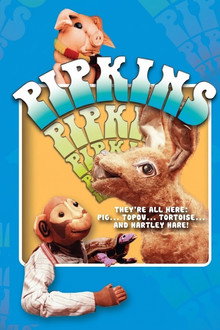
Pipkins
Pipkins was a British children's TV programme. Hartley Hare, Pig, Topov and the gang were the stars of ATV's pre-school series which ran from January 1973 to 29 December 1981.

The Persuaders!
An English aristocrat and an American millionaire come together to tackle crime.

Dixon of Dock Green
Dixon of Dock Green was a BBC television series following the activities of police officers at a fictional Metropolitan Police station in the East End of London from 1955 to 1976. Some episodes were later remade as a BBC radio series in 2005 and 2006.

The Forsyte Saga
The Forsyte Saga is a 1967 BBC television adaptation of John Galsworthy's series of The Forsyte Saga novels, and its sequel trilogy A Modern Comedy. The series follows the fortunes of the upper middle class Forsyte family, and stars Eric Porter as Soames, Kenneth More as Young Jolyon and Nyree Dawn Porter as Irene. It was adapted for television and produced by Donald Wilson and was originally shown in twenty-six episodes on Saturday evenings between 7 January and 1 July 1967 on BBC2, at a time when only a small proportion of the population had television sets able to receive this channel. It was therefore the repeat on Sunday evenings on BBC1 starting on 8 September 1968 that secured the programme's success with 18 million tuning in for the final episode in 1969. It was shown in the United States on public television and broadcast all over the world, and became the first BBC television series to be sold to the Soviet Union.

Out of the Unknown
Out of the Unknown is a British television science fiction anthology drama series, produced by the BBC and broadcast on BBC2 in four series between 1965 and 1971. Each episode was a dramatisation of a science fiction short story; some were created for the series, but most were adaptations of already published stories. The first three years were exclusively science fiction, but that genre was abandoned in the final year in favour of horror and fantasy. A number of episodes were wiped during the early 1970s, as was standard procedure at the time.

Mystery and Imagination
Mystery and Imagination is a British television anthology of classic horror and supernatural dramas. Five series were broadcast from 1966 to 1970 on ITV and produced by ABC and Thames Television.

A Ghost Story for Christmas
A strand of annual British short television adaptations of classic ghost stories, referencing the oral tradition of telling supernatural tales at Christmas. First broadcast on BBC One from 1971 to 1978, and revived in 2005 on BBC Four.
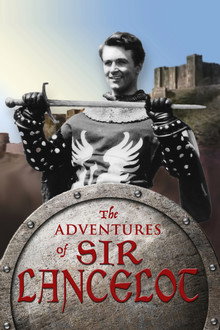
The Adventures of Sir Lancelot
The Adventures of Sir Lancelot is a British television series first broadcast in 1956, produced by Sapphire Films for ITC Entertainment and screened on the ITV network. The series starred William Russell as the eponymous Sir Lancelot, a Knight of the Round Table in the time of King Arthur at Camelot.

The Invisible Man
British scientist Peter Brady, while working on an invisibility formula, suffers a tragic accident which turns himself invisible. Unfortunately, there is no antidote, so, while working on a method to regain his visibility, he undertakes missions for his government stopping bad guys.

Whack-O!
Whack-O! was a British sitcom TV series starring Jimmy Edwards, written by Frank Muir and Denis Norden, and broadcast from 1956 to 1960 and 1971 to 1972. The series ran on the BBC from 1956 to 1960 and from 1971 to 1972. Edwards took the part of Professor James Edwards, M.A., the drunken, gambling, devious, cane-swishing headmaster who tyrannised staff and children at Chiselbury public school. The Edwards character bore more than a passing resemblance to Sergeant Bilko as he tried to swindle the children out of their pocket money to finance his many schemes.

Dracula
After Jonathan Harker attacks Dracula at his castle, the vampire travels to a nearby city, where he preys on the family of Harker's fiancée. The only one who may be able to protect them is Dr. van Helsing, Harker's friend and fellow-student of vampires, who is determined to destroy Dracula, whatever the cost.