
Personal Info
Known For
Gender
Birthday
Place of Birth
Leonardo Daniel
Known for

El Señor de los Cielos
Set in the 1990s, these are the life and times of Amado Carrillo Fuentes, a man who became the head of the Juárez cartel. Nicknamed “El Señor de los Cielos” (Lord of the Skies) because of the large fleet of airplanes he used to transport drugs, he was also known for washing more than $200 million through Colombia to finance his huge fleet. He is described as the most powerful drug trafficker of his time.

Mundo de Juguete
Mundo de Juguete is a telenovela produced in Mexico by Televisa in 1974. It is a remake of telenovela Papá Corazón. This telenovela holds the record for having the second longest run ever for a Latin American telenovela, with a total of 605 episodes. Most telenovelas run for an average of six to eight months; the shortest ones run about four months, and the longest up to a year. Many "Mundo de Juguete" fans believe that either all or some of the tapes and film from the telenovela were lost when Televisa collapsed during the 1985 earthquake. Televisa has been secretive regarding which tapes were lost during that earthquake, so there is no way of confirming this. However, such claims can be disputed, considering that the Telenovela has been repeated on television several times after 1985. During the nineties, it was repeated on Mexico City Canal 9. For a period of time, it was also shown on Unicable or on Telenovelas Televisa remade the telenovela in 2000, and called it "Carita de Angel".

Los ricos también lloran
Popular telenovela produced in Mexico in 1979, starring Verónica Castro, Rogelio Guerra and Rocío Banquells. Castro also sang the theme Aprendí a Llorar, a song written by Lolita de la Colina. The telenovela was produced by Chilean Valentín Pimstein and Carlos Romero, it was directed by Rafael Banquells. The story was written by Inés Rodena and adapted by Valeria Philips.

Falling Angel
Set in New York, the serial features the street-wise Ángel, who treats life as a game he plays to win. He tangles with the power-hungry Martín, who is engaged to a stunning, feisty lawyer named Manuela. She decides to defend Ángel, even though Martín wants to destroy him. Neither of the men know that Ángel is Martín's own son. Our hero learns that love is the only key to survival.

Collision
When business magnate Miguel Ángel dies in a mysterious crash, his daughter Zoé and estranged wife Belén fight for control of his company.

Chispita
The story follows Isabel—known as "Chispita"—who was separated from her mother after the latter lost her memory in an accident. After growing up in an orphanage, Isabel is adopted by a widowed businessman, Don Alejandro; he hopes she will bring joy to the life of his daughter, Lili, who has become sad and ill-tempered since her mother's death—largely due to the influence of her teacher, the wicked Miss Irene. However, contrary to Alejandro's expectations, Isabel is not welcomed by his daughter; instead, she must contend with the malicious traps set for her by Lili and Miss Irene. Yet, Isabel also finds friends in the household, such as Juan Carlos (Lili’s older brother) and Gloria (the family’s maid). From her new home, Chispita begins the search for her mother.

Corazon Valiente
Angela and Samantha were best friends when they were little, but a trap of fate separated them for many years. An unmissable story of loyalty, friendship, courage and love.

Velvet el nuevo imperio
Talented designer Ana Velázquez arrives at Velvet and falls in love with Alberto Márquez, heir to the company, but their love must overcome many intrigues, including a marriage of convenience.

El hogar que yo robé

Enemigo íntimo
The story of two siblings who witness the murder of their parents in the hands of one of the drug cartels in Mexico, after which Alejandro Ferrer's younger sister is kidnapped. 25 years later, Alejandro is now the captain of the Federal Police and seeks revenge against the narcos for destroying his family.

Cañaveral de Pasiones
Cañaveral de Pasiones is a Mexican telenovela produced by Christian Bach and Humberto Zurita for Televisa and originally broadcast on Canal de las Estrellas from April 22 to September 3, 1996. It is based on the stories Una sombra entre los dos and Al pie del altar by Caridad Bravo Adams, adapted for television by María del Carmen Peña and José Cuauhtémoc Blanco. The story follows Julia Santos and Pablo Montero, two childhood friends whose lives are torn apart by a tragedy that sparks hatred between their families. Years later, Pablo returns to his hometown engaged to another woman, only to realize that he still loves Julia. As they struggle to rekindle their romance, they must confront family rivalries, dark secrets, jealousy, and betrayal that threaten to keep them apart forever.
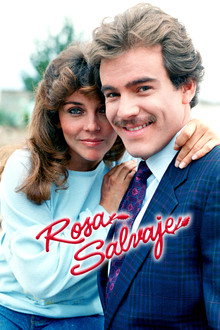
Rosa Salvaje
The drama tells the story of Rosa, who lives with her godmother in a very poor neighborhood; she is a simple girl who dresses like a boy. She was abandoned by her mother, Paulette. One day, Rosa goes to a mansion to steal apples and meets the owner of the house, Ricardo.

Doménica Montero
A respected and renowned businesswoman and philanthropist, considered one of the most sought-after brides in the country, who is left at the altar on her wedding day. Humiliated, betrayed, and turned into a target of public scrutiny, Doménica decides to flee and take refuge in one of her parents’ old estates. There, marked by pain, she faces new challenges and meets Luis Fernando, the owner of the neighboring estate, who also carries a painful past. Between them, an explosive relationship develops, marked by pride, misunderstandings, and growing attraction, where land disputes intertwine with their shared desire to rebuild, heal, and give new meaning to their lives.

Las Dos Caras de Ana
Las Dos Caras de Ana is a Mexican telenovela produced by Televisa and Fonovideo that debuted in 2006, starring: Ana Layevska and Rafael Amaya. The telenovela was made, filmed and set in Miami, Florida. The title is upon the phrase Las Dos Caras de Jano.

DOC
After an attack wipes 12 years of memories, a brilliant doctor must relearn his past, navigate tangled romances and a looming scandal over a new medication.