Personal Info
Known For
Gender
Birthday
Place of Birth
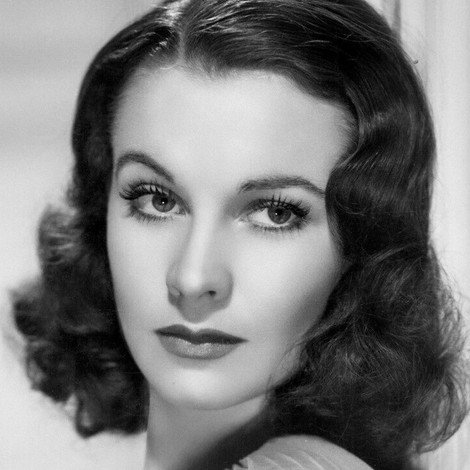
Vivien Leigh
Biography
Known for

The Ed Sullivan Show
The Ed Sullivan Show is an American TV variety show that originally ran on CBS from Sunday June 20, 1948 to Sunday June 6, 1971, and was hosted by New York entertainment columnist Ed Sullivan. It was replaced in September 1971 by the CBS Sunday Night Movie, which ran only one season and was eventually replaced by other shows. In 2002, The Ed Sullivan Show was ranked #15 on TV Guide's 50 Greatest TV Shows of All Time.

Gone with the Wind
The spoiled daughter of a Georgia plantation owner conducts a tumultuous romance with a cynical profiteer during the American Civil War and Reconstruction Era.

Small World
Presents a filmed, intercontinental conversation that links moderator Edward R. Murrow in New York with three internationally known figures located in different parts of the world. What set this apart from other televised interview/discussion programs was the fact that its participants could not see each other but could hear one another via telephone lines and radio.

A Streetcar Named Desire
A disturbed, aging Southern belle moves in with her sister for solace — but being face-to-face with her brutish brother-in-law accelerates her downward spiral.

Faye
Through honest reflection, complemented by insight from colleagues and friends, Faye Dunaway contextualizes her life and filmography, laying bare her struggles with mental health while confronting the double standards she was subjected to as a woman in Hollywood.

Glorious Technicolor
The history of color photography in motion pictures, in particular the Technicolor company's work.

That Hamilton Woman
The story of courtesan and dance-hall girl Emma Hamilton, including her relationships with Sir William Hamilton and Admiral Horatio Nelson and her rise and fall, set during the Napoleonic Wars.

Caesar and Cleopatra
At the height of the Roman Civil War, an aging Julius Caesar finds himself intrigued by the young Egyptian queen Cleopatra, whom he teaches how to rule Egypt.

Iconic Couples of Hollywood

Beyond Tara: The Extraordinary Life of Hattie McDaniel
Profiles the life of performer Hattie McDaniel, the first Black American to win an Oscar, and her unapologetic resilience in the face of critics.

Waterloo Bridge
On the eve of World War II, a British officer revisits Waterloo Bridge and recalls the young man he was at the beginning of World War I and the young ballerina he met just before he left for the front.
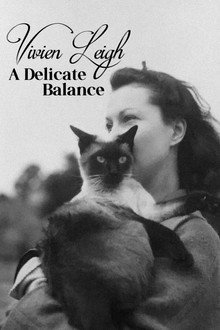
Vivien Leigh: A Delicate Balance
Explores the many facets of Vivien Leigh's life and performances through rarely-seen home movies, personal photographs and interviews with her family and friends. An episode of A&E Biography, a series that recounts the life stories of various historical figures and celebrities.

Ivanov
A play by Chekhov, starring Vivien Leigh and John Gielgud; it was Leigh’s final performance before her death in 1967.

Charmed Lives: A Family Romance
Sir Alexander Korda, one of the world's most flamboyant movie tycoons, rose from obscurity in rural Hungary to become a legendary filmmaker. With him were his brothers, Zoltan and Vincent, all living charmed lives in circles that included Vivien Leigh, Sir Laurence Olivier, Marlene Dietrich, H.G. Wells and Merle Oberon, who was soon to be Alex's wife. But along with Alex's flair for success lies an equally powerful impulse for destruction.

21 Days
After Larry Darrent accidentally kills his lover's blackmailing husband, someone else is arrested for the crime. When he is found guilty, Larry and Wanda have just three weeks together before he must give himself up— or let an innocent man go to the gallows.