
Personal Info
Known For
Gender
Birthday
Place of Birth
Jerzy Cnota
Known for

Dom
The story of the residents of a tenement house on Złota Street in Warsaw from 1945 to 1980.
Dom
The story of the residents of a tenement house on Złota Street in Warsaw from 1945 to 1980.
Dom
The story of the residents of a tenement house on Złota Street in Warsaw from 1945 to 1980.

Janosik
Janosik was a television series that aired in Poland in 1974. It is about a famous Polish highlander outlaw who in folk legends steals money and goods from the rich and helps out the poor. The series was directed by Jerzy Passendorfer. There are 13 1-hour episodes.

Trzecia granica

Blisko, coraz bliżej
The story stretches from 1863 to 1945. Its main characters are representatives of the Pasternik family, who live in the fictional village of Wielowice near Pszczyna. The protagonist of the first three episodes is Franciszek Pasternik, the following parts tell about the fate of his many children and even more grandchildren. The viewer follows their history against the backdrop of great changes and historical events that influenced the lives of Silesian Poles. So there is the Kulturkampf, Prussian rugi, the revolution of 1905, World War I and the Silesian Uprisings.

Brunet Will Call
Modest editor, has shipped his wife and kids for the weekend, and is trying to relax in his house at the outskirts of Warsaw. His quiet evening is only disturbed by the accidental forecast made by a Gypsy woman, that at evening time he will murder a mysterious brunet.

Teddy Bear
En route to London, Bear discovers at the border checkpoint that his passport is missing a few pages, which may prevent him from traveling to the city with the sports team he manages.


With Fire and Sword
In the mid-17th century, Poland was the largest, most democratic, and most tolerant country in Europe. However, a tragic civil war brought about the gradual decline of the once glorious republic... An epic story about the Cossack rebellion against the Polish-Lithuanian Commonwealth.

Cnota

Byzuch 2
Silesians are going to Germany for a return visit! Jorg and Andreas will be forced to put Gienek, Jurek, Marzena, Irek and Maryjan's colorful father… In Poland remain the neighbors, Grejta and Jerzy, who guard the household and dogs. A former churchman becomes the new mayor and has trouble making various decisions, and his mentor Fr. Maryjan is in Germany for a week. Maybe the new churchman will help the mayor.


The Sinful Life of Franciszek Buła
The end of the 1930s. Wilek Lizoń, a true-blue Silesian, together with his troupe of actors and circus performers, stages a play in the courtyards of miners' tenement houses. The main character is Franciszek Buła, a figure from folk tales. Buła's story begins during the Silesian Uprisings. The courtyard artists present vivid images of Frank's school years, his work in the mine, his communist activities, his imprisonment, and his constant poverty. Fantasy mixes with reality.
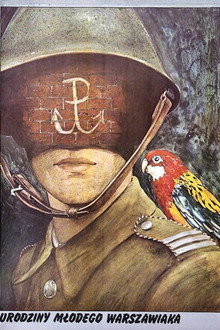
The Birthday
The four sequences in the film cover four days in a life of young Warsaw lad in September 1938, 1939, 1943 and 1944. In the first sequence Jurek decides not to study in the Sorbonne but enlists in a Polish military school instead. In the second sequence the war starts and Warsaw is occupied. In the third sequence he works in the underground resistance. The final sequence takes place during the Warsaw uprising.