Personal Info
Known For
Gender
Birthday
Place of Birth
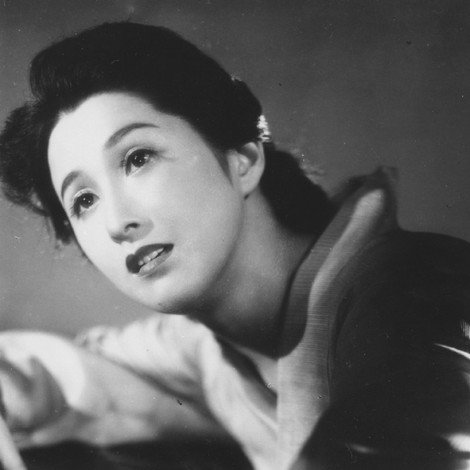
Michiyo Kogure
Biography
Known for
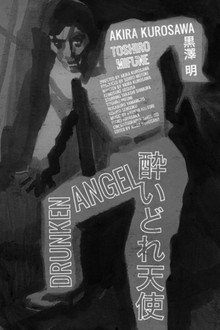
Drunken Angel
In postwar Tokyo, a blunt, alcohol-soaked doctor diagnoses a swaggering young yakuza with tuberculosis, forging an uneasy bond that’s tested when the gangster’s ruthless former boss returns and drags him back toward the swampy underworld he can’t escape.

The Flavor of Green Tea Over Rice
The arranged marriage between a capricious woman from Tokyo high society and a quiet rustic man is tested by a marital crisis.

Samurai III: Duel at Ganryu Island
A humble and simple Takezo abandons his life as a knight errant. He's sought as a teacher and vassal by Shogun, Japan's most powerful clan leader. He's also challenged to fight by the supremely confident and skillful Sasaki Kojiro. Takezo agrees to fight Kojiro in a year's time but rejects Shogun's patronage, choosing instead to live on the edge of a village, raising vegetables. He's followed there by Otsu and later by Akemi, both in love with him. The year ends as Takezo assists the villagers against a band of brigands. He seeks Otsu's forgiveness and accepts her love, then sets off across the water to Ganryu Island for his final contest.

Winter Jasmine
An inept and recently graduated Japanese man begins working in the administration of Manchuria, under the supervision of his uncle. Meanwhile, he becomes acquainted with both a Japanese and Manchurian woman.

Street of Shame
Follows five sex workers employed at a Japanese brothel while the nation debates the passage of an anti-prostitution law.

A Geisha
Fleeing a distressing family situation, Eiko, a very young girl, becomes an apprentice to Miyoharu, a veteran geisha. Both, determined to preserve their professional integrity, must face the selfishness and ambition of several petty people.
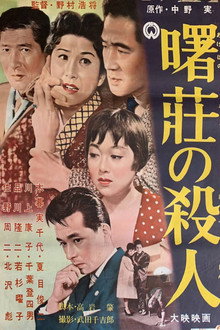
Akebono sō no satsujin
A body is found poisoned in a room of a luxury apartment late at night and a beautiful mother turns herself in to protect her rebellious daughter.

Miyamoto Musashi
In this first episode, we are introduced to Takezo, what Musashi used to be before he became the man of legend. His beginning are not exactly auspicious. He sides with the Toyotomi at Sekigahara, and as a result finds himself on the losing side of the historic battle. He and his friend Matahachi manage to escape the slaughter although the latter is wounded in his leg. They stumble across the young Akemi who makes her living with her mother Oko by robbing corpses of their armor and anything else they can sell. Oko takes it into her head to seduce Matahachi, which she does first by skillfully sucking the gangrene from his blood, and then just by sucking.

Samurai II: Duel at Ichijoji Temple
After years on the road establishing his reputation as Japan's greatest fencer, Takezo returns to Kyoto. Otsu waits for him, yet he has come not for her but to challenge the leader of the region's finest school of fencing. To prove his valor and skill, he walks deliberately into ambushes set up by the school's followers.

In Case of One Woman
Coming Up of Kodokan
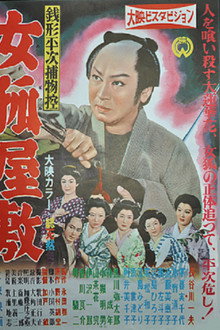
Zenigata Heiji torimono hikae: Onna kitsune yashiki

Ghost Cat of Nabeshima
Tanuma Kandayuu is a high class samurai of the house of Nabeshima. He finds a lavish board of Go (a Chinese Board game) at Kinbei's store. He recommend Kinbei to offer it to his lord. Kinbei hesitates at first, since he knows the board has a mysterious legend surrounding it; it's believed that for every game played on the board, one death is required.

Kenji Mizoguchi: The Life of a Film Director
In 39 interviews with actors and actresses, writers, producers and staff members, interspersed with film excerpts and stills, Shindō recounts the life and career of his friend and mentor Mizoguchi.