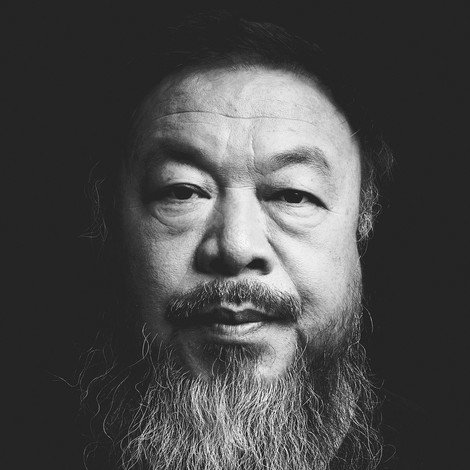
Personal Info
Known For
Gender
Birthday
Place of Birth
Ai Weiwei
Biography
Known for

The Daily Show
The World's Fakest News Team tackle the biggest stories in news, politics and pop culture.

Morgenmagazin

Bambi
The Bambi, often called the Bambi Award and stylised as BAMBI, is a German award presented annually by Hubert Burda Media to recognize excellence in international media and television to personalities in the media, arts, culture, sports, and other fields "with vision and creativity who affected and inspired the German public that year", both domestic and foreign. First held in 1948, it is the oldest media award in Germany. The trophy is named after Felix Salten's book Bambi, A Life in the Woods and its statuettes are in the shape of the novel's titular fawn character. They were originally made of porcelain until 1958, when the organizers switched to using gold, with the casting done by the art casting workshop of Ernst Strassacker in Süßen.

Firing Line with Margaret Hoover
Join author, activist and commentator Margaret Hoover for a public affairs talk show that delivers a civil and engaging contest of ideas among the brightest minds and voices from across the ideological spectrum.

Kulturplatz

Aux arts et cætera

Ithaka
The campaign to free Julian Assange takes on intimate dimensions in this documentary portrait of an elderly man’s fight to save his son. Arguably the world’s most famous political prisoner, WikiLeaks founder Julian Assange is a figure pretty much everybody has an opinion about; perhaps more importantly, he serves as the emblem of an international arm wrestle over freedom of journalism, government corruption and unpunished war crimes. For his family members who face the prospect of losing him forever to the abyss of the US justice system, however, this David-and-Goliath struggle is personal – and, with his health declining in a British maximum-security prison and American government prosecutors pulling out all the stops to extradite him, the clock is ticking.

Laogai: Prison Nation - Inside China's Ruling System
After the founding of the People's Republic of China in 1949, Mao Tsetung established a system of labor camps for systematic repression, known as Laogai, an abbreviation for "Reform Through Labor". In such camps, forced labor and physical and mental torture were used to bring about a so-called mental reform, re-education in the spirit of the Chinese Communist Party. Millions of Chinese were affected. Many were executed. In hundreds of camps, the Party took advantage of the prisoners' free labor to build the economy. Self-criticism and denunciation were often the only way to escape martyrdom. Successive waves of purges culminated in the Cultural Revolution, which saw massive human rights abuses, political assassinations, massacres, and exiles in remote parts of the country. Using unreleased archive footage, the documentary tells the story of the invention, development and improvement of China's totalitarian system of surveillance and repression up to the present day, never told before.

ALLEN & AI
June 3, 1990. New York City. On his 64th birthday, Allen Ginsberg gathers a handful of friends in his downtown apartment. Among them, a young, unknown Chinese artist documents the day. His name is Ai Weiwei. The tape survives. Nothing “historic” happens and yet, everything is there.

The Rest
Europe's refugees are met at eye level in a film by the Chinese artist Ai Weiwei, who defends the ideals of humanism in the midst of the crisis.

Ai Weiwei en Buenos Aires
The documentary registers with detail this first visit to Argentina. It's a meditation on the artistic and conceptual processes that Ai Weiwei needs to think of his art. The images dialogue between the director and his instagram, revealing an intimate side, close to the people.

Disturbing the Peace
"Disturbing the Peace" is a documentary of an incident during Tan Zuoren's trial on August 12, 2009. Tan Zuoren was charged with inciting subversion of state power. Chengdu police detained witnessed during the trial of the civil rights advocate, which is an obstruction of justice and violence. Tan Zuoren was charged as a result of his research and questioning regarding the 5.12 Wenchuan students' casualties and the corruption resulting poor building construction. Tan Zuoren was sentenced five years to prison.

Ai Weiwei's Turandot
There's a first time for everything, and thus Chinese multi-disciplinary artist Ai Weiwei set out to make his debut as an opera director, with an entire film crew following the meticulous preparations of this endeavour. Ai Weiwei's Turandot provides not only a rich insight into the creation process, but also offers a glimpse into the heart and brain of China's most famous artistic dissident.

Ai Weiwei's Appeal ¥15,220,910.50
Ai Weiwei’s Appeal ¥15,220,910.50 opens with Ai Weiwei’s mother at the Venice Biennial in the summer of 2013 examining Ai’s large S.A.C.R.E.D. installation portraying his 81 day imprisonment. The documentary goes onto chronologically reconstruct the events that occurred from the time he was arrested at the Beijing airport in April 2011 to his final court appeal in September 2012. The film portrays the day-to-day activity surrounding Ai Weiwei, his family and his associates ranging from consistent visits by the authorities, interviews with reporters, support and donations from fans, and court dates. The Film premiered at the International Film Festival Rotterdam on January 23, 2014.