Personal Info
Known For
Gender
Birthday
Place of Birth
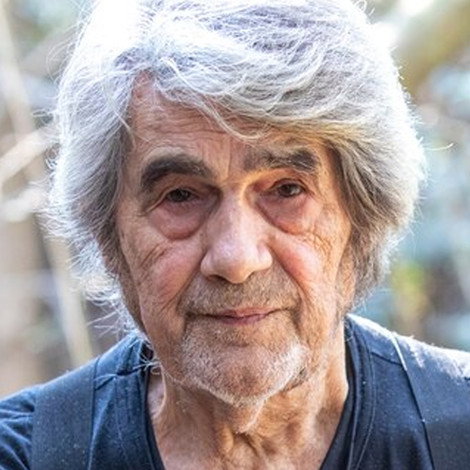
Juan José Camero
Biography
Known for


Piedra libre
Eugenia's parents die. She goes to live with Amalita, her close friend. Her grandmother Amalia Pradere a wealth landlady, takes the orphan under her protection. After a chain of events, disappearing her grandchild, Eugenia will take Amalita's place. She will inherit not only Amalia's possessions but also Ezequiel's love, Amalita's widower.

Pobre diabla

El llanto del perro
Plagued by anxiety, Gaby retreats to Ema's secluded home for an alternative therapy. What begins as a path to healing soon turns into a disturbing ritual of obedience - leading her into a world where humans behave like domesticated pets.

Basta de mujeres
Alberto, who has been married to Laura for twenty years, meets Monica in his office, a serious and formal employee with whom he strikes up a friendship.

Triangle of Four
In a boring marriage a model-photographer attracts the husband and a young man to the woman.

Mi hijo Ceferino Namuncurá
Biopic of Ceferino Namuncurá (1886-1905), son of a Mapuche cacique and a white woman, and the first Indian of South America to be beatified. The film starts out as a war movie, showing his father Manuel battling the Spanish and taking a white woman as his captive bride. But little of interest happens after Ceferino is born. His beatification relies partly on his "miraculous" survival after falling in a stream as a baby, but the film does not present this with any great drama, and plods through the rest of the boy's life with similar tepor. Ceferino does well in school, attracts the interest of a priest, attends a Catholic school in Buenos Aires, and studies for the priesthood in Italy, where he dies of tuberculosis after a few unconvincing coughs.

Nazareno Cruz and the Wolf
The Mighty One offers Nazareno Cruz all the wealth in the world if he agrees to abandon his beloved; otherwise, the curse that supposedly weighs on him will be fulfilled.

The Previous Life
Ana and Federico have only been married for a few years and everything is going well until the sudden arrival of Úrsula in their lives to change them forever.

La mayoría silenciada

Allá lejos y hace tiempo
While growing up on the pampas, a young boy becomes fascinated with nature and the mysteries of the human soul.

The Debt
The drama tells the story of an Argentine elementary-school teacher sent by the government to a rural hamlet located in the northwestern province of Jujuy. It shows how he touches the lives of the villagers, especially the young and impressionable boy Verónico, whose mother died and father left to seek work when he was an infant. The film is based on a non-fiction book written by Fortunato Ramos, a rural teacher in northwest Argentina, that discusses his teaching experiences.
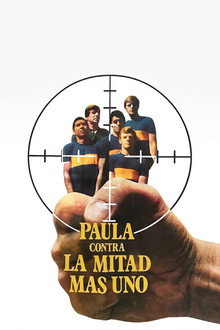
Paula contra la mitad más uno
Shortly before a match against River Plate, members of the Boca Juniors football team are kidnapped.

Favio: Chronicle of a Director
There are very few icons in Argentine culture capable of appealing to both popular and elitist tastes. Leonardo Favio was undoubtedly one of them. An unseasonable Peronist attached to the liturgy of his land, the director, born in the province of Mendoza, was and artist at every craft. a Renassaince man, but above all, a filmmaker. This is how "Favio: Chronicle of a Director" recaptures him, as a man of film who fed from radio, acting, music and painting in order to build up the handful of rhapsodies with which he adorned argentinean cinematography

José María y María José (Una pareja de hoy)
A couple of university students face the dilemma of abortion.