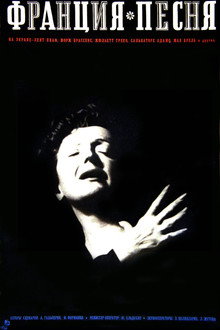
Édith Piaf
Biography
Édith Piaf (born Édith Giovanna Gassion, 19 December 1915 – 10 October 1963) was a French singer, lyricist and actress. Noted as France's national chanteuse, she was one of the country's most widely known international stars.
Piaf's music was often autobiographical, and she specialized in chanson réaliste and torch ballads about love, loss and sorrow. Her most widely known songs include "La Vie en rose" (1946), "Non, je ne regrette rien" (1960), "Hymne à l'amour" (1949), "Milord" (1959), "La Foule" (1957), "L'Accordéoniste" (1940), and "Padam, padam..." (1951).
Since her death in 1963, several biographies and films have studied her life, including 2007's La Vie en rose. Piaf has become one of the most celebrated performers of the 20th century.
Despite numerous biographies, much of Piaf's life is unknown. She was born Édith Giovanna Gassion in Belleville, Paris. Legend has it that she was born on the pavement of Rue de Belleville 72, but her birth certificate says that she was born on 19 December 1915 at the Hôpital Tenon, a hospital located in the 20th arrondissement.
She was named Édith after the World War I British nurse Edith Cavell, who was executed 2 months before Édith's birth for helping French soldiers escape from German captivity. Piaf – slang for "sparrow" – was a nickname she received 20 years later.
Louis Alphonse Gassion (1881–1944), Édith's father, was a street performer of acrobatics from Normandy with a past in the theatre. He was the son of Victor Alphonse Gassion (1850–1928) and Léontine Louise Descamps (1860–1937), known as Maman Tine, a "madam" who ran a brothel in Bernay in Normandy.
Her mother, Annetta Giovanna Maillard, better known professionally as Line Marsa (1895–1945), was a singer and circus performer born in Italy of French descent on her father's side and of Italian and Kabyle on her mother's. Her parents were Auguste Eugène Maillard (1866–1912) and Emma (Aïcha) Saïd Ben Mohammed (1876–1930), daughter of Said ben Mohammed (1827–1890), an acrobat born in Mogador and Marguerite Bracco (1830–1898), born in Murazzano in Italy.
Annetta and Louis-Alphonse divorced on 4 June 1929.
Piaf's mother abandoned her at birth, and she lived for a short time with her maternal grandmother, Emma (Aïcha). When her father enlisted with the French Army in 1916 to fight in World War I, he took her to his mother, who ran a brothel in Bernay, Normandy. There, prostitutes helped look after Piaf. The bordello had two floors and seven rooms, and the prostitutes were not very numerous – "about ten poor girls", as she later described. In fact, five or six were permanent while a dozen others would join the brothel during market days and other busy days. The sub-mistress of the brothel was called "Madam Gaby" and Piaf considered her almost like family, since she became godmother of Denise Gassion, Piaf's half-sister born in 1931. Edith believed her weakness for men came from mixing with prostitutes in her grandmother's brothel. ...
Source: Article "Édith Piaf" from Wikipedia in English, licensed under CC-BY-SA 3.0.
Known for
Le Grand Échiquier
Le Grand Échiquier is a French variety television program created and presented by Jacques Chancel. It aired at 8:30 pm on the first channel of the ORTF from January 12, 1972 to July 12, 1972, then on the second color channel of the ORTF from September 1972 to December 1974, and finally on Antenne 2 from January 1975 to December 21, 1989. The program returned to France 2 on December 20, 2018 and is hosted by Anne-Sophie Lapix.
The Ed Sullivan Show
The Ed Sullivan Show is an American TV variety show that originally ran on CBS from Sunday June 20, 1948 to Sunday June 6, 1971, and was hosted by New York entertainment columnist Ed Sullivan. It was replaced in September 1971 by the CBS Sunday Night Movie, which ran only one season and was eventually replaced by other shows.
In 2002, The Ed Sullivan Show was ranked #15 on TV Guide's 50 Greatest TV Shows of All Time.
Legends
The story of the big names that have shaped the musical genres, plus an occasional stopgap for the new rock 'n' roll - comedy.
McCartney 3, 2, 1
Paul McCartney sits down for a rare in-depth one-on-one with legendary producer Rick Rubin to discuss his ground breaking work with The Beatles, the emblematic 70s arena rock of Wings and his 50 years and counting as a solo artist.
The Tomboy
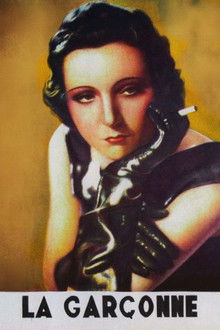
The eponymous garçonne or flapper is Monique Lerbier, an emancipated French woman who leaves home to escape a marriage of convenience to a man she does not love which her parents have forced on her. She then falls into all sorts of carnal temptations and artificial pleasures previously unknown to her. These include her being seduced into a lesbian love affair by a chanteuse.
Paris Still Sings!
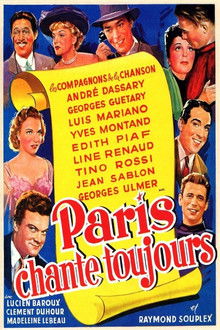
A famous comedian decrees that his fortune will go to whoever collects as many pop star autographs as quickly as possible. When he dies, two cousins embark on the race for signatures.
Royal Affairs in Versailles
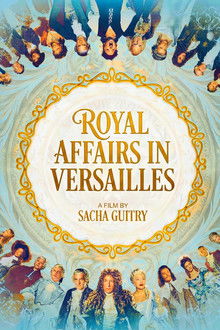
Witty narration follows the history of Versailles Palace; founded by Louis XIII, enlarged by autocratic Louis XIV, whose personal affairs and amours, and those of his two successors, are pursued in more detail to the start of the Revolution, after which the story is brought rapidly up to date.
France, Song
Song chronicle of France in the 60s. The film introduces the work of famous French chansonnier singers.