Personal Info
Known For
Gender
Birthday
Place of Birth
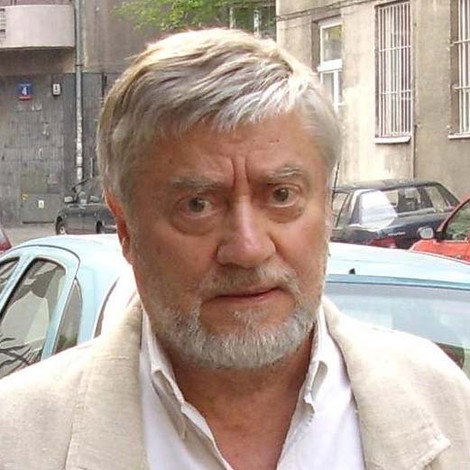
Janusz Michałowski
Known for

Przygody Joanny
Christmas is coming. Little Ania dreams of a doll she saw in a shop window.

Boża podszewka. Część druga
Boża podszewka. Część druga

Sexmission
Two scientists are chosen as guinea pigs for a time experiment: they are placed in hibernation and should be brought back to life after three years. In the meantime, however, World War III breaks out and life has been wiped off the surface of Earth. When they wake up, it turns out that not only 50 years have passed but also that they are the only living specimens of the male sex in a new, underground society composed exclusively of women.

The Master and Margarita
The Master and Margarita is a Polish television production of Polish Film Producers Teams, based on the novel by Mikhail Bulgakov.

Boża podszewka
God's Lining presents the dramatic fate of Marianna Jurewiczówna, her family, and the inhabitants of the Vilnius region from 1900 to 1945. The series begins in 1900, when Marianna, the youngest child of Maria and Andrzej Jurewicz, is born. Through Maryśka's eyes, we meet a succession of characters passing through the manor: the order-takers (Bartłomiej), the slackers (e.g., Mickiewicz), the peasant farmhands (e.g., Antośka), the servants (e.g., Walunia), and various misfits, rejected and ridiculed (e.g., the foolish Maryla), just like the main character. Marianna Jurewiczówna is called "niedonosek" by her family because of her premature birth; she feels unloved and rejected, misunderstood, and different. The series concludes in 1945, during the so-called first repatriation.

Synthesis
In 2059 scientists manage to revive two people after 80 years of suspended animation - a boy Marek Torlewski and a dictator Muanty, who quickly becomes a serious threat to humanity. Synteza is an adaptation of a novel by Maciej Wojtyszko.

Public Prosecutor
District attorney Kazimierz Proch with policeman Witold Kielak tries to figure out what happened with his family.

Nightmares
Set before the first World War in part of Poland under Austrian occupation, the story of a young boy in primary school who later grows up to become a rebellious, poetic-minded teen in the same school when the national movement toward liberation is under way. The story of a country where church and state work together to suppress the human spirit.

Faustina
Faustina is a 1995 Polish film directed by Jerzy Łukaszewicz about Blessed Sister Faustina Kowalska, a saint of the Roman Catholic Church who was canonized by Pope John Paul II in 2000. It is the first feature film of its kind in Poland, and far from the path of modern cinema.

Zakręt
A psychological study of a successful man, completely devoted to his professional work, for whom the first vacation in years becomes an opportunity to reflect on the illusory value of civilizational progress, opposed to the purity and harmony of the natural world, and to compare his own life with the model of others. Stefan is in charge of the construction of a large investment. He fears imminent old age. He visits a friend who lives in a mountain solitude. They witness a tragic accident - a young mountaineer falls off a cliff. They bring help. Stefan notices the emptiness of his family life. His wife wants to leave him, he still believes in the possibility of saving their marriage. During a trip together they get into a car accident. An encounter with Stefan's son, Andrew, occurs, forcing him to make a harsh assessment of his life.
Polish Cuisine
A Polish lieutenant from the Royal Air Force comes home with his British wife and faces political persecution.

Darmozjad polski
A slice of life type movie. A main plot goes around showing common behavior and psychological portraits of inhabitants of a typical little town in Poland.

An Uneventful Story
A well-known professor of medicine finding himself at the threshold of autumn of his life, takes stock of his achievements and experiences. "In the end it ends with what has been known for a long time: that conscious life without a fixed worldview is not life, but torment, horror. - wrote Anton Chekhov in one of his letters summarizing "An Uninteresting Story". The protagonist, Professor Nikolai Stepanovich, is a character characteristic of Chekhov's entire oeuvre - a Russian intellectual from the late nineteenth century, depressed by boredom and a sense of his own uselessness and the meaninglessness of his existence.

Lava
On the eve of the Day of the Dead, among mysterious old rituals of the Vilnius region, ghosts of the past and present start to appear.