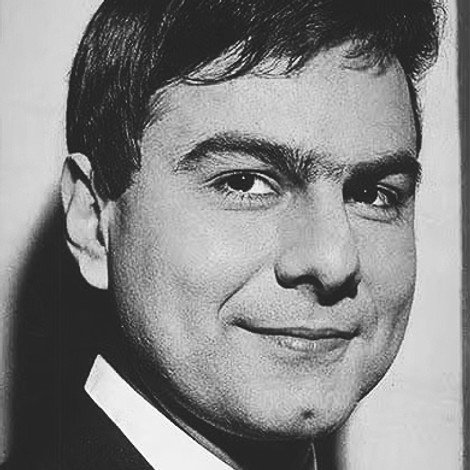
Personal Info
Known For
Gender
Birthday
Place of Birth
Agnaldo Rayol
Biography
Known for

The Trapalhões
Os Trapalhões was a Brazilian comedy group and also a Brazilian television series created by Wilton Franco. Its members were Dedé Santana, Zacarias, Mussum and their leader Didi Mocó, that was played by Renato Aragão. The name Trapalhões is derived from the Portuguese verb atrapalhar, which means the opposite of helping, to do something the wrong way or to Those that confuse. The name is translated "Tramps" in English DVD subtitles. It was aired by Rede Globo from 1977 to 1999. On March 18, 1990, Zacarias died due to respiratory failure, but the group and the series didn't come to an end until July 29, 1994, when Mussum died due to an unsuccessful heart transplant.

Os Imigrantes
In Europe, at the end of the 19th century, social policies sent thousands of immigrants out of their countries. A Spaniard, a Portuguese, and an Italian seek new opportunities in the new country, without imagining the difficulties along the way.

As Pupilas do Senhor Reitor

Casseta & Planeta, Urgente!
Casseta & Planeta is a Brazilian group of comedians who run a TV show named Casseta & Planeta Urgente, broadcast by Rede Globo. The humour featured on the show is mostly satirical, relating to religious or ethical groups, and minorities. The group founded a company called Toviassu Produções Artísticas, whose name is an acronym composed of syllables from the phrase "Todo viado é surdo" – "Every gay is deaf"; which is the ending of a widely known Brazilian practical joke. Each one of the seven members has a specific function within the company. They present their TV show at Rede Globo and publish a website and many books, among other products, for example the "Machobol". Originally a magazine named Casseta Popular and a humour newspaper called O Planeta Diário, the two teams joined forces and were hired by Rede Globo to become writers for the network's comedy shows, starting with TV Pirata in 1988. A few years later, they starred in their own show.
Dead Gods
In 1889, a conflict arose between the decadent and ruined rural aristocracy following the liberation of slaves and a new class of wealthy individuals, comprised of entrepreneurs emerging from the republican industrial class, interested in free labor. In the city of Ouro Negro, in the interior of São Paulo state, the conservative, aristocratic, and monarchist Almeida Santos family, which traditionally dominated the region, began to lose ground to the Lobo Ferraz family, representing the nascent progressive and republican bourgeoisie.

Vitória Bonelli
Como Salvar Meu Casamento
O Caminho das Estrelas
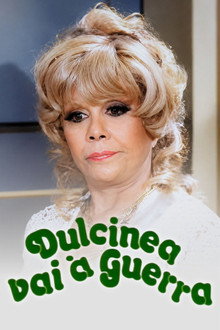
Dulcinéa Vai à Guerra
With new debts, the comedic Dulcinéa is struggling to save her theater once again when she meets the street children Caco, Minga, Cristina, Márcia, and Mico and gets the idea to put on a children's show to turn things around, but taming the little rascals is an arduous task. The new owner of the building, the Count of Castelnuovo, can't wait for the theater to close to build a commercial building, plotting to ruin Dulcinéa's plans and counting on the help of social worker Helena to get rid of the children. The Count also prevents his daughter, Jerusa, from dating the humble Thales because he wants her to marry the wealthy old man Camilo Batateira, putting the housekeeper Murcia to watch over her. There's also the romance between Carolina and Marcelo, thwarted by the wicked Ludmila, and the comical messes created by Lucrécia to prevent her son Mateus from marrying Mariana and leaving home.
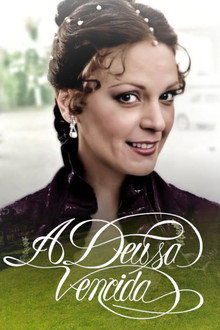
A Deusa Vencida
São Paulo, late 19th century. The nobleman Lineu Maciel, from a traditional São Paulo family, loses his entire fortune gambling. The problem could be solved by marrying his daughter, the beautiful Cecília, to the young Edmundo Amarante, son of the wealthy merchant Jorge Amarante. However, Edmundo's miserly father hates the Maciel family, even more so because they are ruined, and promises to disinherit his son if the marriage takes place.

Sessão +SBT
Mãe
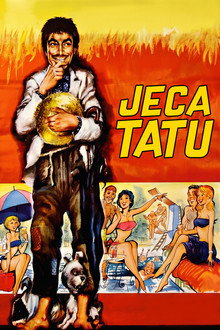
Jeca Tatu
Jeca Tatu is a lazy, simple-minded guy who has his property threatened by the greed of a landowner.

Hebe: Um Brinde à Vida
Hebe's story confounds with that of Brazilian TV. Find out what she was like behind the cameras: her passions, disappointments and how she became one of the greatest icons of Brazil.

Mazzaropi
A documentary on the life and work of Amácio Mazzaropi, a phenomenon of popularity and profitability of Brazilian cinema.