Personal Info
Known For
Gender
Birthday
Place of Birth
Bronisław Pawlik
Known for

Dekalog
The Ten Commandments, exact and uncompromising, literally cast in stone, continues to provide a source of moral conflict in contemporary society. In the ten part collection of films, The Decalogue, Krzysztof Kieślowski examines the dilemma of fundamental sin in the lives of ordinary Warsaw citizens.
The Doll
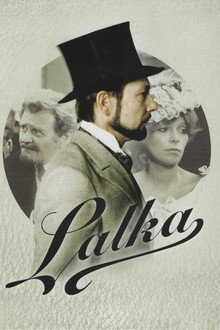
The story of Stanisław Wokulski, a wealthy merchant who falls in love with a haughty aristocrat, Izabela Łęcka. Causing a misalliance in the late nineteenth century Warsaw. Young Wokulski is forced to work as a waiter, while dreaming of a life in science. After taking part in the failed uprising, he is sentenced to exile in Siberia. Upon return to Warsaw, he becomes a salesman. Marrying the late shop owner's widow, he becomes rich, He uses his money set up a partnership with a Russian merchant, met in the exile. The two makes a fortune supplying the Russian army. Wokulski falls in love with Izabela, daughter of the bankrupt aristocrat. In his quest to win her, he ventures theatres and aristocratic salons. To help her financially distressed father, he founds a company with the aristocrats as shareholders. Wokulski ability to make money is respected, but his lack of social rank is often brought. Izabela eventually accepts his affection, but without true devotion or love.

More Than Life At Stake
A series about the adventures of a Polish secret agent, Hans Kloss, who acts as a double agent in the Abwehr during Second World War in occupied Poland.
More Than Life At Stake
A series about the adventures of a Polish secret agent, Hans Kloss, who acts as a double agent in the Abwehr during Second World War in occupied Poland.
More Than Life At Stake
A series about the adventures of a Polish secret agent, Hans Kloss, who acts as a double agent in the Abwehr during Second World War in occupied Poland.

4 Alternative Street
4 Alternative Street was a Polish comedy TV show that was finished in 1983 and aired in 1986 due to censorship. Many famous Polish actors appeared in the series. The filming location used in the mini series was a residential complex which is still in existence at 3 Grzegorzewska Street in Warsaw, Poland. The series was a satire to the communist rule in Poland, spoken in a way that it passed through communist censorship office.

Theatre Macabre
Horror legend Christopher Lee hosts this anthology in the tradition of Alfred Hitchcock Presents, each half-hour episode adapting a story from a classic author, with tales by Edgar Allen Poe, Fyodor Dostoevsky, Ambrose Bierce, Robert Louis Stevenson, and Oscar Wilde.

Polskie drogi
An epic, multi-threaded story about the fate of Poles during World War II. "Czas pogardy" was shown primarily from the perspective of two main characters - Lieutenant Władysław Niwiński and Leon Kuraś - a petty crook, but not without heroic traits. The authors of the series sought to show, in particular, everyday life under Nazi occupation in Poland.

Droga
Marianek is an unlucky man and not successful in his affairs. At the same time, he is a dove-hearted man, sensitive to other people’s misfortunes and harm, willing to help, even at his own expense. He is always ready to solve the problems of others, although he is usually not very good at it. His favorite saying is “absolutely”.

Komedie pomyłek
A collection of intimate television short stories based on well-known literary works.

Subs
"Zmiennicy" is a grotesque comedy of absurdity and reality that masterfully blends slapstick, satire, and surrealism to expose the absurdities of life under communist rule in the People's Republic of Poland (PRL). The story follows Jacek Żytkiewicz, a taxi driver in Warsaw, and his mysterious new shift partner, Katarzyna Piórecka, who disguises herself as a man to get the job. The series is a comedy of the grotesque, filled with exaggerated characters, nonsensical bureaucracy, and surreal plot twists. It mocks the inefficiencies and contradictions of PRL institutions—from corrupt officials and inept police to bizarre workplace dynamics and social hypocrisy. Underneath the absurdity lies a thriller-like subplot: a drug trafficking operation smuggling heroin from Thailand to West Germany. This storyline, featuring shady sports officials, a Thai student, and a crooked firefighter, adds a layer of intrigue reminiscent of American crime dramas.

Niewiarygodne przygody Marka Piegusa

Ziemia obiecana
