Personal Info
Known For
Gender
Birthday
Place of Birth
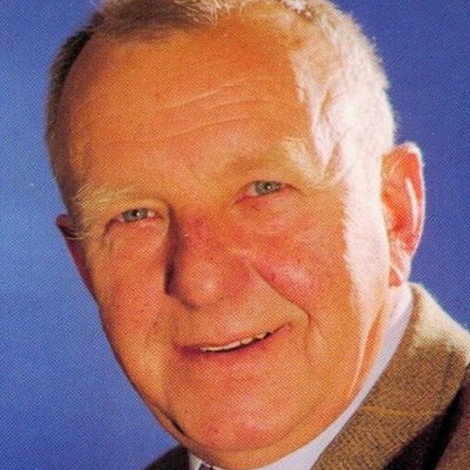
Jerzy Turek
Known for

Dekalog
The Ten Commandments, exact and uncompromising, literally cast in stone, continues to provide a source of moral conflict in contemporary society. In the ten part collection of films, The Decalogue, Krzysztof Kieślowski examines the dilemma of fundamental sin in the lives of ordinary Warsaw citizens.

Dom
The story of the residents of a tenement house on Złota Street in Warsaw from 1945 to 1980.
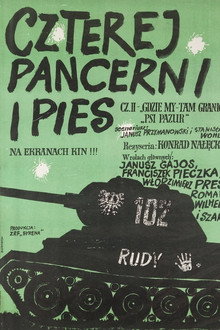
Four Tank-Men and a Dog
Czterej pancerni i pies was a Polish black and white TV series based on the book by Janusz Przymanowski. Made between 1966 and 1970, the series is composed of 21 episodes of 55 minutes each, divided into three seasons. It is set in 1944 and 1945, during World War II, and follows the adventures of a tank crew and their T-34 tank in the 1st Polish Army. Although both the book and the TV series contain elements of pro-Soviet propaganda, they have achieved and retain a cult series status in Poland, Soviet Union and other Eastern Bloc countries. The T-34 tank Rudy with the identifying number "102", a German Shepherd dog from Siberia Szarik and to a lesser extent the crew Jan Kos, Gustaw Jeleń, Grigorij Saakaszwili, Tomasz Czereśniak, and their commander and mentor Olgierd Jarosz, as well as other heroes of the series, have become icons in Polish popular culture.

Janosik
Janosik was a television series that aired in Poland in 1974. It is about a famous Polish highlander outlaw who in folk legends steals money and goods from the rich and helps out the poor. The series was directed by Jerzy Passendorfer. There are 13 1-hour episodes.

Droga
Marianek is an unlucky man and not successful in his affairs. At the same time, he is a dove-hearted man, sensitive to other people’s misfortunes and harm, willing to help, even at his own expense. He is always ready to solve the problems of others, although he is usually not very good at it. His favorite saying is “absolutely”.

Legenda
Three children strike a deep friendship after a chance encounter during World War 2.

Clouds of War
Polish Fanfan, the first Polish series from the "cloak and dagger" - written about the "black cloud" in the press of the 70's. Axis of the plot became a dramatic episodes of the struggle for the maintenance of the Polish Prussia. They remained in feudal depending on the Republic from 1525, when Albrecht Hohenzollern secularized religious state and filed in Krakow tribute to the Polish king.

Trzy młyny
Series based on the stories of Jarosław Iwaszkiewicz “Młyn nad Utrata” (1936), “Młyn nad Lutyniu” (1946) and “Młyn nad Kamienna” (1950). The action of the miniseries takes place from 1928 to the 1950s.
Yokohama
An American actress temporarily stops in Warsaw on her way to Japan, where she gets acquainted with the Polish writer.

Kapitan Sowa na tropie
Kapitan Sowa na tropie is a Polish series from 1965 directed by Stanisław Bareja. It was the first Polish criminal series made after World War II.
Kapitan Sowa na tropie
Kapitan Sowa na tropie is a Polish series from 1965 directed by Stanisław Bareja. It was the first Polish criminal series made after World War II.

Unloved
The story of the tumultuous relationship between a Jewish girl called Noemi and a Polish art student named Kamil is set at the outbreak of World War II.

Teddy Bear
En route to London, Bear discovers at the border checkpoint that his passport is missing a few pages, which may prevent him from traveling to the city with the sports team he manages.

Wszystkie pieniądze świata