
Personal Info
Known For
Gender
Birthday
Place of Birth
Norbert Heckner
Known for

The Old Fox
A police department, lead by an older, experienced detective solve crimes together.

Die Rosenheim-Cops
A team of inspectors investigates murders in and around the small Upper Bavarian town of Rosenheim, and they still have plenty of time to see idyllic landscapes and luxurious pre-alpine villas and enjoy sumptuous Bavarian fare with beer.
Die Rosenheim-Cops
A team of inspectors investigates murders in and around the small Upper Bavarian town of Rosenheim, and they still have plenty of time to see idyllic landscapes and luxurious pre-alpine villas and enjoy sumptuous Bavarian fare with beer.
Die Rosenheim-Cops
A team of inspectors investigates murders in and around the small Upper Bavarian town of Rosenheim, and they still have plenty of time to see idyllic landscapes and luxurious pre-alpine villas and enjoy sumptuous Bavarian fare with beer.
Die Rosenheim-Cops
A team of inspectors investigates murders in and around the small Upper Bavarian town of Rosenheim, and they still have plenty of time to see idyllic landscapes and luxurious pre-alpine villas and enjoy sumptuous Bavarian fare with beer.
Die Rosenheim-Cops
A team of inspectors investigates murders in and around the small Upper Bavarian town of Rosenheim, and they still have plenty of time to see idyllic landscapes and luxurious pre-alpine villas and enjoy sumptuous Bavarian fare with beer.

Polizeiruf 110
Polizeiruf 110 is a long-running German language detective television series. The first episode was broadcast 27 June 1971 in the German Democratic Republic, and after the dissolution of Fernsehen der DDR the series was picked up by ARD. It was originally created as a counterpart to the West German series Tatort, and quickly became a public favorite.

Die Chefin
First Police Chief Inspector Vera Lanz, a Munich police detective, attempts to balance her professional and private life.

Der Bulle von Tölz

Hausmeister Krause – Ordnung muss sein
Hausmeister Krause – Ordnung muss sein is a German sitcom with Tom Gerhardt in the title role, shown from 1999 through 2010 on Sat.1. The series parodies typical German "squareness". Half-day janitor Dieter Krause is the embodiment of the German "square"; he is pernickety, blindly follows order, denounces others, is nosy, consistently puts his own interests above all else, acts subservient to his superiors and is brutish and unjust to those he deemes below him. Many plot elements — mishaps, misunderstandings, and frequent cases of mistaken identity — originate from Boulevard theatre. The characters in the series borrow heavily from those in Tom Gerhardt's film Voll normaaal, in many cases sharing names. In Voll normaaal, Tom Gerhardt played the roles of both Dieter and Tommie Krause; in Hausmeister Krause, Tommie was played by Axel Stein. Daughter Carmen is played by Janine Kunze. Other characters from Voll normaaal, such as Tommie's friend Mario, are relegated to the status of background characters. The scope of action also changed.

Der Bergdoktor
Der Bergdoktor is a German-Austrian medical drama television series, broadcast in 96 episodes between 1992 and 1997.

Downfall
In April of 1945, Germany stands at the brink of defeat with the Russian Army closing in from the east and the Allied Expeditionary Force attacking from the west. In Berlin, capital of the Third Reich, Adolf Hitler proclaims that Germany will still achieve victory and orders his generals and advisers to fight to the last man. When the end finally does come, and Hitler lies dead by his own hand, what is left of his military must find a way to end the killing that is the Battle of Berlin, and lay down their arms in surrender.

Auf dem Nockherberg

Brettl-Spitzen – Die Volkssänger-Revue
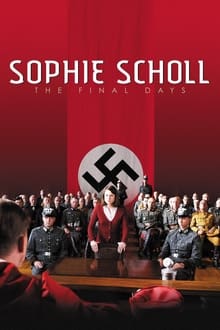
Sophie Scholl: The Final Days
In 1943, as Hitler continues to wage war across Europe, a group of college students mount an underground resistance movement in Munich. Dedicated expressly to the downfall of the monolithic Third Reich war machine, they call themselves the White Rose. One of its few female members, Sophie Scholl is captured during a dangerous mission to distribute pamphlets on campus with her brother Hans. Unwavering in her convictions and loyalty to the White Rose, her cross-examination by the Gestapo quickly escalates into a searing test of wills as Scholl delivers a passionate call to freedom and personal responsibility.