Personal Info
Known For
Gender
Birthday
Place of Birth
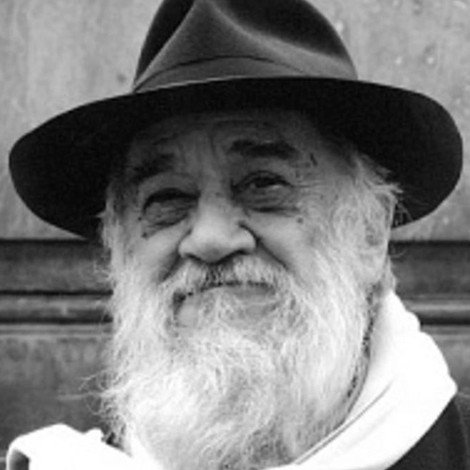
Fernando Birri
Biography
Known for

Non ho tempo

Sierra Maestra
An Italian journalist is arrested in Venezuela by the military, accused of being a revolutionary. The journalist, interviewed by the press, says he has no connection with the guerrilla organizations and is thrown into jail and subjected to psychological and physical violence.

The Cheerful Squadron
The Cheerful Squadron is a 1954 Italian war-comedy film directed by Paolo Moffa and Interpreted by movie stars like Paolo Stoppa, Vittorio De Sica, Alberto Sordi and Silvana Pampanini. Based on the military environment novel The Allegro Squadron by Georges Courteline (1886), this film presents a series of sketches on military life in the late nineteenth century.

Carpani, vida y obra
A journey through the life and work of artist Ricardo Carpani, his artistic and ideological formation, and the importance of his pictorial output, considered a symbol of the political struggle of the 1950s, 1960s, and 1970s. Once the rise of state terrorism began, Carpani was forced into exile and spent ten years in Europe. During this period, he continued his political commitment, creating works that denounce the horrors experienced in Argentina during those years.

El Fausto Criollo
A version of El Estatola del Campo's poetic Faust of the Poet (1886) integrates the major trilogy of Argentine gaucho poetry, is proposed here in a faithful version and integral.

Donde comienza el camino
The journey of Fernando Birri, the great father of New Latin American Cinema, has left a mark that begins at the legendary Santa Fe Documentary School and continues to this day. His methods, influences, his founding role, his poetic-political commitment, and his artistic output are some of the milestones that make up his journey.

Claves, 2: We will return younger
Documentary in four parts on Latin American cinema. Second episode, evoking the border between fiction and documentary. With his film Tire dié (1960), the Argentinian Fernando Birri proposed this manifesto: to create a realistic and critical national cinema, closer to society without falling into populism.

Jorge Giannoni: NN, ese soy yo
Jorge Giannoni isn't a hero; he's a witness to the darkest part of the history of independent cinema in our country, and of an entire generation; a story that saw him present alongside Raymundo Gleyzer and Glauber Rocha in the turbulent Brazil of the 1960s, during the French May as a producer for RAI, in his work as a face-hunter for Fellini, and in film production from Cuba, making documentaries critical of the Trial; a history riddled with encounters, disagreements, exiles, frustrations, burned negatives, and a few triumphs.

Attila
Attila, the leader of the barbarian Huns and called by the Romans "The Scourge of God", sweeps onto the Italian peninsula, defeating all of the armies of Rome, until he and his men reach the gates of the city itself.

Mario Verdone: Il critico viaggiatore

Vanishing Landscapes
A mockumentary about three young student filmmakers as they make a movie about an alleged film director living obscurely in a Buenos Aires mental hospital. In their visits to the mental hospital, the three students will forge a very special relationship with the self-styled former film director as they follow different clues and strategies to discover his 'true' identity.

Osvaldo Bayer “La livertá”
Throughout his 87 years, the anarchist historian, journalist and writer Osvaldo Bayer was one of the greatest exponents of a sustained commitment to his liberation struggles, illuminating the past so that the present and future are increasingly emancipatory. But, as this documentary by Gustavo Gzain demonstrates, using the past tense is difficult to describe the peaceful battles of Bayer, who is still an active defender of human rights.

Tie Your Plow to a Star
In 1997 the Argentine filmmaker Fernando Birri returned to his home country to film a documentary on the 30th anniversary of the death of Che Guevara and the relevance of utopias at that time. Carmen Guarini decided to record those moments. A rough edit of this film was hidden away on a fragile VHS tape for twenty years. Today, these images come to life and shed some light on the life of this Latin American poet and master filmmaker, who, at the age of 92, still refused to give up on his own utopias.

Ho ritrovato mio figlio
A young boy, about to take his first communion, must wrestle with his familial loyalty and his conscience when there is a fire at their local cinema where his brother works and it is clear that he is involved in the theft of the projector. Determined to right the wrong done by his sibling, he attempts to make amends.
Fernando Birri, el utópico andante
Documentary film about Argentinian filmmaker Fernando Birri. An interview: a journey through documentary filmmaking, his childhood, the dawning of New Latin American cinema...