
Personal Info
Known For
Gender
Birthday
Place of Birth
Tengiz Archvadze
Known for
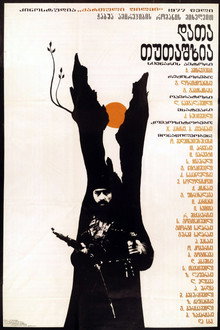
Data Tutashkhia
A just man becomes an outlaw. He is pursued by the police over the years, while he tries to fight the injustice in the world, but he can't figure out the minds of his fellow men, and is often misunderstood.

The Stars Don't Fade
The film consists of several novels reproducing the most vivid pages of the biography of the first Chairman of the Council of People's Commissars of Azerbaijan Nariman Narimanov (1870-1925).

The Red Tent
Torn by personal guilt, Italian General Umberto Nobile reminisces about his 1928 failed Arctic expedition aboard the airship Italia.
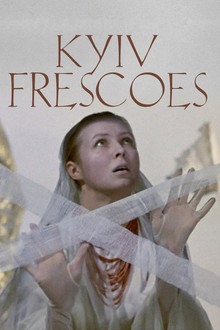
Kyiv Frescoes
Parajanov's collage of all the footage that remained from his film "Kyiv Frescoes," which was halted by the Soviet authorities who demanded that all the negatives be destroyed.

Escape to the End of the World

Only Death Comes
A man has died in a mountain village. The bandsmen are forbidden to accompany the deceased to the cemetery. There is a war going on, and this is the border that the locals are not allowed to cross...

Parajanov Triptych
Three short films by Sergei Parajanov, Hakob Hovnatanyan (1967), Kyiv Frescoes (1966) and Arabesques on the Theme of Pirosmani (1986). Scanned and restored from the original camera negatives in 4K by Fixafilm. Produced in association with National Cinema Centre of Armenia (NCCA), Dovzhenko Centre and Georgian Film. Scans for Hakob Hovnatanyan and Arabesques on the Theme of Pirosmani financed by Kino Klassika.

The Book of Oath
The tragic events in Georgian history, spanning from the 16th to the 18th centuries, culminated in the signing of the Treaty of Georgievsk in 1783, which placed Georgia under Russian protection.

Like a Morning Mist
A lonely provincial man asks his childhood friends to come to his hometown. He is forced to explain the reason for their gathering to his surprised friends by the unexpected invitation.

Cinema
At the end of the 20th century, the son of a distinguished family, Sosiko Cholokashvili, became interested in cinematography, a field unknown to the public. Despite his inexperience, financial difficulties, and disappointment, one of the first enthusiasts of Georgian cinema recorded many shots depicting the appearance and existence of old Tbilisi on tape.

Don't Believe that I'm No Longer Here
The film is based on a real story. Climbers found the purse of a military postman killed during World War II, letters sent 30 years later.

Not Every Comet Dies Down
The film recounts a meeting between veterans of the WWII at the site of former battles.

Before Rain Stops Pouring
Salome, a former teacher, constantly lectures her student son, Gia, about morality and the perceived indifference of modern youth. Gia finds her mother’s views outdated. Seeking to help Gia clarify her values, Salome asks her husband, Vakhtang, for assistance. After speaking with his son, Vakhtang realises that Gia is a decent young man who lives in accordance with the current times. However, Salome’s illness disrupts the family dynamics. Father and son decide to fulfil Salome’s dream and take her on a trip to Lithuania.

The Right Hand of the Grand Master
It is set during the 11th century and tells of the reign of King George I. He is at war with Byzantine Empire ruled by Basil II. Apart from ongoing war, he has to fight rebellious Georgian tribes. Problems occur when King George falls in love with Shorena. For her, the King is willing to go against the church. The story is based on famous novel by Konstantine Gamsakhrudia.

Meeting With The Past
In the early twenties, with the advent of Soviet power, a difficult period of collectivization began in a small Georgian mountain village. Nino leaves his native village. Years pass, becoming a famous surgeon, she comes to celebrate the thirtieth anniversary of the collective farm. On the day of her arrival, an unknown tramp is found in serious condition on the riverbank. Upon starting the operation, Nino recognizes this man as her ex-husband. The surgeon's thoughts go back to those distant days...