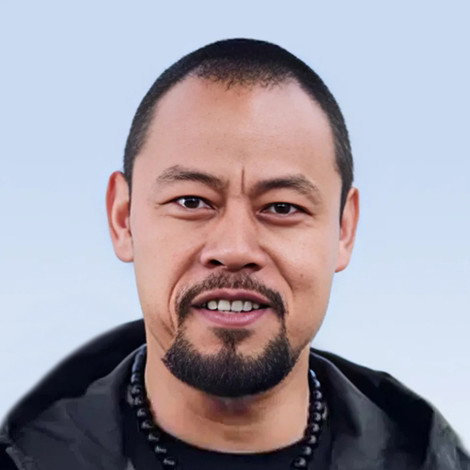
Personal Info
Known For
Gender
Birthday
Place of Birth
Jin Song
Biography
Known for

Strange Tales of Tang Dynasty
General Lu Lingfeng and Detective Su Wuming uncover supernatural mysteries and hidden conspiracies threatening the empire during Emperor Xuanzong’s reign.

All Men Are Brothers
Toward the end of Northern Song Dynasty, the government was deeply corrupted. The oppressed people finally rebelled. A hundred and eight men and women fought against the government and took their last stand in a place called Liangshan.

Faith Makes Great
One hundred years since the founding of the Communist Party of China, Faith Makes Great tells stories from different times in history that chronicle the people's endless struggle to realize their dream of rejuvenating the nation.

The Emperor in Han Dynasty
The Emperor in Han Dynasty,[1] also released under the title The Emperor Han Wu in some countries, is a 2005 Chinese historical television series based on the life of Emperor Wu of the Han dynasty. It uses the historical texts Records of the Grand Historian and Book of Han as its source material. The series covers the life of Emperor Wu from his early childhood to his death and some events in the reign of Emperor Jing (Emperor Wu's father and predecessor), such as the Rebellion of the Seven States. It follows the conflicts that defined the pivotal war between the Han Empire and the Xiongnu, and depicts the major victories that the Han scored over the Xiongnu during Emperor Wu's reign. Prominent historical figures such as the generals Li Guang, Wei Qing and Huo Qubing, as well as the diplomats Su Wu and Zhang Qian, also make appearances as supporting characters in the series.

Heavenly Sword and Dragon Sabre
Based on the popular novel by Jin Yong Kam Yung. He also wrote Legend of the Condor Heroes and Return of the Condor Heroes. The Heavenly Sword and Dragon Sabre takes place during 14th Century China during the Mongolian Yuan Dynasty, roughly 100 years after the events of Return of the Condor Heroes. After decades of struggles, famine, and bitterness which the Chinese citizens blamed on the Yuan Dynasty's misgovernment, the Martial Arts sects have begun to rebel. Prince Ruyong asks Cheng Kun, a Shaolin monk with an ulterior motive, for a plan on how to deal with the rebels. "The wielder of Heavenly Sword and/or Dragon Sabre rules the world." This well known legend in the Martial Arts community is the impetus for the tale of Zhang Wuji. The story begins with how his parents met (episodes 1-3), then tells his trials as an adolescent (episodes 4-8), proceeds to relate his rise to prominence (episodes 9-23) and reveals the secret behind Heavenly Sword and Dragon Sabre (episode 23), and ends with the confluence of Wuji's love life, the Martial Arts sects' long standing grudges, and cruel fate.

Heroes
The drama tells the story of a group of individuals with different backgrounds who were unexpectedly drawn into a mysterious treasure-hunting journey during the late Qing Dynasty. Amidst the grand and tumultuous historical tide, they gradually strengthened their ideals of saving the country.

Zen Master
China's Southern Song Dynasty was troubled by external troubles and internal troubles, and people's hearts were unstable. At this time, a monk called Ji Lu appeared in Lin'an City, and later generations were even more regarded as Ji Gong. Jigong acts insanely and does not obey the Buddhist precepts, but he is brilliant in magic and heals people everywhere, but he does not know how to deal with emotional disputes. In order to experience love, Jigong bravely broke through the love barrier and caused bruises all over his body ...

战神

The Myth
When a fellow scientist asks for Jack's help in locating the mausoleum of China's first emperor, the past collides violently with the present as Jack discovers his amazing visions are based in fact.

Sisters
In a war-torn era, three sisters face betrayal, lost love, and hidden family secrets while striving to protect their family's tea business. As their homeland faces danger, they set aside personal struggles, uniting to defend their legacy and land.

借问英雄何处

Peach Blossoms in Storm

狼毒花

摩登岳父
