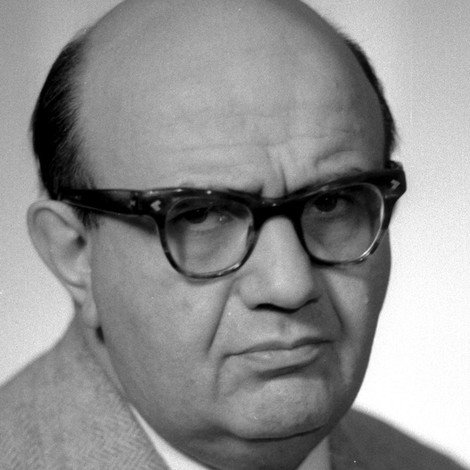
Personal Info
Known For
Gender
Birthday
Place of Birth
Aleksander Bardini
Biography
Known for

Inspector Rex
After his handler is killed, police dog Rex teams up with recently-divorced inspector Richard Moser to investigate crimes and solve mysteries on the streets of Vienna. And they sometimes get help from their two-legged friend, Inspector Stockinger.

Dekalog
The Ten Commandments, exact and uncompromising, literally cast in stone, continues to provide a source of moral conflict in contemporary society. In the ten part collection of films, The Decalogue, Krzysztof Kieślowski examines the dilemma of fundamental sin in the lives of ordinary Warsaw citizens.

Three Colors: White
Polish immigrant Karol Karol finds himself out of a marriage, a job and a country when his French wife, Dominique, divorces him after six months due to his impotence. Forced to leave France after losing the business they jointly owned, Karol enlists fellow Polish expatriate Mikołaj to smuggle him back to their homeland.

Schwarz Rot Gold
Crime series about Hamburg customs investigator Hans Zaluskowski, who joins forces with his colleagues to take on smugglers and fraudsters. In doing so, he not only has to contend with opaque EU customs regulations, but also solve tricky cases with international implications.

Theatre Macabre
Horror legend Christopher Lee hosts this anthology in the tradition of Alfred Hitchcock Presents, each half-hour episode adapting a story from a classic author, with tales by Edgar Allen Poe, Fyodor Dostoevsky, Ambrose Bierce, Robert Louis Stevenson, and Oscar Wilde.

The Double Life of Véronique
Véronique is a beautiful young French woman who aspires to be a renowned singer; Weronika lives in Poland, has a similar career goal and looks identical to Véronique, though the two are not related. The film follows both women as they contend with the ups and downs of their individual lives, with Véronique embarking on an unusual romance with Alexandre Fabbri, a puppeteer who may be able to help her with her existential issues.

Prince of Shadows
Madrid, 1962. More than twenty years after the civil war has finished, a communist comes back to Spain to kill a traitor.

Polskie drogi
An epic, multi-threaded story about the fate of Poles during World War II. "Czas pogardy" was shown primarily from the perspective of two main characters - Lieutenant Władysław Niwiński and Leon Kuraś - a petty crook, but not without heroic traits. The authors of the series sought to show, in particular, everyday life under Nazi occupation in Poland.

Dotknięci
Jan weds his mentally ill wife Joanna at her insistence, but her increasing dependence on sedatives, and the clandestine extra pills supplied by Jan, their son Piotr and Jan’s friend Maria, leads to Joanna’s fatal overdose. Accused of murder, Jan endures a trial, psychiatric evaluation and deep depression before the case is dropped; only after reconciling with his children does he finally leave the clinic to return home.

Long Is the Road
The first feature film to represent the Holocaust from a Jewish perspective. Shot on location at Landsberg, the largest DP camp in U.S.-occupied Germany, and mixing neorealist and expressionist styles, the film follows a Polish Jew and his family from pre-war Warsaw through Auschwitz and the DP camps.

The Gorgon Case
In 1931, just before the New Year, in a house of architect Henryk Zaremba scream rips the night. The daughter of Zaremba is found killed in her bedroom, obviously killed with a pickaxe. The police arrives and starts the investigation. Rita Gorgonova, the governess of the girl and also lover of Zaremba becomes the main suspect.

Salvation
A biology professor, Adam enters a hospital for observation. He is a loner and a serious-minded man, who dislikes any display of emotions. He spends three months in the hospital while being tested. After observing patients and hospital routines around him from a distance, he learns that he will need a kidney transplant. Meanwhile his personal and professional life is falling apart: he refuses his wife's offer to donate the kidney for him; the scientific problem he was working on has been solved elsewhere. In the end Adam cracks under the prolonged pressure, waiting for the sound of an ambulance bringing a moribund patient whose kidney may be used for the transplant.


Decalogue IV
A father and daughter, Michał and Anka, have a unique intimacy, which the college-aged Anka is beginning to feel conflicted about. When she finds an unopened letter from her deceased mother, it seems to justify her attraction to Michał, who may not in fact be her father.