Personal Info
Known For
Gender
Birthday
Place of Birth
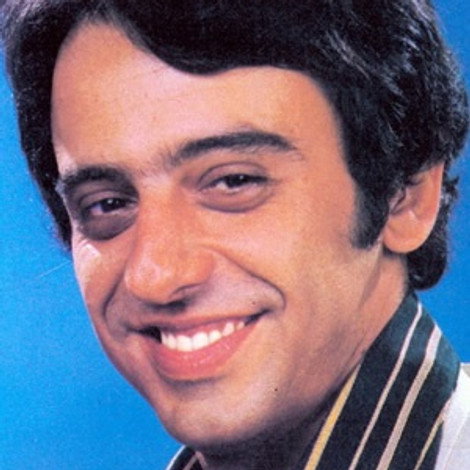
Luiz Armando Queiroz
Known for

The Trapalhões
Os Trapalhões was a Brazilian comedy group and also a Brazilian television series created by Wilton Franco. Its members were Dedé Santana, Zacarias, Mussum and their leader Didi Mocó, that was played by Renato Aragão. The name Trapalhões is derived from the Portuguese verb atrapalhar, which means the opposite of helping, to do something the wrong way or to Those that confuse. The name is translated "Tramps" in English DVD subtitles. It was aired by Rede Globo from 1977 to 1999. On March 18, 1990, Zacarias died due to respiratory failure, but the group and the series didn't come to an end until July 29, 1994, when Mussum died due to an unsuccessful heart transplant.
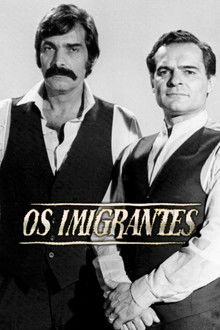
Os Imigrantes
In Europe, at the end of the 19th century, social policies sent thousands of immigrants out of their countries. A Spaniard, a Portuguese, and an Italian seek new opportunities in the new country, without imagining the difficulties along the way.
Os Imigrantes
In Europe, at the end of the 19th century, social policies sent thousands of immigrants out of their countries. A Spaniard, a Portuguese, and an Italian seek new opportunities in the new country, without imagining the difficulties along the way.
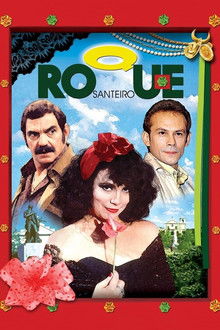
Roque Santeiro
In the tiny poor town of Asa Branca, in the middle of Brazilian Northeast, Roque Santeiro is worshiped as a saint. He was supposedly killed by a bandit, 18 years ago, trying to save the local church. After his disappearance, local leaderships such as landowner Sinhozinho Malta and mayor Florindo, took profit on that to control the humble population. They even make up a widow, Porcina, who should have married Roque secretly before his death. What they don't expect is that Roque is alive, and he's back to, allegedly, "save his people". Now Malta, Florindo, Porcina, and others must hold him down and explain the "truth" to their commoners, in a desperate attempt to save their own bottoms. Meanwhile, mysterious facts surround Asa Branca, such as a Werewolf, a film crew who are trying to shoot a movie about Roque's story, and violent murderers.

Selva de Pedra
Amidst an unresolved crime, Simone protects Cristiano and falls in love with him. However, the couple faces ambition and betrayals that tear them apart. Presumed dead, she returns under a new identity seeking revenge.
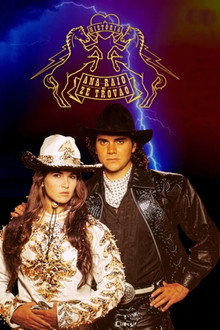
A História de Ana Raio e Zé Trovão
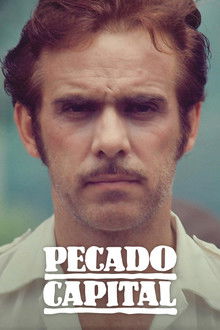
Pecado Capital
Carlão is a taxi driver who experiences a drama of conscience after fleeing bank robbers leave a suitcase with stolen money in his car: he doesn't know whether to hand it over to the police, running the risk of being accused of being an accomplice in the robbery, or whether to use the money to solve his problems.

Telerromance
Telerromance
Telerromance

Água Viva
Nelson, a fishing champion, and his brother Miguel, a renowned plastic surgeon, compete for the love of Lígia, an ambitious woman who seeks to climb the social ladder by any means necessary.

Estúpido Cupido
The story is set in the fictional city of Albuquerque, in the interior of São Paulo, in the early 1960s – a time marked by changing behaviors in much of the world. There, young people enjoy the sounds of rock and twist on the dance floors, follow the fashion of jeans and leather jackets, and show off on Lambrettas and motorcycles through the city streets. In this context, Maria Tereza, a student teacher, dreams of living in the capital and being elected Miss Brazil, but clashes with her boyfriend, João. An idealistic young man who intends to pursue a career in journalism, he is consumed by jealousy of his beloved.
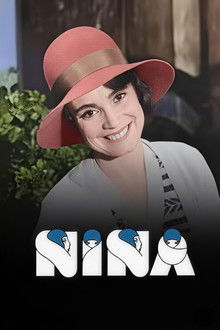
Nina

Um Sonho a Mais
The story begins with the arrival of millionaire Antônio Carlos Volpone in Brazil. After living in Cairo for 18 years, he returns to his homeland for two reasons: first, to clarify the murder of his father-in-law, Dr. Telles, of which he was accused; second, to get closer to his ex-wife Estela, now married to Orlando Aranha. The millionaire also attracts media attention, and reporter Amélia Bicudo decides to investigate his life. To mislead his enemies and move freely, Volpone uses numerous disguises: the executive Anabela Freire, the doctor Nilo Peixe, the industrialist Augusto Melo Sampaio, and the driver André Silva. With the help of his loyal secretary and friend, Mosca, he confronts his main rival, Orlando Aranha, and Renata, Orlando's sister, who holds secrets about the murder of Estela's father.