Personal Info
Known For
Gender
Birthday
Place of Birth
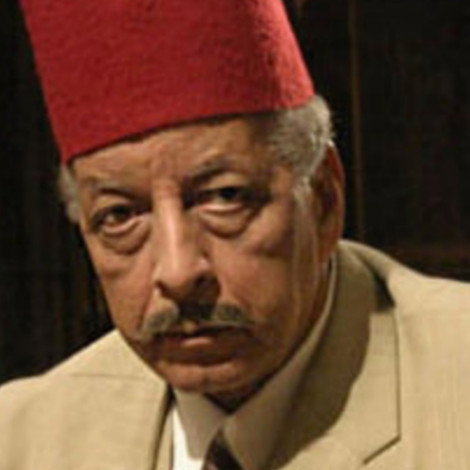
Khalil Morsi
Biography
Known for

Zezenia
Set in Alexandria during the 1940s, at the height of the city's cosmopolitan golden age, Zezenia follows Bishr — the son of an Egyptian father and Italian mother — as he navigates a fractured sense of identity torn between East and West. Against a backdrop of World War II, mixed nationalities, and a society on the brink of change, the series is a sweeping portrait of love, belonging, and the soul of a city.

Bwabet Elhalwani
Bwabet El‑Halawani brings to life the human stories behind Egypt’s transformation during the Suez Canal era. Through craftsmen, families, and dreamers caught in political and social upheaval, the series blends history with personal struggle, showing how ambition, sacrifice, and resilience shaped a defining moment in Egypt’s past.

Al-Gama'a
Al-Gama'a is an Egyptian television drama, Historical and Political drama series written by Wahid Hamid, directed by Mohammed Yasin and produced by Kamel Abu Ali. The series began filming in January 2010 with a budget of 50 million Egyptian pounds. The show deals with the rise of the Muslim Brotherhood, Egypt’s largest Islamist political group, which was officially banned but nonetheless tolerated to an extent before the revolution. Critics have decried the show's pro-government stance, charging that it plays into the Egyptian government's agenda prior to the 2010 Egyptian parliamentary elections.

I Won't Live in My Father's Glbab
The events of the series revolve around the story of the rise from the bottom to the top of Abdel Ghafour Al Borai (Noor Al Sharif), starting from the agency of Hajj Ibrahim Sardinah (Abdul Rahman Abu Zahra) until he becomes a private business owner who makes a fortune, during which he has admired Fatima (Abla Kamel), a saleswoman. Al-Kushari, whom he admired, passes the days and marries Fatima and gives birth to his son Abdel-Wahhab (Mohamed Riyad), and four girls (Sunni, Bahira, Nafisa, and Nazira), and despite the availability of the elements of happiness in the life of Abdel Ghafour Al-Borai, he suffered from the separation of his only son. About him, and Abdel Wahab's insistence on building a very special world away from his father and his influence.

The Hibiscus-Man
This science-fiction show revolves around a mad scientist, known by his friends as the "Al Ragol Al E'naab." The mad scientist concocts an elixir that gives regular human beings supernatural abilities. Though he tries to use his potion to help people, the government hinds him out and goes after him. In the midst of his manhunt, Egypt undergoes a major disaster, prompting the Egyptian government to seek out his help rather than his arrest.

Napoleon And Al Mahrousa
A portrait of the social and political aspects of Egypt during the late 18th-century French campaign, and the most important events that ensued, from Battle of Shubra Khit between Napoleon and the Mamluk leader, Murad Bey, and through the first and second Revolt of Cairo, till the defeat and exit of the campaign.

نابليون والمحروسة

Bab Al Khalq
After the Arabic language teacher travels outside Egypt in despair, he returns after a while to his hometown in Bab Al Khalq to be surprised by many changes that foretell a possibly mysterious future, whereupon he tries to coexist and keep pace with them to ensure the continuation of life.

Never Fear

The Oracle
A crook manages to evade capture for a long time as he switches between various identities that make it difficult for the police to catch him. As he is finally caught by the police officer who has spent his life chasing him, both of them are changed forever by a series of events.

أهل الطريق

Opera Aida
Sayed Abdel Hafiz, famously known as Sayed Opera, is a lawyer famous for the schemes that he uses to defend criminals and drug traffickers. Aida is a skilled doctor who lives in a simple house after her father lost his wealth because of one of Sayed's tricks, until the paths of Opera and Aida cross.

Horseless Knight
Hafez Naguib was raised between his mother's sophisticated family, and his father's poor and modest family. When his father gets killed at the time of the English occupation, he swears to take revenge for him and every other persecuted Egyptian citizen, and leads the life of a true patriot.

Harun Al Rashid
The story of the Abbasid caliph Harun al-Rashid, which depicts the era of the Abbasid state and its historical glory, focusing on the personal life of the Abbasid caliph who was famous for his infatuation with women, and shedding light on his amorous exploits and the feuds of the harem inside the palace.