Personal Info
Known For
Gender
Birthday
Place of Birth
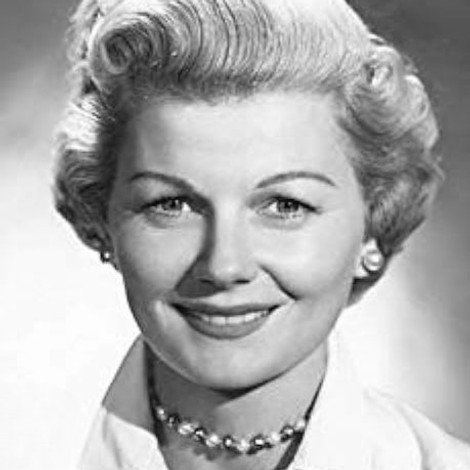
Barbara Billingsley
Biography
Known for

The Love Boat
Passengers who search for romantic nights aboard a beautiful ship travelling to tropical or mysterious countries, decide to pass their vacation aboard the "Love Boat", where Gopher, Dr. Bricker, Isaac, Julie, and Captain Stubing try their best to please them, and sometimes help them fall in love. Things are not always so easy, but in the end, love wins.

Leave It to Beaver
An inquisitive and often naïve boy, Theodore 'The Beaver' Cleaver, has adventures at home, in school, and around his suburban neighborhood. The show also starred Barbara Billingsley and Hugh Beaumont as Beaver's parents, June and Ward Cleaver, and Tony Dow as Beaver's brother Wally. The show has attained an iconic status in the US, with the Cleavers exemplifying the idealized suburban family of the mid-20th century.

Four Star Playhouse
Four Star Playhouse is an American television anthology series that ran from 1952 to 1956, sponsored in its first bi-weekly season by The Singer Company; Bristol-Myers became an alternate sponsor when it became a weekly series in the fall of 1953. The original premise was that Charles Boyer, Ida Lupino, David Niven, and Dick Powell would take turns starring in episodes. However, several other performers took the lead from time to time, including Ronald Colman and Joan Fontaine. Blake Edwards was among the writers and directors who contributed to the series. Edwards created the recurring character of illegal gambling house operator Willie Dante for Dick Powell to play on this series. The character was later revamped and spun off in his own series starring Howard Duff, then-husband of Lupino. The pilot for Meet McGraw, starring Frank Lovejoy, aired here, as did another episode in which Lovejoy recreated his role of Chicago newspaper reporter Randy Stone, from the radio drama Nightbeat.

Murphy Brown
Murphy Brown is a recovering alcoholic who returns to the fictional newsmagazine FYI for the first time following a stay at the Betty Ford Clinic residential treatment center. Over 40 and single, she is sharp tongued and hard as nails. In her profession, she is considered one of the boys, having shattered many glass ceilings encountered during her career. Dominating the FYI news magazine, she is portrayed as one of America's hardest-hitting (though not the warmest or more sympathetic) media personalities.

The F.B.I.
The F.B.I. is an American television series that was broadcast on ABC from 1965 to 1974. It was sponsored by the Ford Motor Company, and the characters almost always drove Ford vehicles in the series. Alcoa was co-sponsor of Season One only.
The F.B.I.
The F.B.I. is an American television series that was broadcast on ABC from 1965 to 1974. It was sponsored by the Ford Motor Company, and the characters almost always drove Ford vehicles in the series. Alcoa was co-sponsor of Season One only.

Empty Nest
Widowed pediatrician Harry Weston is a miracle worker when it comes to dealing with his young patients, but he's more challenged by the other people surrounding him: daughters Barbara and Carol; his wisecracking office assistant, nurse LaVerne Todd; and obnoxious neighborhood mooch Charley Dietz. Thank goodness he always finds a friendly shoulder (and a warm, wet tongue) in Dreyfuss, his enormous dog.

Amazing Stories
A truly amazing, fantastical, science fiction, funny and odd, and sometimes scary, sad and endearing anthology series presented by Steven Spielberg with guest appearances by many famous actors, actresses, and directors.

Mork & Mindy
A wacky alien comes to Earth to study its residents and the life of the human woman he boards with is never the same.

The Ford Television Theatre
This show started in New York City, with Broadway actors and actresses. It then moved to Hollywood, California, where Hollywood actors and actresses headed the cast.

The Danny Thomas Show
Danny Thomas, an entertainer, tries to balance his home life with the needs of his career, with hilarious results.

Monsters
Monsters is a syndicated horror anthology series which originally ran from 1988 to 1991 and reran on the Sci-Fi Channel during the 1990s. Similarly to Tales from the Darkside, Monsters shared the same producer, and in some ways succeeded the show. It differed in some respects nonetheless. While Tales sometimes dabbled in stories of science fiction and fantasy, this series was more strictly horror. As the name implies, each episode features a different monster, from the animatronic puppet of a fictional children's television program to mutated, weapon-wielding lab rats.