Personal Info
Known For
Gender
Birthday
Place of Birth
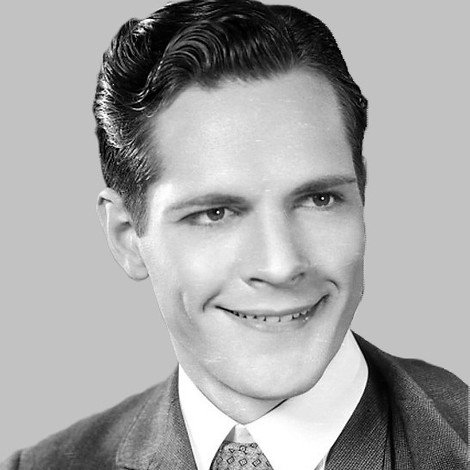
Donald Woods
Biography
Known for

Lassie
Lassie is the pet of Jeff Miller, an 11-year-old farm boy. The two become best friends and enjoy family adventures in the American countryside, teaching each other about love, nature and commitment.

Wagon Train
The series initially starred veteran movie supporting actor Ward Bond as the wagon master, later replaced upon his death by John McIntire, and Robert Horton as the scout, subsequently replaced by lookalike Robert Fuller a year after Horton had decided to leave the series. The series was inspired by the 1950 film Wagon Master directed by John Ford and starring Ben Johnson, Harry Carey Jr. and Ward Bond, and harkens back to the early widescreen wagon train epic The Big Trail starring John Wayne and featuring Bond in his first major screen appearance playing a supporting role. Horton's buckskin outfit as the scout in the first season of the television series resembles Wayne's, who also played the wagon train's scout in the earlier film.

Ironside
When an assassin's bullet confines him to a wheelchair for life ending his career as Chief of Detectives, Robert T. Ironside becomes a consultant to the police department. Detective Sergeant Ed Brown and policewoman Eve Whitfield join with him to crack varied and fascinating cases. Ex-con Mark Sanger is employed by the chief as home help but eventually becomes a fully fledged member of the team also. Officer Whitfield leaves after 4 years service, and is replaced by Officer Fran Belding.

Robert Montgomery Presents
Robert Montgomery Presents is an American dramatic television series which was produced by NBC from January 30, 1950 until June 24, 1957. The live show had several sponsors during its seven-year run, and the title was altered to feature the sponsor, usually Lucky Strike cigarettes, for example, Robert Montgomery Presents Your Lucky Strike Theater, ....The Johnson's Wax Program, and so on.

The Philco Television Playhouse
The Philco Television Playhouse is an American anthology series that was broadcast live on NBC from 1948 to 1955. Produced by Fred Coe, the series was sponsored by Philco. It was one of the most respected dramatic shows of the Golden Age of Television, winning a 1954 Peabody Award and receiving eight Emmy nominations between 1951 and 1956.

Thriller
Thriller is an American anthology television series that aired during the 1960–61 and 1961–62 seasons on NBC. The show featured host Boris Karloff introducing a mix of self-contained, macabre weird-horror and morbid, hitchockian crime stories, in some of which he also starred.

The Wild Wild West
During the administration of President Ulysses Grant, Secret Service agents James West and Artemus Gordon solve crimes, protect the President, and foil the plans of megalomaniacal villains to take over all or part of the United States.

Ben Casey

Bat Masterson
Bat Masterson is an American Western television series which showed a fictionalized account of the life of real-life marshal/gambler/dandy Bat Masterson. The title character was played by Gene Barry and the half-hour black-and-white shows ran on NBC from 1958 to 1961. The series was produced by Ziv Television Productions, the company responsible for such hit series as Sea Hunt and Highway Patrol.
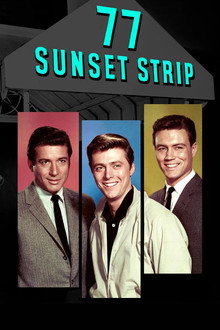
77 Sunset Strip
Stu Bailey and Jeff Spencer are the wisecracking, womanizing private-detective heroes of this Warner Brothers drama. They work out of an office located at 77 Sunset Strip in Los Angeles, California, right next door to a snazzy restaurant where Kookie works as a valet. The finger-snapping, slang-talking Kookie occasionally helps Stu and Jeff with their cases, and eventually becomes a full-fledged member of the detective agency. Rex Randolph and J.R. Hale also join the firm, and Suzanne is their leggy secretary.

Police Story
Detective Cheng is commissioned by Interpol to destroy the Empire of Chaiba, a worldwide criminal organization based in Southeast Asia. He initiates an undercover operation to infiltrate the organization.

Lights Out
Lights Out was an extremely popular American old-time radio program, an early example of a network series devoted mostly to horror and the supernatural, predating Suspense and Inner Sanctum. Versions of Lights Out aired on different networks, at various times, from January 1934 to the summer of 1947 and the series eventually made the transition to television. In 1946, NBC Television brought Lights Out to TV in a series of four specials, broadcast live and produced by Fred Coe, who also contributed three of the scripts. NBC asked Cooper to write the script for the premiere, "First Person Singular", which is told entirely from the point of view of an unseen murderer who kills his obnoxious wife and winds up being executed. Variety gave this first episode a rave review ("undoubtedly one of the best dramatic shows yet seen on a television screen"), but Lights Out did not become a regular NBC-TV series until 1949.

The Millionaire
An anthology series that explored the ways sudden and unexpected wealth changed life for better or for worse. It told the stories of people who were given one million dollars from a benefactor who insisted they never know him, with one exception.

Felony Squad
Twenty-year veteran Detective Sergeant Sam Stone is paired with rookie Briggs in a large Western metropolis.