
Personal Info
Known For
Gender
Birthday
Place of Birth
Sandra Barsotti
Known for

Os Imigrantes
In Europe, at the end of the 19th century, social policies sent thousands of immigrants out of their countries. A Spaniard, a Portuguese, and an Italian seek new opportunities in the new country, without imagining the difficulties along the way.

Chico Anysio Show

Seize the Day
Helena and Luciana are two supermodels with completely opposite personalities: the first is stormy and spoiled, while the second - being older - is patient and restrained. Their fate changes when Helena becomes involved with Marcos, Luciana's father, an older man recently divorced from a former model, Tereza, who does not accept the end of the marriage.

Telerromance

Pecado Capital
Carlão is a taxi driver who experiences a drama of conscience after fleeing bank robbers leave a suitcase with stolen money in his car: he doesn't know whether to hand it over to the police, running the risk of being accused of being an accomplice in the robbery, or whether to use the money to solve his problems.

Dinossaurs & Robots
Paleontologist Júlia wants to convince the stubborn farmer Abner to let her excavate on his land. The site is said to be an archaeological site containing the remains of prehistoric animals.

Ti Ti Ti
'Ti-Ti-Ti' presents a humorous plot, set in São Paulo, whose central theme is the professional, familial, and romantic rivalry between André Spina and Ariclenes Martins, or Ari, as he is known to those closest to him. The two were childhood friends and always fought a lot, engaging in tireless disputes over the same girlfriends.
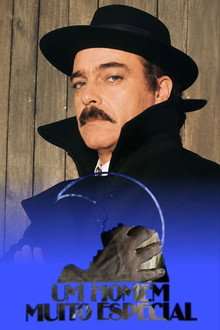
Um Homem Muito Especial
Vladimir, Count Dracula, leaves Transylvania and comes to Brazil to reunite with his son Rafael. Because of the turmoil in Europe during World War I, Rafael, still a boy, was entrusted to his nanny, Ana, who fled with him. Having discovered his son's whereabouts, Vladimir is determined to rescue him and make him claim his inheritance. Of seemingly humble origins, Rafael has secretly courted Mariana, granddaughter of the powerful Dona Marta, matriarch of the Matos Lacerda family, who dominate the city, since childhood. Rafael is unaware of his father's existence. In his struggle to win his son, Vladimir faces opposition from Ana, who knows all his weaknesses. Upon arriving in Brazil, in addition to his son, Vladimir finds the woman of his dreams, exactly like the one he loved and lost in the past – none other than Mariana, Rafael's beloved. Vladimir believes Mariana is the reincarnation of the great love of his past.

O Casarão

Cabocla
The soap opera critiques the power struggles among rural politicians in the 1920s. Joaquim is shocked when a doctor reveals that his son, Luís Jerônimo, has a lung lesion. To recover his health, the young man leaves Rio de Janeiro for Colonel Boanerges's farm in Vila da Mata, Espírito Santo. There, he meets Zuca, and the two fall in love. Zuca is the colonel's goddaughter and the fiancée of the fearless cowboy Tobias, who refuses to accept the possibility of losing her to the outsider. Zuca and Luís Jerônimo face numerous obstacles in pursuing their love. Their romance is also threatened by the arrival of Pepa in Vila da Mata; having been in love with Luís Jerônimo back when he lived in Rio, she tries by every means possible to drive the couple apart.

Gente Fina
Facing a financial crisis, Guilherme receives an ultimatum: he must pay his overdue rent within 24 hours or face eviction from the Copacabana apartment—located in Rio de Janeiro's South Zone—where he lives with his family: his wife Joana, his children Kika, Beto, and Tatá, and his father Olavo. Left with no other option, they move into a large house in São Cristóvão (in the North Zone) lent to them by Joaquim, a Portuguese friend. The family struggles to adapt to the suburban neighborhood and cope with their lack of money. To overcome the crisis, Guilherme becomes a partner in Joaquim's auto repair shop.
Um Sol Maior

Tudo ou Nada
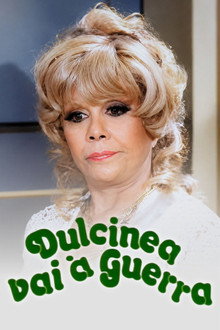
Dulcinéa Vai à Guerra
With new debts, the comedic Dulcinéa is struggling to save her theater once again when she meets the street children Caco, Minga, Cristina, Márcia, and Mico and gets the idea to put on a children's show to turn things around, but taming the little rascals is an arduous task. The new owner of the building, the Count of Castelnuovo, can't wait for the theater to close to build a commercial building, plotting to ruin Dulcinéa's plans and counting on the help of social worker Helena to get rid of the children. The Count also prevents his daughter, Jerusa, from dating the humble Thales because he wants her to marry the wealthy old man Camilo Batateira, putting the housekeeper Murcia to watch over her. There's also the romance between Carolina and Marcelo, thwarted by the wicked Ludmila, and the comical messes created by Lucrécia to prevent her son Mateus from marrying Mariana and leaving home.