
Personal Info
Known For
Gender
Birthday
Place of Birth
Aleksey Bardukov
Known for
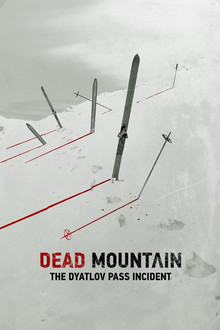
Dead Mountain: The Dyatlov Pass Incident
Russia, 1959. A KGB major investigates the mysterious deaths of a group of nine student hikers in the Ural Mountains. Troubled by his past as a WWII veteran, he has a sixth sense and death seems to follow him around as he digs deeper into the mysterious incident. The more he learns, the more it becomes clear: the reason the students died will never see the light of day.
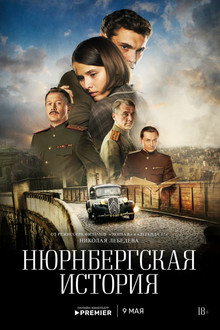
Нюрнбергская история

The Saboteur
1942. Young men, graduates of a reconnaissance school, develop and carry out extremely complex operations behind enemy lines.

MosGaz. Delo N4: Shakal
The beginning of the 70s. Major Cherkasov and his team are investigating a new case. This time we are talking about robberies. And this is the sphere of management for combating theft of socialist property (UBKhSS). During the robberies, the bandits mercilessly kill witnesses. The robberies are well organized and well thought out. And someone very knowledgeable prepares them. The leadership decides to unite the efforts of two departments of the Moscow militia against the "outlaws": the Ministry of Internal Affairs and the UBKHS. Together they are preparing an operation to arrest the gang.

MosGaz
A crime series about MosGaz - Valdimir Ionesyan, one of a firsts Russian serial killers caught in 1962 in Moscow.
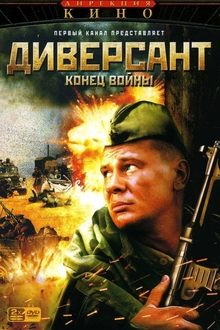
The Saboteur 2: The End of the War
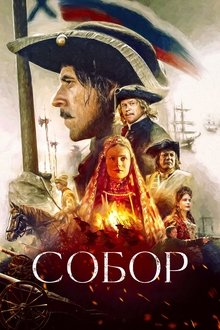
The Cathedral
Different strokes for different folks - says the proverb. Born a rabble dies a rabble. But this is the year 1700, the time of dramatic changes in the Russian Empire, the time of reformations carried out by Peter the Great. Young serf Ivan Starshov is head over heels in love with Maria, the daughter of his master. He doesn't want to accept that the young princess is no match for him. "You gave me wishes, but you do not allow me to satisfy them!" rages Ivan against God. He asks a priest for help, since God created all people equal. But the priest repeats the proverb. Accept your fate destiny as it is. In despair, Starshov repudiates from faith. Ivan is stubborn; he leaves the village to take possession of his fate. This is how the protagonist gets on the winding road to the true understanding of Love.
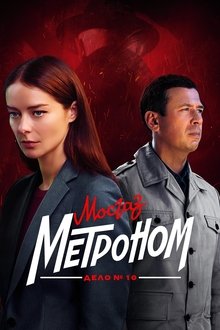
MosGaz. Case No. 10: Metronome
1982. After the task force breaks up, Major Viktor Kovalev wants to take over as boss. Around the same time, pop singer Andrei Grinyaikin dies during a concert. Someone tries to cover up the case, and Sonya Timofeeva begins her own investigation. Kovalev also picks up the trail of Mosconcert, which appears to have influential patrons behind it.

Roof of the World
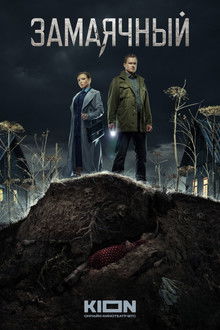
Fancy
In their youth, investigator Ekaterina Mazurova and operative Sergei Polyakov witnessed the tragic events that took place in their native village of Zamayachny, which then received the unflattering nickname Yama. In 1990, a maniac appeared there. His victims were several girls, among whom was Valya, Katya's sister and Sergei's fiancee. Then the murders stopped, as suddenly as they had begun. For eleven long years. And all this time Sergey was living with a thirst for revenge, and Katya, in order not to go crazy, simply erased that terrible summer from her memory. But the maniac is back again. And now Katya and Sergey have to meet again to deal once and for all with the past, which, as it turned out, never let them go.
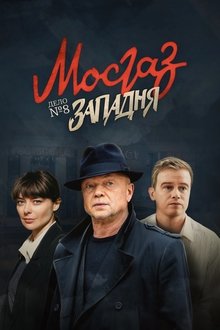
MosGaz. Delo N8: Zapadnya
1980 year. Pre-Olympic Moscow. The MUR people were tasked with preventing a single crime in the capital, clearing the city of all unreliable elements. Even the slaughter department is involved in the execution. Cherkasov and his team are entrusted with the fight against prostitution and "bad luck." But, instead, Ivan Petrovich is forced to investigate one murder after another. In the center of events is a bandit named Skull who recently left the prison. Almost all of the murders committed take place under the Skull, but there is no direct evidence of his involvement in the crimes. It is impossible to prove his guilt, but at the same time his innocence is under great doubt: as if someone invisible constantly saves the Skull from death, clearing the way for him. But who might be interested in this?

MosGaz. Delo N11: Raffle
Retired Major Cherkasov helps former colleagues at MOORE to investigate the murders of lottery participants who won a large sum of money. Kovalev and Timofeeva believe that the organizer of the prank, Belousov, and the presenter, Shorokhov, are behind the murders. Gradually unwinding the case, MOORE's staff is facing resistance from officials for whom the lottery is an important budget item. Unexpectedly, the investigation leads the Murovites to the Research Institute of Mathematics and Cybernetics, where a group of young scientists is conducting research aimed at studying and optimizing ways to earn money through the state lottery.

The Mutiny
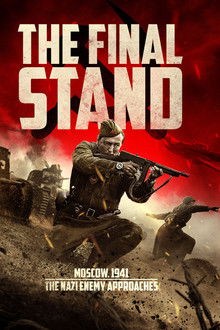
The Last Frontier
The story of the Podolsk cadets’ heroic stand outside Moscow in October 1941. Cadets were sent to the Ilyinsky line, fighting alongside units from the Soviet 43rd Army to hold back the German advance until reinforcements arrived. Hopelessly outnumbered, young men laid down their lives in a battle lasting almost two weeks to obstruct the far superior German forces advancing towards Moscow. Around 3,500 cadets and their commanding officers were sent to hold up the last line of defense outside Moscow. Most of them remained there for eternity.
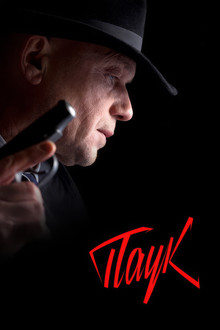
MosGaz. Delo N3: Pauk
The third film of the project about Cherkasov's task force is "Goznak". Based on another famous story - the robbery of the State Bank of the Armenian SSR in 1977, when the Kalachyan brothers swept the treasury for one and a half million rubles (two million dollars at the then exchange rate). It was the largest kidnapping in the Soviet Union. 1967 year. Moscow. A fashion model from the House of Fashion was killed. A group of Major Cherkasov arrives at the crime scene. He urgently introduces his man, Sonya Timofeeva, into the Fashion House, whose main task is to obtain information about the relationship between the employees of the Fashion House. Soon, another fashion model dies. And simultaneously with this murder, a very daring crime is taking place - the robbery of Goznak ...