Personal Info
Known For
Gender
Birthday
Place of Birth
Mahtab Keramati
Biography
Known for

Men of Anjolos
The story of six nobles and one sheepman who become Christian, run away from Romans to a cave where they will sleep 309 years, from Islamic view

Red Square
Sheida intends to travel abroad to seek treatment for her daughter, but due to her husband's secrecy and lies, she faces a horrible event that changes her life forever and...

Apparition
A drunken, boorish general tyrannises his wife and his maid. When the wife discovers that her husband and the maid are having an affair, she turns the maid out of the house, little realising that the young woman is pregnant with the general's child. Years later, the general is dead, and a younger generation has risen with a new outlook on life and new problems to face... This flamboyantly stylised melodrama, loosely adapted from Ibsen, is the newest work by one of the legendary figures of Iran's New Wave.

The Mummy 3
Officer Ghorbani is a good and on time police officer but when a mummy corpse is find his troubles and adventures begin and he has to find a way to save the mummy from the thieves.

Dance on the Glass

Women Are Angels
A greedy husband (Hayayee) is found to be cheating on his wife, who immensely adores him. With the help of her friends, she plots revenge on him.

Hussein Who Said No
The story of Imam Hossein's battle in Karbala, an unfair war which made one the most important effects in Islam history.

Orca
Elham is a young, divorced Iranian woman. Seeking to find herself after a near-fatal beating by her husband, she finds solace and salvation in the water and soon makes her mark as a formidable endurance swimmer. In the fight of her life, Elham faces political, religious, and personal obstacles in search of her goal: the Guinness World Record for swimming the longest distance with hands bound.

Gole Sang
This work is a social romance that tells the story of a family who buys a house after years of saving, but the house reveals many secrets.

Shirin
A hundred and fourteen famous Iranian theater and cinema actresses and a French star: mute spectators at a theatrical representation of Khosrow and Shirin, a Persian poem from the twelfth century, put on stage by Kiarostami. The development of the text -- long a favorite in Persia and the Middle East -- remains invisible to the viewer of the film, the whole story is told by the faces of the women watching the show.

Arghavan

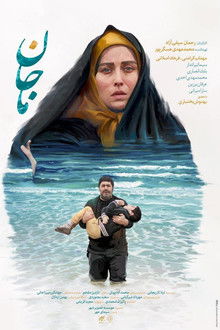
The Fourth Child
Two on the road: an actress who is giving up cinema and discovering a new world in photography and a man who lost his factory. The destination is Somalia where human dignity proves to be the conqueror even in the hard times of war and starvation.
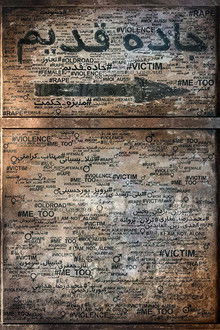
The Old Road
Manijeh Hekmat is an Iranian film director. Born in 1962 in Farmahin, Iran, she has worked since 1980 as an assistant director and production designer in over 25 films. She directed her first feature film Women's Prison (Zendān-e Zanān) in 2002. This film has been shown at over 80 international film festivals and has received seven prizes. Three Women (Seh Zan) is Hekmat’s second feature film made in 2007.
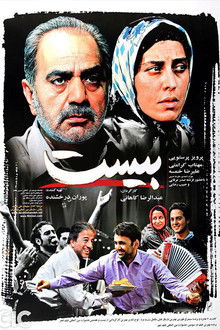
Twenty
A once thriving reception hall has been reduced to catering to the funeral business and the somber rituals of death. The owner, Soleimani, is a sour, lonely and unloved old man who treats his workers with contempt, inflicting small cruelties whenever possible. Embittered and seeing a psychologist, he decides he will close the business in twenty days, sending his staff, already fighting just to get by, into a state of fear and uncertainty. Like a close-knit family, the staff members endure their daily suffering together. These good-hearted people include an ostracized young widow trying to survive with her daughter; a chef with a paralyzed arm who has a demanding wife; and two young men, working but homeless, who must sleep in the company's truck. Despite Soleimani's indifference to their plight, the people on his staff have retained their hope and humanity. As the threat of closure nears, they work together to save the hall and at the same time attend to each others' emotional needs.