
Personal Info
Known For
Gender
Birthday
Place of Birth
Glicínia Quartin
Known for

O Jogo
Todo o Tempo do Mundo
Segredo de Justiça

A la minuta
O Mandarim
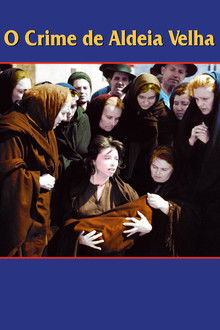
The Crime of Aldeia Velha
Joana lives in a small and remote village where people are very primitive and religious. When accidents start happening that involves her, people slowly start believing that she is possessed by the devil.

No One Twice
Director Jorge Silva Melo has developed a viable, though highly intellectual mystery story about the world of art and culture and murder in this somewhat theatrical presentation. When German artist Bernd Hoffmann (Michael König) arrives in Lisbon to oversee the installation of his paintings in a joint exhibition with another Berlin artist, Hanna Brauer (Charlotte Schwab), Hanna never shows up. Hoffmann is puzzled because he is certain he saw a video sequence with Hanna at the exhibition, and he begins to look for her. Another Lisbon cultural center, a theater, is also having problems that may or may not be related -- and the mystery deepens when Hanna is found dead, either by her own hand, or murdered.
How Do I Love Thee
It’s been a year since we were together. A year since you left me, or I left you. What does it matter? And suddenly here you are in front of me, smiling, radiant, pregnant. And there’s me, who thought he was cured of you.
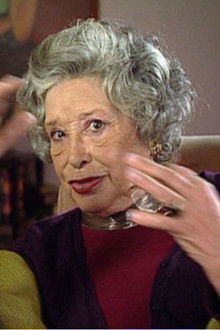
Conversas com Glícínia
A documentary about the actress Glicínia Quartin on her 80th birthday. Her family, the anarcho-syndicalism, readings at his parents' house, prisons, experimental theaters, surrealists, the encounter with José Ernesto de Sousa on the unfolding of Cinema Novo with “Dom Roberto”, Italy, fantasy, Beckett, Genet, Vitor Garcia, the encounter with Luís Miguel Cintra - a life in motion.
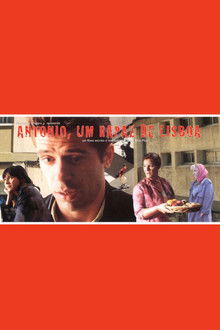
O mistério da boca do inferno
The secret history of a curse upon an astrologer and esoteric initiate, who was a Portuguese poet and essayist: Fernando Pessoa.

A Man is not a Cat
A woman gets into a fight with her boyfriend, concerning her lack of humanism. Leaving him abruptly at the Santa Apolónia Station, she strikes a conversation with an interesting homeless man whom she decides to take home to just to show her boyfriend that she cares.
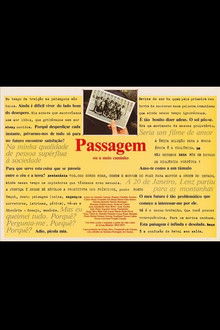
Passagem ou a Meio Caminho
Ambulatory history, freely inspired by Georg Büchner's biography (1813-37) and the reasons that led him first to political intervention and then to strict isolation. With students of unidentified present time (1968? 1970?), the themes developed, in Büchner, are triggered by the publication of "The Messenger of Hesse", a pamphlet addressed to the peasants, urging them to revolt. Their misunderstanding, as well as the repression of the young revolutionaries, leads Büchner to a particularly skeptical and painful attitude...
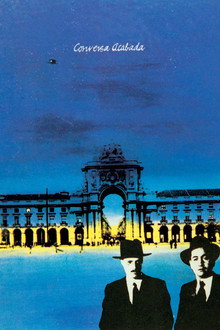
The Conversation Is Over
The film was to be a documentary, but evolved during production to a fictional film. It nevertheless adheres strictly to the poems and letters exchanged by two of the most outstanding names of the Modernist Movement, Fernando Pessoa (in Lisbon) and Mário de Sá-Carneiro (in Paris). Their endless conversation was dramatically and suddenly terminated.

Blind Man's Bluff
A blind beggar is robbed of his chest of money. The theft leads to a dramatic situation in the street where he begs every day.