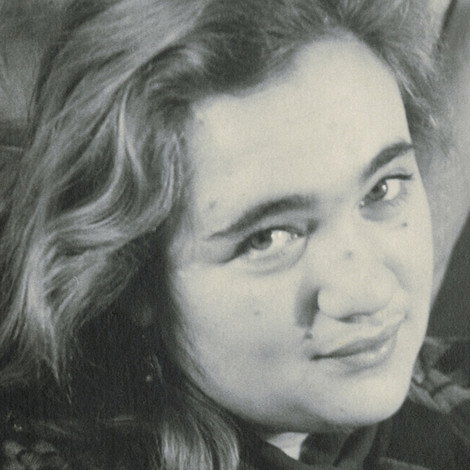
Personal Info
Known For
Gender
Birthday
Place of Birth
Galina Volchek
Biography
Known for

KVN Major League
KVN is a Russian humour TV show and competition where teams compete by giving funny answers to questions and showing prepared sketches. The programme was first aired by the First Soviet Channel on November 8, 1961. Eleven years later, in 1972, when few programmes were being broadcast live, Soviet censors found the students' impromptu jokes offensive and anti-Soviet and banned KVN. The show was revived fourteen years later during the Perestroika era in 1986, with Alexander Maslyakov as its host. It is one of the longest-running TV programmes on Russian Television. It also has its own holiday on November 8, the birthday of the game, which KVN players celebrate every year since it was announced and widely celebrated for the first time in 2001.

A Sinful Angel
Fourteen-year-old Vera Telegina sees the sea, which she had dreamed of since childhood. She is here only because her parents were repressed and she is left alone. The police chief Stavridi, having learned about the girl's misfortune, places her in a boarding school. Vera has to go through a lot. But with the concernment of new friends and sympathy of adults Vera survives until the spring of 1953, when the long-awaited telegram from her parents arrives.

Don Quixote
Senor Quexana has read so many books on chivalry that he believes that he is the knight Don Quixote de la Mancha. So Don Quixote sets off on his horse, accompanied by his squire Sancho Panza on a mule, to perform valiant deeds. They mistakenly save the Lady Altisidora who is so amused that she invites them to visit the Duke to provide some merriment at court. Among other deeds, Don Quixote frees some prisoners, who then turn upon him, and Don Quixote attacks a windmill that he imagines is a monstrous wizard.

Waves of the Black Sea
The Odesa boys, Petya Bachey and Gavrik Chernoivanenko, are brave and resourceful, finding themselves at the centre of early 20th-century events leading to the October Revolution. They are joined by adult characters like sailor Rodion Zhukov, Petya’s father Vasily, Madame Storozhenko, and Gavrik’s grandfather. As they grow, they experience the revolution, civil war, and become underground fighters during WWII in occupied Odesa.

About the Little Red Riding Hood
A sequel to the well-known story about a Little Red Riding Hood. This time, a family of a slain wolf decides to avenge his death. So they falsely inform Little Red Riding Hood that her grandma is sick and prepare to eat her on her way.
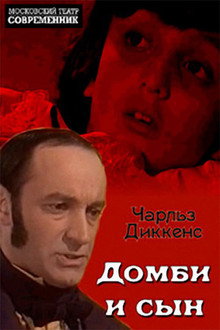
Dombey & Son
The dream of Paul Dombey, the wealthy owner of the shipping company, is to have a son to continue his business. Tragically, Dombey's wife dies shortly after giving birth to their son.

The Path to the Role
The path to a new role for an actor is always a living dialogue with it, full of secrets and mysteries. At this stage, it is important for the actor to feel the primacy of life and the points of connection between the play and real life. For the audience, it's not only interesting to be present at the performance but also to learn about the journey their favorite actor took to this role. Renowned actresses Natalia Gundareva and Marina Neyelova will share their moments of happiness in their work.

Phenomenon
One soviet programmer has problems in his job. He is laughed at by women, they think he is too awkward. His chiefs are giving no rest to him. In addition to that they give him very difficult project to be done very soon. Overcoming himself he does impossible. After closing away in his office and spending there several days and nights without sleep he finds some solution and immediately fells asleep. After waking up after very surrealistic dream he surprises of what has happened while he was asleep. And the miracles have just started for him…

My Destiny
Mikhail Nikolaevich Ermakov has come a long and difficult life path. At the age of nineteen, the student, the son of a worker, was sent on a Komsomol ticket to work in the Cheka. In one of the operations he was seriously wounded. And now, many years later, General Ermakov comes to Moscow and settles in the house where he spent his youth...
Галина Волчек. Любовь и заблуждения
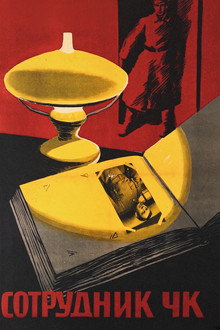
In the Enemy's Den
Russia, 1919. A young soldier of the First Cavalry Army, Aleksei Mikhalyov, is sent to work in the provincial Cheka. Here in the south of the country there is a large White Guard underground led by the elusive Markov. Aleksei gets into the gang, where he is mistaken for his own. The day of the operation to eliminate the white underground is appointed. But unforeseen circumstances destroy the plans of the Chekists.

My Destiny
Mikhail Nikolaevich Ermakov has come a long and difficult life path. At the age of nineteen, the student, the son of a worker, was sent on a Komsomol ticket to work in the Cheka. In one of the operations he was seriously wounded. And now, many years later, General Ermakov comes to Moscow and settles in the house where he spent his youth...
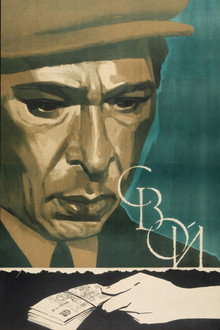
Own

Who's Afraid of Virginia Woolf?
A film-play based on the play by Edward Albee (translated by Vitaly Vulf, Igor Kochnov).

Oleg Efremov. For The Theater To Be...
Oleg Yefremov was one of the most beloved actors and directors in Russia. He was the founder of the Sovremennik (Contemporary) Theatre and later became the artistic director of the Moscow Art Theatre. The film shows him in a moment of extreme dramatic tension: Yefremov has decided to split the repertory company into two. His aim is to re energize a stagnant group of actors and move them away from an artistic "dead end". The company, split into supporters and detractors discusses the situation on very heated terms. The situation mirrors the overall climate of a country and a society shaken by the changes brought about by perestroika.