Personal Info
Known For
Gender
Birthday
Place of Birth
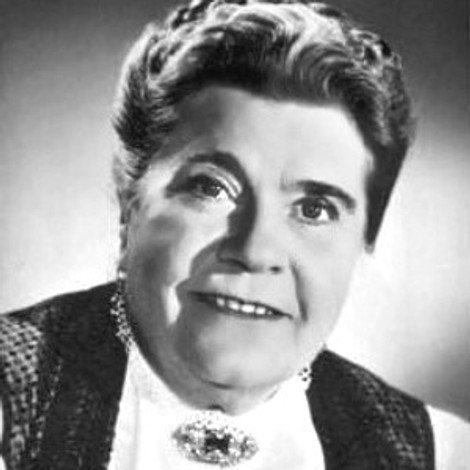
Annie Rosar
Known for

Bambi
The Bambi, often called the Bambi Award and stylised as BAMBI, is a German award presented annually by Hubert Burda Media to recognize excellence in international media and television to personalities in the media, arts, culture, sports, and other fields "with vision and creativity who affected and inspired the German public that year", both domestic and foreign. First held in 1948, it is the oldest media award in Germany. The trophy is named after Felix Salten's book Bambi, A Life in the Woods and its statuettes are in the shape of the novel's titular fawn character. They were originally made of porcelain until 1958, when the organizers switched to using gold, with the casting done by the art casting workshop of Ernst Strassacker in Süßen.
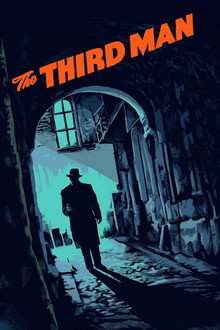
The Third Man
In postwar Vienna, Austria, Holly Martins, a writer of pulp Westerns, arrives penniless as a guest of his childhood chum Harry Lime, only to learn he has died. Martins develops a conspiracy theory after learning of a "third man" present at the time of Harry's death, running into interference from British officer Major Calloway, and falling head-over-heels for Harry's grief-stricken lover, Anna.

Nina

Ihr Leibhusar
An easy-going hussar officer successfully vies for the love of a millionaire's daughter.

Münchnerinnen
The love between a noble student and the daughter of a coffee house owner, set against clichéd images of Munich at the turn of the century.
Millionäre
"Millionaires" is an Austrian feature film from 1937, a comedy directed by Karlheinz Martin. The film premiered on July 31, 1937, in Vienna and is based on a story that illuminates life and love in the social milieu of the time.

Eine Frau genügt nicht?
Anni
In 1900, the pianist Radofsky seduces singer Anni in Vienna. Twenty years later, he runs into her again … with her daughter.

13 Chairs
A classical art junk dealer and an almost bankrupt hairdresser who unexpectedly makes an inheritance go hunting behind thirteen chairs from which of a 100,000 DM contains which the rich aunt has hidden there.

And Lead Us Not Into Temptation
A unlucky village railroader causes a trainwreck by accident. In court he is exculpated by a woman who first becomes his lover, later on his wife. But in the end, his guilt is too strong and he faces his due punishment.
A Merry House
The seamstresses Franzi and Mizzi have opened up a small shop in a suburb of Vienna. Mizzi is of the opinion, however, that her friend could have a much better life if only she'd marry Karl, the son of the landlord, who has been hot for her for quite a while now. Next store to them lives a rather elegant gentleman, whom Mizzi does not like. One day, an excited woman bursts into the studio, tears off her clothes and begs the girls to act as if they're fitting her for a dress should her husband waltz on in, too. In fact, her jealous husband Stefan does show up and is thrilled to discover that his Gerda isn't cheating on him. But Mizzi and Franzi are positive, that she's been meeting a certain elegant gentleman next door.
Frühjahrsparade
This Hungarian musical comedy (English title: Spring Parade) was produced by Joseph Pasternak, who later remade the picture in Hollywood as a Deanna Durbin vehicle. The original 1934 version stars Franciska Gaal as a Hungarian serving girl who heads to Vienna to visit a relative. Stopping over at an outdoor carnival, Gaal is told by a fortune teller that she will enjoy a happy marriage with a handsome and wealthy stranger. Later on, she finds herself at a fancy dress ball, where a good-looking aristocrat, assuming that our heroine is a countess masquerading as a peasant, falls in love with her. Delighted that the fortune-teller's prophecy seems to be coming true, Gaal finds herself in a dilemma when she falls in love with poverty-stricken soldier Wolf Albach Retty. But things turn out OK when Retty, the regimental drummer, composes a hit song which brings him fame and fortune, thereby neatly fulfilling that prophecy.

The Devil Makes Three
Jeff Elliot is an American GI investigating a black market gang in Munich.

Little Melody from Vienna
Vienna shortly after World War II. A music professor, in whose house a young widow with three children is quartered by the housing office, changes under the influence of the charming lady.

Schwarz auf weiß
Vienna, around 1900. The master baker Streussler’s most ardent wish is to see his daughter Nelly as a student at the university. With the help of his famous “streusel cake” he succeeds in luring all kinds of helpers for this endeavor into his house. But Nelly has entirely different plans: she is in love with the chimney sweep Heinz, the son of a neighbor, with whom Papa Streussler has been fighting for years. So it’s no wonder then, that the grump confectioner is doing everything he can to break up the relationship.