Personal Info
Known For
Gender
Birthday
Place of Birth
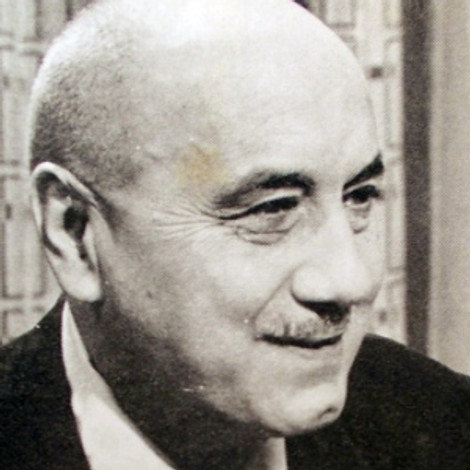
Jean Nohain
Biography
Known for

Midi Première
Midi Première is a French variety show presented by Danièle Gilbert, directed by Jacques Pierre and broadcast from January 6, 1975 until January 1, 1982 on TF1. The program was generally broadcast between 12:15 p.m. and 12:55 p.m., then giving way to the 1:00 p.m. TV news. However, the broadcast schedule could change, depending on the guests, and the setting where the recording of the program was shot. Certain performances by artists who have become cult like the one where Ringo jostles with a demonstrator in interpretation (1977), that of Dalida with the title There is always a song with the soundtrack that does not start, twice, at the right speed (1978), Claude François and his Clodettes, who, in the provinces, are unable to join "the set" in order to interpret his song, the latter being taken by the crowd of delirious fans (summer 1977) . The group Supertramp performed there with the title "Dreamer" on March 8, 1975.

Samedi soir
Système 2

Welcome
The leading coach the company of Jean Nohain make a program fails in a small village. The people immobilize the troops to force him to do the show there.

La Danseuse nue
Colette gives up her studies to become a cabaret dancer. She breaks with her fiance who does not approve of her choice.

The Chocolate Girl
Benjamine, the daughter of the chocolate maker Lapistole, has broken down in her car, spends a night at Paul Norman's, imposes herself casually and causes the break-up of the engagement of this peaceful civil servant with the daughter of his department head. A friend maintains contact between Paul and Benjamine, becomes the head of publicity at Lapistole and when Norman is dismissed through Benjamine's fault, brings his two friends closer and proves to them that they are made for each other.

Fantaisie d'un jour
Thérèse is the daughter of a modest couple. One day, she wins a voucher for two hundred thousand francs in a department store. Dazzled, the little typist chose a fur cape, much to her parents' disappointment. She has a fiancé, François, whom she now scorns a little. She returns to him, however, after an unfortunate foray into the big wide world, and gets rid of the cumbersome cape forever.

Boom on Paris
In the early 1950s, the popular radio show "La Kermesse aux Étoiles", hosted by the famous Jean Nohain, mixing lottery games and performances of various artists, will be disrupted by the adventures of a man and his fiancée seeking to recover a dangerous bottle of perfume (explosive) which was unfortunately mixed with the prizes to be won ...

Portrait of a Woman
A woman disappears after visiting her daughter and realizing her presence was unwelcome by her in-laws. Some time later, a body is found in a nearby lake.

Radio Surprises
The Bontemps family, like all the inhabitants of the village of Coussy la Chapelle, are passionate about radio. Coco, the fiancé of Jacqueline Bontemps, participates in all the contests and under the name of Mr. Bontemps wins a beautiful Sunday. All arrive in Paris and in the premises of the Parisian Post Office attend popular broadcasts.

It Happened on the 36 Candles
Rejecting the union of her daughter Brigitte with a modest worker, Madame Magnin invents an adultery for the lover, then introduces Brigitte to a good-looking man working on the famous RTF entertainment show 36 Chandelles. The show ultimately seals the reunion of the two estranged young lovers. The story features a parade of music-hall stars from the era: Charles Trenet, Charles Aznavour, Georges Guétary, Juliette Gréco, Roger Pierre and Jean-Marc Thibault, Fernand Raynaud, Georges Ulmer and many more.

Trois vieilles filles en folie
A marquis organizes a matrimonial contest with the aim of enriching three spinsters.

Over the waves
Panorama of the programs and hosts who made the heyday of radio in the 1950s.

King Ottokar's Sceptre
An absent-minded sigillographer gets Tintin involved in a dangerous political intrigue in the Balkan nation of Syldavia.
King Ottokar's Sceptre
An absent-minded sigillographer gets Tintin involved in a dangerous political intrigue in the Balkan nation of Syldavia.