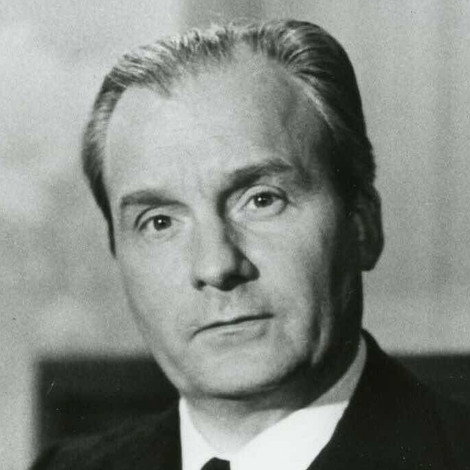
Personal Info
Known For
Gender
Birthday
Place of Birth
Michel Bouquet
Biography
Known for

Champs-Elysées

Vivement dimanche

Spécial cinéma
Marcello Mastroianni, Isabelle Adjani, Alain Delon, Martin Scorsese, Woody Allen... the biggest stars in cinema were welcomed by Christian Defaye on his show Spécial cinéma. Between intimate confessions from actors and immersion in the world of the greatest filmmakers, Christian Defaye took viewers on a journey into the fascinating world of cinema for nearly thirty years.

Discorama

Samedi soir

Maigret
The pragmatic, reserved and refined Maigret investigates murders in his singular unhurried manner and inevitably discovers the truth.

28 minutes

La Case du Siècle
La Case du Siècle is a French television program launched in 2010 and broadcast on France 5. Hosted by Fabrice d'Almeida, it airs documentaries every Sunday that aim to shed light on the history of the 20th century, both in France and around the world. Through these documentaries, viewers can deepen their knowledge of a specific subject or simply discover a particular era. *La Case du siècle* offers an in-depth look at the events that changed the course of history.

Élisa
Marie has had a tough childhood ever since her mother Elisa committed suicide. She has spent most of her life in an orphanage and now makes a living as a small time criminal in Paris. Now she wants to unravel her past and find her father whom she blames for her mother's death.

The Toy
When Francois, a journalist, tours a big store for an article, he is chosen by the son of the newspaper's owner, Rambal-Cochet, as his new toy. Needing money and unwilling to quit his job, Francois agrees to this ridiculous assignment. Gradually befriending the spoiled boy, he induces him to play at making a newspaper, unveiling publicly the tyrannical way of life of the father. The powerful emotional climax we experience with the child astonishes both men.

The Conspiracy
Paris 1960. DeGaulle determines to end a bitter war in Algeria by granting its independence. Millions oppose him, including a group of DeGaulle's disenchanted Arm Officers. In a desperate attempt to save the colony for France, they plan a daring jailbreak of their imprisoned leader. A network of snitches inform a tenacious detective leading to an explosive three-way cat-and-mouse game among the rebels, the Gaullist politicos and the police.

Manon
Port of Marseille, France, recently liberated from the German yoke. Caught as stowaways aboard a ship, Manon, a young woman who was accused of collaborating with the Nazis, and Robert, a freedom fighter who saved her from reprisals, tell the captain about the many challenges they have had to face in order to survive.

Night and Fog
Filmmaker Alain Resnais documents the atrocities behind the walls of Hitler's concentration camps.

The Assassination
Darien, a left-wing police informant, is forced to lure his old friend Sadiel to Paris, allegedly to film a television special about the Third World. Sadiel, the exiled leader of a North African state, is being hunted by the ruthless Colonel Kassar, who will stop at nothing to capture his political rival. Once Sadiel arrives in Paris, Darien realizes he has been manipulated. He tries to turn back the clock, not realizing what or who he’s truly dealing with.

Mozart
The 1982 French television miniseries "Mozart" traces the life of Wolfgang Amadeus Mozart from his childhood as a musical prodigy to his final years as one of history's greatest composers. It follows his European concert tours, his pursuit of artistic independence, his marriage to Constanze, and the personal and financial struggles that accompanied his remarkable career. The series emphasizes historical authenticity, recreating eighteenth-century settings and depicting the people and events that shaped Mozart's life and music. Blending biographical storytelling with performances of his compositions, it offers a thoughtful portrait of the man behind the enduring musical legacy.