Personal Info
Known For
Gender
Birthday
Place of Birth
Sandra Payne
Known for
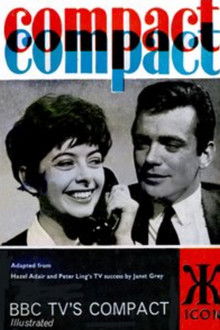
Compact
Compact was a British television soap opera shown by the BBC between 1962 and 1965. The series was created by Hazel Adair and Peter Ling, who together went on to devise Crossroads. In contrast to the kitchen sink realism of Coronation Street, Compact was a distinctly middle-class serial, set in the more "sophisticated" arena of magazine publishing. An early "avarice" soap, it took the viewer into the business workplace, and aligned the professional lives of the characters with more personal storylines. The show was scheduled for broadcast on Tuesdays and Thursdays, thus avoiding a clash with ITV's Coronation Street on Mondays and Wednesdays. When Compact began, the editor was a woman, Joanne Minster, yet it was not long before she was replaced by Ian Harmon, the son of the magazine's owner. Despite being largely criticised by reviewers, Compact was popular with the general public, and in 1964 a regular omnibus edition was introduced, broadcast on Sundays. Morris Barry, a some-time actor and BBC director – he directed several Doctor Who stories in the 1960s – took over as producer and was given a brief to spice the series up in view of the criticism it had received from the national press. But the BBC, never comfortable with the concept of soap opera, quietly dropped the series in 1965.
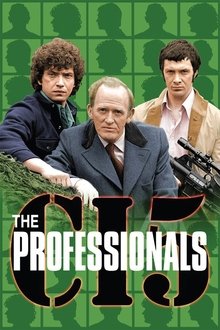
The Professionals
The lives of Bodie and Doyle, top agents for Britain's CI5 (Criminal Intelligence 5), and their controller, George Cowley. The mandate of CI5 was to fight terrorism and similar high-profile crimes. Cowley, a hard ex-MI5 operative, hand-picked each of his men. Bodie is a cynical ex-SAS paratrooper and mercenary whose nature ran to controlled violence, while his partner, Doyle, comes to CI5 from the regular police force, and is more of an open minded liberal. Their relationship is often contentious, but they are the top men in their field, and the ones to whom Cowley always assigned to the toughest cases.
Tales of the Unexpected
A British television anthology of stories, often with sinister and wryly comedic undertones, and a twist at the end. With early episodes written and presented by Roald Dahl, the series featured a plethora of big name guest stars.
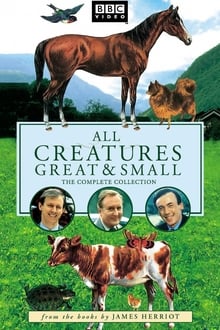
All Creatures Great and Small
The trials and misadventures of the staff at a country veterinary office in Yorkshire. James Herriot, a young animal surgeon, moves to a small Yorkshire town to begin his first job.
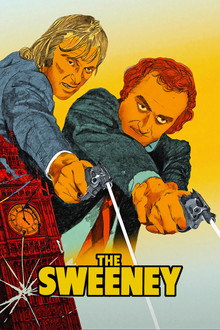
The Sweeney
Jack Regan, an unethical officer of the Flying Squad, uses unorthodox methods to pursue criminals with the help of his partner, George Carter.

Only Fools and Horses
Only Fools and Horses.... Is a British sitcom created and written by John Sullivan. Seven series were originally transmitted on BBC One from 1981 to 1991, with sixteen sporadic Christmas specials aired until 2003. In working-class Peckham in south-east London, ambitious market trader Derek 'Del Boy' Trotter and his younger half-brother Rodney, explore their highs and lows in life, in particular their attempts to get rich. Initially not an immediate hit and receiving little promotion early on, it later achieved consistently high ratings, and the 1996 episode "Time on Our Hands" (originally billed as the series finale) holds the record for the biggest UK audience for a sitcom episode, attracting 24.3 million viewers. The series bears a significant influence on British culture, contributing several words and phrases to the English language.
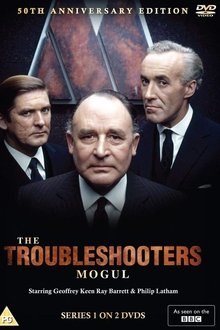
The Troubleshooters
The Troubleshooters is a British television series made by the BBC between 1965 and 1972, created by John Elliot. During its run, the series made the transition from black and white to colour transmissions. The series was based around an international oil company – the "Mogul" of the title. The first series was mostly concerned with the internal politics within the Mogul organisation, with episodes revolving around industrial espionage, internal fraud and negligence almost leading to an accident on a North Sea oil rig.
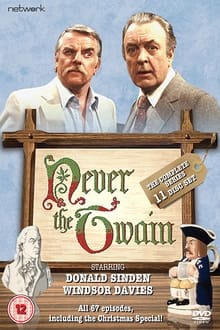
Never the Twain
Simon Peel and Oliver Smallbridge are former business partners turned bitter rival antique dealers whose shops and homes are right next door to each other. Their rivalry stems partly from Oliver having an affair with Simon's wife, but now tensions are escalating as Oliver's daughter, Lyn, has fallen in love with Simon's son, David, and plan to marry.
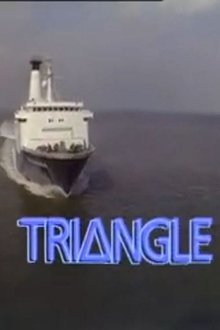
Triangle
Triangle was a BBC Television soap opera in the early 1980s, set aboard a North Sea ferry which sailed from Felixstowe to Gothenburg and Gothenburg to Amsterdam. A third imaginary leg existed between Amsterdam and Felixstowe to justify the programme title, but this was not operated by the ferry company. The show ran for three series before being cancelled, but is still generally remembered as "some of the most mockable British television ever produced". The scripts involved clichéd relationships and stilted dialogue, making the show the butt of several jokes - particularly on Terry Wogan's morning Radio 2 programme - which caused some embarrassment to the BBC. In 1992, the BBC screened TV Hell, an evening of programming devoted to the worst television had to offer, and the first episode of Triangle was broadcast as part of the line-up. The ferry used in the first series was the Tor Line's MS Tor Scandinavia. In the second and third series this was replaced by the DFDS vessel Dana Anglia probably because she had a less intensive schedule and the longer time she spent in port made on-board filming easier.
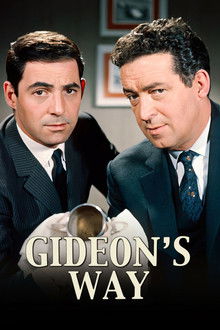
Gideon's Way
Gideon's Way is a British television crime series made by ITC Entertainment in 1964/65, based on the novels by John Creasey. The series was made at Elstree in twin production with The Saint TV series. It starred Liverpudlian John Gregson in the title role as Commander George Gideon of Scotland Yard, with Alexander Davion as his assistant, Detective Chief Inspector David Keen, Reginald Jessup as Det. Superintendent LeMaitre, Ian Rossiter as Detective Chief Superintendent Joe Bell and Basil Dignam as Commissioner Scott-Marle. The show did not acknowledge any help from Scotland Yard, any other police force or advisor. Daphne Anderson starred as his wife, Kate with Giles Watling as young son, Malcolm, Richard James as older son, Matthew who seemed to have a lot of new girlfriends and Andrea Allan as daughter, Pru. Unusually for police stories, Gideon was shown as a family man at home though urgent phone calls from his bosses tend to disrupt family plans too often. However, he did admit in "State Visit" that his wife had walked out on him for a while years ago when he put the job first and her second. They live in an expensive detached house in Chelsea.
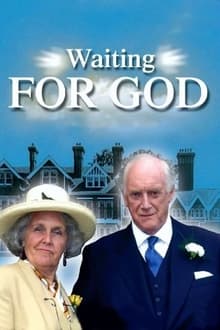
Waiting for God
Refusing to succumb to old age, Tom Ballard and Diana Trent are a pair of seasoned delinquents that cause many headaches. Their uneasy alliance is destined to make life difficult at the Bayview Retirement Village.
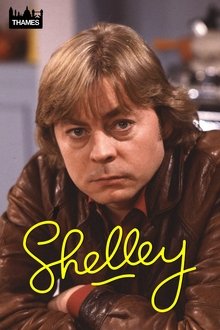
Shelley
James Shelley, an educated, sardonic, permanently unemployed "professional freelance layabout," has many battles with authority, the tax-man, his landlady, and his girlfriend Fran.
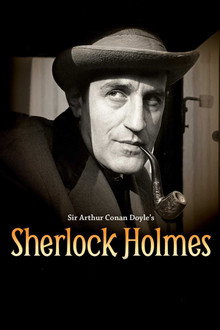
Sherlock Holmes
Sherlock Holmes (also known as 'Sir Arthur Conan Doyle's Sherlock Holmes') is a series of Sherlock Holmes adaptations produced by British television company BBC between 1964 and 1968. This was the second screen adaption of Sherlock Holmes for BBC Television.
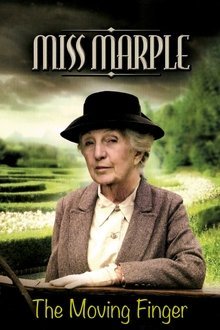
Miss Marple: The Moving Finger
The residents of a quiet English village begin to receive nasty, threatening letters. The wife of the local vicar calls in her friend Miss Marple to investigate.
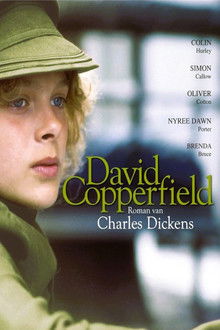
David Copperfield
A young man journeys from a difficult childhood to maturity, exploring social injustice, personal development, and the complexities of human relationships.