Personal Info
Known For
Gender
Birthday
Place of Birth
James Burke
Biography
Known for
Tomorrow's World
Tomorrow's World was a long-running BBC television series on new developments in science and technology. First transmitted on 7 July 1965 on BBC1, it ran for 38 years until it was cancelled at the beginning of 2003.
Doomwatch
Doomwatch is a British science fiction television programme produced by the BBC, which ran on BBC 1 between 1970 and 1972. The series was set in the then present-day, and dealt with a scientific government agency led by Doctor Spencer Quist, responsible for investigating and combating various ecological and technological dangers. The series was followed by a film adaptation produced by Tigon British Film Productions and released in 1972, and a revival TV film was broadcast on Channel 5 in 1999.
Apollo: Missions to the Moon
National Geographic's riveting effort recounts all 12 crewed missions using only archival footage, photos and audio.

The Inventing of America
Raymond Burr and James Burke take a whimsical look at 200 years of inventions from the cotton gin to the computer. Included are commentaries, animation, song by and dance routines and on-location segments.
Network First
Network First is a wide-ranging documentary strand broadcast on ITV in the U.K. from January 1994 to December 1997, and was a part replacement for First Tuesday. Unlike other documentary series on ITV such as World in Action, Network First, was not centred on current affairs or politics, but broadcast a range of one-off programmes covering various subjects such as biography, history, and science. Programmes were usually transmitted in the 22:40 slot after News at Ten, each usually running for an hour. The strand was not "owned" by any one ITV franchise, and individual programmes were contributed by the various ITV companies. As a strand, Network First never became a household "name" - unlike the likes of World in Action or This Week - possibly because of its diverse subject matter. The series appears to have been dropped quietly by ITV in the lead up to the high-profile axing of both World in Action on 7 December 1998 and News at Ten on 5 March 1999.
The Day the Universe Changed
Documentary series about the effect of advances in science and technology on western society in its philosophical aspects.
Connections
Taking an interdisciplinary approach to the history of science and invention, Connections explores an "Alternative View of Change" that rejects the conventional linear and teleological view of historical progress. To demonstrate this view, Burke begins each episode with a particular event or innovation in the past (usually ancient or medieval) and traces a path from that event through a series of connections to a fundamental and essential aspect of the modern world.
The Real Thing
Asking how you tell what's real and what isn't sounds like an obvious question. But in this series of six programmes, James Burke shows that the more you think about it the harder it is to answer. After all, what have you got, apart from your five senses, to prove those senses are giving you the real thing?
Connections with James Burke
Historian James Burke continues his journey through random historical connections that together have shaped our world and provide important clues to our future.
ReConnections
25th anniversary of James Burke's landmark Connections program, in which Burke looks back and forward to the program's digital incarnation, the Knowledge Web
Connections 2
Historian James Burke walks the viewer through the tenuous threads of history that link seemingly obscure scientific breakthroughs and the events and products that exist today.
Connections 3
In the third edition of his groundbreaking series, James Burke continues to make incredible connections to history's most important discoveries and inventions.
After the Warming
Set in 2050, social journalist James Burke looks back at events of the world from the dawn of civilization and shows how climate change has affected human history. At the point of the Industrial Revolution, humans began to do things to the climate, rather than the other way round. When he brings us up to date (1989), that is when the predictions begin. From Kyoto to the two Gulf Wars, Burke accurately predicts many of the events that have taken place so far. His predictions have been sound, even to the tune of carbon credits and climate change agreements. Using virtual reality computer simulations, Burke traces the Earth's history of ice ages and warming trends and presents several possible scenarios caused by the greenhouse effect during the 1990s to 2050.
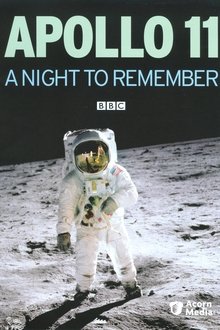
Apollo 11: A Night to Remember
This is one small step for a man, one giant leap for mankind." Commemorating the 40th anniversary of NASA's 1969 moon landing, this documentary uses news coverage from the BBC archives to recount the excitement of the historic event. Led by science reporter James Burke and astronomer Sir Patrick Moore, the BBC team captures all the drama of the momentous occasion, from the exhilarating takeoff to Neil Armstrong's unforgettable first step.
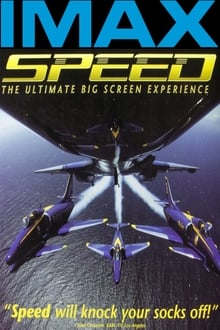
Speed
A documentary on the history on mankind's attempts to reach high speeds. Starting with the invention of the bicycle, going on to sports cars, cars with jet engines, rocket-powered cars, attempts to break the sound barrier, and rocket-engine airplanes. Each achievement is documented by title card indicating the speed reached in miles per hour.