
Personal Info
Known For
Gender
Birthday
Place of Birth
Georges Poujouly
Biography
Known for

Forbidden Games
Orphaned after a Nazi air raid, Paulette, a young Parisian girl, runs into Michel, an older peasant boy, and the two quickly become close. Together, they try to make sense of the chaotic and crumbling world around them, attempting to cope with death as they create a burial ground for Paulette's deceased pet dog. Eventually, however, Paulette's stay with Michel's family is threatened by the harsh realities of wartime.

Les Aventures de Tintin, d'après Hergé
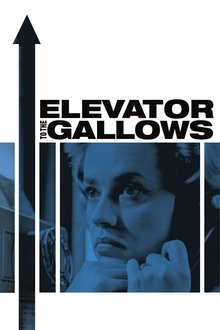
Elevator to the Gallows
A self-assured businessman murders his employer, husband of his mistress, which unintentionally provokes an ill-fated chain of events.
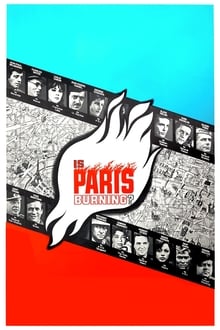
Is Paris Burning?
Near the end of World War II, General Dietrich von Choltitz receives orders to burn down Paris if it becomes clear the Allies are going to invade, or if he's unable to maintain control of the city. After much contemplation, Choltitz ignores orders, enraging the Germans and giving hope to various resistance factions that the city will be liberated. Choltitz, alongside Swedish diplomat Raoul Nordling, helps a leader organise his forces.
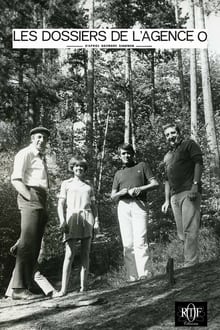
Les Dossiers de l'Agence O
L’Agence O is a famous Parisian private detective firm. Its premises are located in the Passage Choiseul. In front, Torrence leads the shop. In fact, the agency's team is complemented by Émilie le Roux, Mademoiselle Berthe and Barbet, who scrutinize clients through a one-way mirror located behind the desk. Getting hold of a man disguised as an old lady, solving the mystery of the Prisoner of Lagny or discovering who is blackmailing the painter Tigrane Alban does not worry the experts at the O Agency. Les Dossiers de l’Agence O is a French-Canadian television series in thirteen episodes of approximately 55 minutes created by Marc Simenon and broadcast first in Quebec from December 14, 1967 to March 13, 1968 on Télévision de Radio-Canada, then in France from March 11 to June 3, 1968 on the first channel of the ORTF.
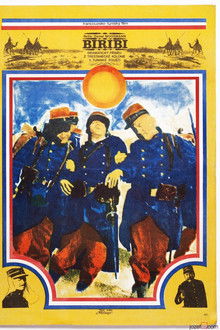
Biribi
Infantryman Jean Froissard is sentenced to two years in Biribi Military Prison in North Africa. He seems to get along, but as incompetence, corruption and sadism of his superiors (which include sexual abuse of the prison inmates) force him and others into rebellion. Court martial ensues ...
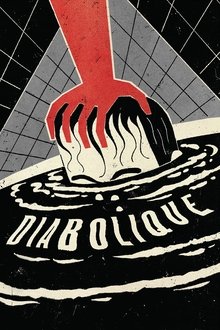
Diabolique
The cruel and abusive headmaster of a boarding school, Michel Delassalle, is murdered by an unlikely duo -- his meek wife and the mistress he brazenly flaunts. The women become increasingly unhinged by a series of odd occurrences after Delassalle's corpse mysteriously disappears.

...And God Created Woman
18-year-old orphan Juliette's unbridled appetite for pleasure shakes up all of St Tropez; her sweet but naïve husband Michel endures beatings, insults, and mambo in his futile attempts to tame her wild ways.
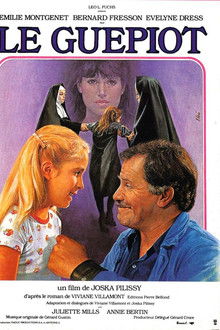
Le Guépiot
A girl is placed in a strict Catholic boarding school by her hateful mother after the divorce of her parents. There she is physically and psychologically tortured by the nuns because of her brutal use of language and anti-clerical upbringing. Her only moments of joy are the visits of her father.
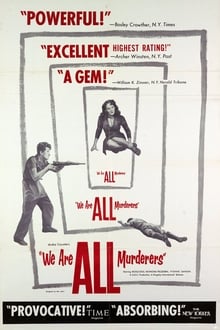
We Are All Murderers
Originally titled Nous Sommes Tout des Assassins, We Are All Murderers was directed by Andre Cayette, a former lawyer who detested France's execution system. Charles Spaak's screenplay makes no attempt to launder the four principal characters (Marcel Mouloudji, Raymond Pellegrin, Antoinine Balpetre, Julien Verdeir): never mind the motivations, these are all hardened murderers. Still, the film condemns the sadistic ritual through which these four men are brought to the guillotine. In France, the policy is to never tell the condemned man when the execution will occur--and then to show up without warning and drag the victim kicking and screaming to his doom, without any opportunity to make peace with himself or his Maker. By the end of this harrowing film, the audience feels as dehumanized as the four "protagonists." We Are All Murderers was roundly roasted by the French law enforcement establishment, but it won a special jury prize at the 1952 Cannes Film Festival.

The Calculus Affair
Strange things are happening in the evening at the mansion: glass things break without any apparent reason. Professor Calculus, somewhat apathetic to the whole series of events, leaves the following day to attend a conference on nuclear physics in Geneva. Foreign powers get wind of his work and send their agents to investigate.
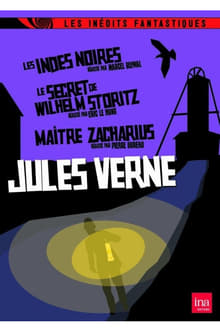
The Black Indies
In 1870s Scotland mining engineer James Starr is asked by former colleague Simon Ford, who's living inside the abandoned Aberfoyle mine, to help solve mysterious occurrences taking place inside the mine.

Les beaux yeux d'Agatha
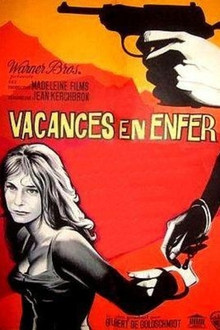
Vacation in Hell
During the Second World War, the Martel family hides out in the Pyrenees, waiting for hostilities to end. André, a young boy, saves them from an attack by bogus resistance fighters. Hunted from all sides, he flees to Spain. Catherine Martel leads him to the border, and a romance develops between them.
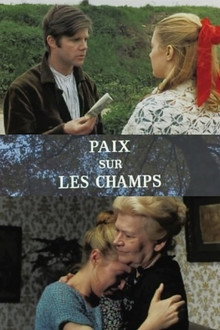
Peace in the Fields
This is a film which was made in Belgium in the early '60s and was never released. However, it somehow got included in the American Oscar category for "Best Foreign Film," and was finally released in its home country in 1971. It explores the issues of prejudice and superstition in the Belgian countryside through the troubles of a middle-aged farmer whose mother has been accused of being a witch. In French, this picture is based on a true story which took place in the late 1920s and early '30s.