
Personal Info
Known For
Gender
Birthday
Place of Birth
Gustaf Gründgens
Biography
Known for

Zur Person
A German television format in which Günter Gaus interviewed prominent members of German society, particularly politicians. More than 200 interviews were conducted over the course of 40 years.
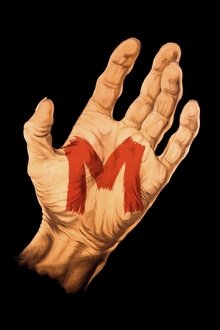
M
In this classic German thriller, Hans Beckert, a serial killer who preys on children, becomes the focus of a massive Berlin police manhunt. Beckert's heinous crimes are so repellant and disruptive to city life that he is even targeted by others in the seedy underworld network. With both cops and criminals in pursuit, the murderer soon realizes that people are on his trail, sending him into a tense, panicked attempt to escape justice.
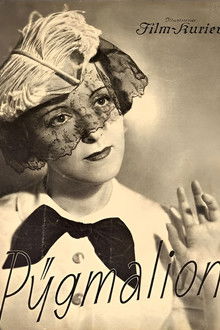
Pygmalion
When linguistics professor Henry Higgins boasts that he can pass off Cockney flower girl Eliza Doolittle as a princess with only six months' training, Colonel George Pickering takes him up on the bet. Eliza moves into Higgins's home and begins her rigorous training after the professor comes to a financial agreement with her dustman father, Alfred. But the plucky young woman is not the only one undergoing a transformation.
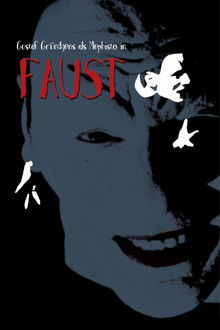
Faust
In 1957 Gustaf Gründgens staged a new production of Goethe's Faust in which he once again played Mephisto, a part he had played since 1932. The brilliant production was a huge success and ran for a couple of years. In 1959 Peter Gorski captured the performance on film in his directorial film debut. Basically it is a registration of the production, but Gorksi did manage to accentuate the details of the acting by using enough medium and close-up shots which give a view on the acting you normally would not able to see in a theater.

Das Jahrhundert des Theaters
"The Century of the Theater" - From the "birth of the director" to the "heroes of modernity" - an overview of the world of theater - illuminates the interaction with the history of the past hundred years is also shown.
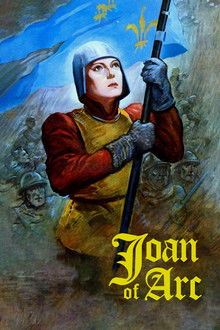
Joan of Arc
France in the 15th Century: The country is marked by the wars with England and internal power struggles. King Charles sees himself powerless against the state. As emerges from the people suddenly a young woman named Johanna, who claimed that the Archangel Gabriel to be appointed, to save France. First of all doubt the king in their words, but he remembers that the people through this "help of God" is gaining new courage. With the slogan "God and the Virgin!" pulls the revivified victorious army into battle against the English-Burgundian alliance. After Johanna King Charles is crowned at Reims, there breaks the plague over the country in. Now Johanna all the blame on the disaster: God would punish believe in the country for that a heretic; if Johanna were actual a holy, she would deal also with the plague. The waning faith weakens France, England is again on the rise. But Johanna is executed as a witch. Only years later annulled the verdict of the Holy and Johanna explained.
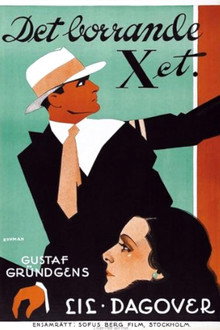
Va Banque
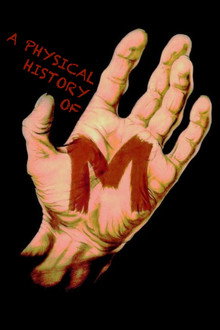
A Physical History of 'M'
This documentary traces the "physical history" of Fritz Lang’s M, from its production and original distribution to the digital restoration used as the basis for this edition. It includes a look at the French-language version of M but was produced before the discovery of the English-language version.
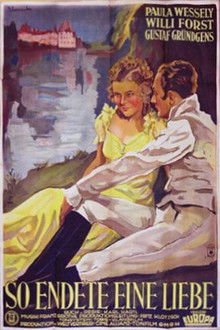
So Ended a Great Love
The political advisor to the French emperor Napoleon, and the Austrian emperor Franz I, arrange a marriage between Napoleon and the Austrian archduchess Marie-Luise in order to prevent another war.
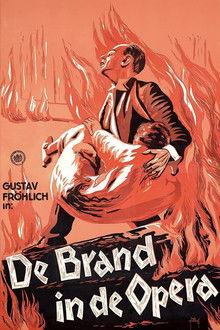
Fire in the Opera House
It begins with a Tannhäuser performance and ends with the premiere of The Tales of Hoffmann. In between a young ingénue cast in her first big role, the Hoffmann rehearsals, the theatre director and his stage director exchanging cynicisms, a budding love affair. Gründgens at his most repulsive, trying to woo both lovers. And a hair-raising finale. Add to this some snappy dialogue and "pre-code" scenes that make you sit up and stare.

Die schönen Tage von Aranjuez
As a gang of classy jewel thieves hop from one European country to another, an engineer rescues a woman from their clutches.
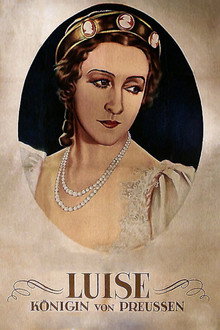
Luise, Queen of Prussia
Vehicle for one of the Weimar era's most beloved actresses: as the popular Prussian queen in 1806-1807, she presides over the humiliating Peace of Tilsit which Napoleon forces on the defeated Germans.
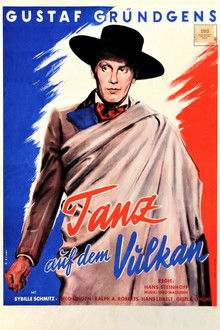
Tanz auf dem Vulkan
Paris, 1830: Jean-Gaspard Debureau performs on the stage and delights his audience with song, wit and charm. He is, however, very unpopular with King Charles X, who is the target of much of Debureau's scornful jests. That would be a somewhat tolerable situation if it weren't for the fact that Debureau has fallen for a countess, who happens to be the King's mistress.

Liebelei
Vienna in the beginning of the twentieth century. Cavalry Lieutenant Fritz Lobheimer is about to end his affair with Baroness Eggerdorff when he meets the young Christine, the daughter of an opera violinist. Baron Eggerdorff however soon hears of his past misfortune...
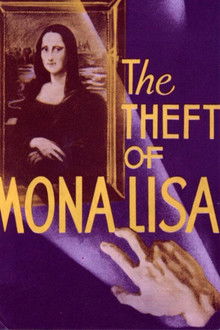
The Theft of the Mona Lisa
A painter working at the Louvre is struck by the Mona Lisa. When he meets a girl whom he believes bears a resemblance to the painting, and who wants him to become famous, he comes up with the idea of stealing the painting. Based on the real-life theft of 1911.