
Personal Info
Known For
Gender
Birthday
Place of Birth
Denise Fraga
Biography
Known for

Uga-Uga
An orphaned young man raised in the wild by an indigenous shaman is found by his grandfather and returned to his estranged family, where he finds himself as heir to their wealth.

Barriga de Aluguel
Ana and Zeca have a happy marriage, but they can't have children. To fulfill their dream, the couple hires the young Clara as a surrogate mother, which leads them into a legal dispute.

Sangue do Meu Sangue

Éramos Seis
Éramos Seis is a Brazilian period drama telenovela produced by SBT and originally broadcast from May 9 to December 5, 1994. Based on the 1943 novel of the same name by Maria José Dupré, it was adapted by Sílvio de Abreu and Rubens Ewald Filho, with direction by Henrique Martins and Del Rangel and general direction by Nilton Travesso. The telenovela stars Irene Ravache, Othon Bastos, Jandir Ferrari, Tarcísio Filho, Luciana Braga, and Leonardo Brício. Set in São Paulo between the 1920s and 1940s, the story follows Dona Lola, a devoted wife and mother who struggles to keep her family together despite financial hardship and personal tragedy. As her four children—Carlos, Alfredo, Isabel, and Julinho—grow into adulthood, each follows a different path shaped by love, ambition, and loss. Through decades of sacrifice and resilience, Lola witnesses the joys and sorrows of family life while enduring profound changes that ultimately leave her to reflect on a lifetime of devotion.

Brava Gente
Brava Gente was a television series aired by TV Globo in Brazil between 2000 and 2003, initially as a special year-end. The program was adapted from stories and national stories, and plays by famous playwrights, screenwriters and signed by a number represented by several actors and actresses. The genres of the stories varied each week with the style of each director or author. Brava Gente in the stories ranged from comedies and dramas. In all 53 episodes were shown, broadcast on Tuesday nights.

Bambolê
A widower who was anything but traditional for the 1950s, Álvaro has a frank relationship with his daughters and becomes the target of criticism from his sister-in-law Fausta, especially when he meets Marta.

A Dog's Will
The lively João Grilo and the sly Chicó are poor guys living in the hinterland who cheat a bunch of people in a small town in Northeastern Brazil. When they die, they have to be judged by Christ, the Devil and the Virgin Mary before they are admitted to paradise.

TV Pirata
TV Pirata was a weekly Brazilian comedy show aired on Rede Globo between 1988 and 1990, being re-aired monthly in 1992. Some of the writers later went on to form the comedy troupe Casseta & Planeta. The show was first aired in April 1988 to fill a gap on Rede Globo's Tuesday night prime time line-up and its comedy was inspired by sketch comedy shows such as Saturday Night Live and Monty Python's Flying Circus with a no-nonsense approach to Brazilian comedy; however, it mixed a new style of comedy with elements of Brazilian culture such as football, politics, pop culture, telenovelas, economics and celebrities. No well-known figure or member of any economical or social class was spared from the show's cutting edge humor. The premise of the show was a TV studio being invaded by pirates who took over the programming department and put a tape on the air with some "unusual" programming. Another new element to Brazilian audiences was the performers, who weren't the usual comedic actors, but dramatic actors doing more comedic roles.

In Your Place
Christian and Renato are identical twins who have opposite lives: Christian grew up in an orphanage and is underemployed, struggling to survive. Renato was adopted by a rich family and had everything that money can buy. When they meet again as adults, a tragedy happens: Renato is murdered and identified as Christian who, in turn, takes the place of his brother. However, to this end, he must leave behind his identity and his great love.

Mundo da Lua
The show features Lucas Silva e Silva, a boy who earns a recorder from his paternal grandfather, Orlando, at the age of 10. Amid the typical problems of moving from childhood to adolescence, Lucas creates stories on the tape recorder from how he would like things to be. He lives at his grandfather's house with his parents, Rogerio, a teacher who works out for three jobs and Carolina, who works in a boutique; the older sister, Juliana; and maid Rosa, who dates Marcelo and talks to broadcaster Ney Nunes on her radio.
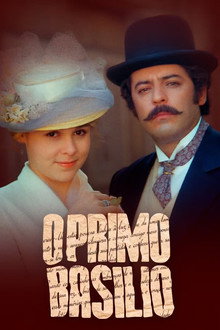
Cousin Bazilio
Arriving in Lisbon from London, Basílio falls in love with his cousin Luísa, but he must go to Brazil, promising he will eventually marry her. As time goes by, he sends her a letter ending the relationship and she marries Jorge, an engineer. One of Jorge's rich aunts dies, leaving him a small fortune and her former maid Juliana. Juliana gets hold of love letters between Luísa and Basílio and starts to blackmail her employer.

Norma

Queridos Amigos
Reserved, intelligent and generous, Leo has achieved professional success and now lives secluded in Serra da Cantareira, alongside young Karina. He discovers that he is ill, and decides to reunite the old friends of the 1970s, with whom he fought the military regime.
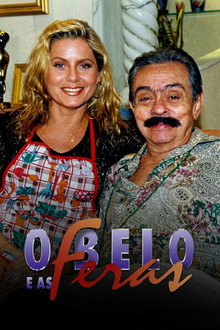
O Belo e as Feras

A, E, I, O... Urca
Silvia goes to Rio de Janeiro as a chorus girl at the Cassino da Urca to free her father, who is imprisoned for defending communism, and becomes involved in a complex love triangle and blackmail.