
Personal Info
Known For
Gender
Birthday
Place of Birth
Bruno Garcia
Biography
Known for

A Grande Família
The daily lives of a typical Brazilian middle-class family, that are always very close and tries, in their way, to survive the financial and relationship difficulties.

Que História é Essa, Porchat?

Força de um Desejo
Set in the 19th century, the novel tells the story of an impossible romance. Inácio, a young man from a traditional family, falls in love with Esther, the owner of the most famous brothel in the Court.

Happiness
Helena and Álvaro fall in love, but she marries someone else. Years later, they meet again and Helena becomes pregnant, but keeps it a secret because Álvaro is now the one who is engaged.

Bang Bang
Twenty years after seeing his family decimated by gunmen, Ben Silver returns to Albuquerque to take revenge on the person responsible for the massacre, but falls in love with his rival's daughter.

Student's Heart
Biology professor Edu is an idealistic man who moves with his son Lipe to the charming, fictional town of Nova Aliança, in Minas Gerais, in search of a better quality of life. Edu is engaged to Amelinha, daughter of the wealthy and greedy rancher João Mourão. But this relationship becomes unstable when Edu falls in love with the dreamy lawyer Clara, daughter of Lígia and the experienced lawyer Raul Gouveia. Edu is a single father and tries to always be present in Lipe's life, attempting to keep him away from his mother, Mariana, whose drug addiction prevented her from raising her son. Edu's future father-in-law, João Mourão, is the biggest businessman in Nova Aliança: he owns a farm, a dairy, a meatpacking plant, and a transportation company. João takes issue with Edu when he discovers that the young man is a strong defender of nature and environmental protection laws, which turns him into a rival in the fight for a stretch of virgin forest.

Três Irmãs
In the coastal city of Caramirim, the three surfing sisters from the Jequitibá family fight for environmental protection in the region. But Violeta wants to build a hotel complex on the site.

Kubanacan
The story begins in 1951 in Kubanacan, a small Caribbean island country known as a"banana republic", both for its prime export and its economic problems. After the death of the current president, General Carlos Camacho imposes a coup d'état and establishes a dictatorial regime. In addition, the new ruler marries the wife of her predecessor, Mercedes, first lady loved by the people for her help to the poor and with whom she had an affair for years. In the village of Santiago, a mysterious man falls from the sky during a storm with a chest shot, being saved by the fishermen and cared for by Marisol. Without memory, Esteban falls in love with the girl and disputes his heart with her husband, Enrico, who leaves and lets his ex-wife live with the new love, who takes over her two children. Seven years later, in 1958, Marisol meets Camacho, who convinces her to leave and live as his mistress, claiming she would never get out of poverty in the village.

Pé na Jaca
The hypochondriac lawyer Arthur, the model Maria, the religious Elizabeth, the hardworking Guinevere, and the womanizing personal trainer Lancelotti reunite after 25 years in the fictional town of Deus me Livre, in the interior of São Paulo. Determined to correct past mistakes and start their lives anew, they end up rekindling old flames. This is the main plot of Pé na Jaca, which, starting with the reunion of the five childhood friends, shows a frantic hunt for fortune, seasoned with hilarious romantic entanglements.

Boogie Oogie
In the swing of the 70s, two women fight for the love of the same man without knowing their fates were already intertwined.
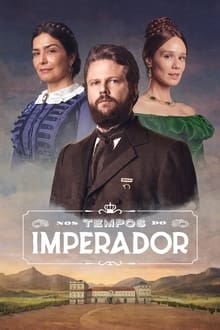
In the Emperor's Times
In 1856, the emperor Dom Pedro II lived a marriage of appearances with Teresa Cristina, with whom he was forced to marry at a young age by his parents' political alliance, having two daughters with her: Isabel and Leopoldina. He truly loves Countess Luisa, a cultured and time-ahead woman who fights for the abolitionist cause and women's rights, married to Eugenio, the emperor Napoleon's cousin. At the same time there are sisters Pilar and Dolores: the first went to a convent after her mother's death in childhood, growing up among books and dreaming of studying medicine - inspired by the story of Elizabeth Blackwell, the first doctor in the world -, while the second stayed at home to take care of her father, Colonel Eudoro, growing up repressed, illiterate and without vanity.

Tangled Hearts
Follows the story of six young individuals who work hard to achieve their dreams and also dream of loving someone special and being loved as well. Amora, Bento and Fabio were raised at an orphanage at Capo Verde by Gilson and his wife, Selma. They each took their own path in life when Amora was adopted by actress Barbara Ellen, Fabio with a broke family in the countryside and Bento grew up to become a florist in a cooperative with Gilson, Selma and Giane, a childhood friend Who secretly has a crush on him. Amora becomes a famous model and media personality and socialite Who is brattish and vain, and Malú, her adoptive sister is a responsible, simple and down to earth University student who is unloved by Barbara Ellen who considers her a mistake.

Brava Gente
Brava Gente was a television series aired by TV Globo in Brazil between 2000 and 2003, initially as a special year-end. The program was adapted from stories and national stories, and plays by famous playwrights, screenwriters and signed by a number represented by several actors and actresses. The genres of the stories varied each week with the style of each director or author. Brava Gente in the stories ranged from comedies and dramas. In all 53 episodes were shown, broadcast on Tuesday nights.