
Personal Info
Known For
Gender
Birthday
Place of Birth
Hebe Camargo
Biography
Known for

As Pupilas do Senhor Reitor
O Profeta
Daniel is a psychic who can see the past and predict the future. As a child, he had a vision that his brother-in-law, João Henrique, was cheating on his sister, Ester, which led her to separate from her husband. As an adult, his psychic abilities increase and Daniel uses them for his own benefit, rather than to help people. He sets up a practice and appears on TV, becoming famous and known as “the Prophet.” Daniel begins to grow rich, important, and cold.

Saia Justa
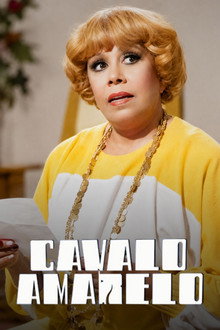
Cavalo Amarelo
The irreverent Dulcinéa struggles to keep her revue theater, *Mambembe*, afloat; the building itself belongs to the traditional Maldonado family. The patriarch, Salvador Maldonado—a conservative man—keeps a tight rein on the clan, maintaining control over both the business and his children: Joana, an elegant and snobbish woman who is the staunchest defender of the views held by Pops, as the children call him; Téo, who has always silently submitted to the old man's high-handedness; Walter, dominated by his older sister and his father's favorite; and Lalucha, the youngest, a film student who challenges the status quo and rebels against the family's stuffy conservatism.
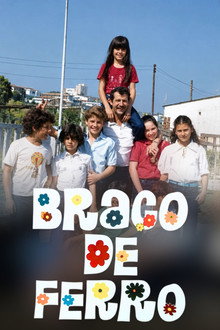
Braço de Ferro
A group of lower-middle-class children, living on the same street, decide to found a club in an abandoned house with the aim of creating a meeting point. Problems begin with the expropriation of the land for the construction of a supermarket. At the same time, two leaders vie for the presidency, dividing the group in a power struggle that will only end when they lose the house permanently. However, the millionaire Gastão dies and leaves a mansion to the children in his will.

Hebe

Sessão +SBT

Viva Marília
The historical, political, and social context of Brazil in the 1960s, 1970s, and 1980s, and the impact of each decade on the life and work of the acclaimed actress Marília Pêra.

Fernando Collor: The Maharajah Hunter
The rise and fall of Fernando Collor de Mello, Brazil's youngest president and the first president in the Americas to be impeached.

Mazzaropi
A documentary on the life and work of Amácio Mazzaropi, a phenomenon of popularity and profitability of Brazilian cinema.

Hebe: Um Brinde à Vida
Hebe's story confounds with that of Brazilian TV. Find out what she was like behind the cameras: her passions, disappointments and how she became one of the greatest icons of Brazil.

Ritas
It explores Rita Lee's personal life and her creative process, revealing her musical talent and her ability to transform on stage. Rita herself guides the narrative through past interviews she gave throughout her career and current testimonies.

Programa do Jô
Programa do Jô is a Brazilian late-night talk show broadcast by Rede Globo since April 3, 2000. It is shown after the late-night news bulletin, Jornal da Globo. The program is hosted by Brazilian comedian, author and musician Jô Soares, and follows the format of American talk shows such as Late Show with David Letterman. It began its life as Jô Soares Onze e Meia in 1988 on SBT. Following Jô Soares' return to Globo in 2000, the show was renamed as Programa do Jô, retaining the same format and late-night time slot. The show usually features interviews with 3 guests and a live musical performance. Usually, if one of the guests is a musician or band, they return to perform at the end of the show. There are also occasions when the first guest stays on to continue the interview past the first commercial break, in which case the show only features 2 interviews. In most cases, the interviews are longer and more in-depth than those on Letterman's show.
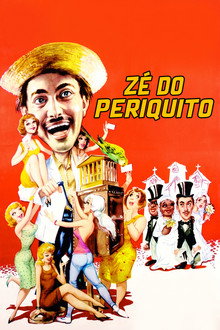
Zé do Periquito
Zenó (Mazzaropi) is a poor gardener of a traditional school in São Paulo who falls in love with one of the local girls, much richer and younger than him. Willing to conquer her, he decides to get rich, getting involved in the most varied and funny situations.
