Personal Info
Known For
Gender
Birthday
Place of Birth
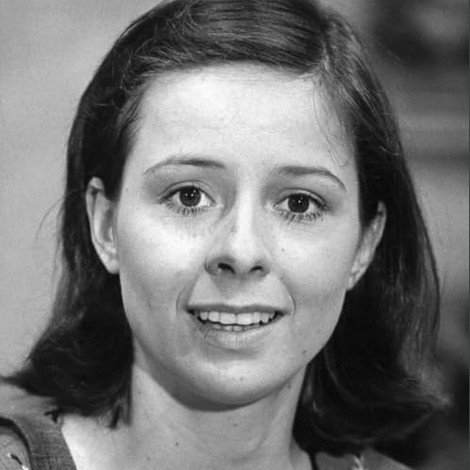
Débora Duarte
Biography
Known for

Young Hearts
Malhação is a Brazilian television series for the teenage audience. The soap started in 1995, and was set in a fictional Gym Club called Malhação on Barra da Tijuca, Rio de Janeiro. Through the years the location varied slightly. Although the name of the soap remains the same, it is now set in the Múltipla Escolha High School.

The Trapalhões
Os Trapalhões was a Brazilian comedy group and also a Brazilian television series created by Wilton Franco. Its members were Dedé Santana, Zacarias, Mussum and their leader Didi Mocó, that was played by Renato Aragão. The name Trapalhões is derived from the Portuguese verb atrapalhar, which means the opposite of helping, to do something the wrong way or to Those that confuse. The name is translated "Tramps" in English DVD subtitles. It was aired by Rede Globo from 1977 to 1999. On March 18, 1990, Zacarias died due to respiratory failure, but the group and the series didn't come to an end until July 29, 1994, when Mussum died due to an unsuccessful heart transplant.
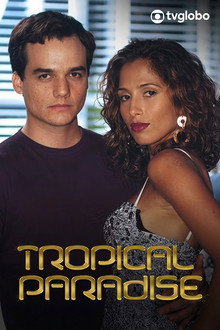
Tropical Paradise
The search for a successor provokes the beginning of a clash between two young and talented executives of his group: Daniel Bastos, a lad of simple origins and excellent character, who is not only handsome and charming, but also intelligent and skilled, and Olavo Novaes, an ambitious and unscrupulous man who is ready to fight for the position, at any cost. To fight against Olavo‘s treacherous plans, Daniel will have the help of the sweet and sensitive Paula, a young lady raised as an only child who founds, on the eve of her mother‘s death, that she is adopted and has a family. What Paula does not know is that she has an identical twin sister, the wicked Taís, who is as ambitious and unscrupulous as the man who becomes her main ally, Olavo Novaes. Antenor, for his part, decides on having an heir when he meets the headstrong and honest Lúcia, a woman who will make this cold businessman find true love is and a real reason to live.

Pátria Minha
Four stories intertwine, revolving around moral dilemmas of life in society. A secret unites student Alice and mega-businessman Raul Pelegrini, who are major ideological opponents.

Albert, the Rockefeller
Albert, the Rockefeller is a Brazilian telenovela produced by TV Tupi and aired from November 4, 1968 to November 30, 1969. It was created by Cassiano Gabus Mendes, written by Bráulio Pedroso and directed by Lima Duarte and Walter Avancini.

The Enchanted Cave
A Caverna Encantada is a Brazilian children's telenovela produced by SBT in partnership with Disney and originally broadcast from July 29, 2024, to September 5, 2025. Created by Íris Abravanel, with collaboration from Andreza Porto, Denise Barbosa, Fany Higuera, Gustavo Braga, and Luiz Felipe Pereira Santos, and directed by Ricardo Mantoanelli, the telenovela is an adaptation of the books A Little Princess and The Secret Garden by Frances Hodgson Burnett. The story follows Anna, a seven-year-old girl whose father, Paulo, a missionary doctor, leaves her at the Rosa dos Ventos boarding school before going on a dangerous mission. When he mysteriously fails to return, Anna begins searching for answers about his disappearance and discovers secrets about her past. At the boarding school, she forms friendships, faces challenges, and experiences adventures filled with mystery, fantasy, and hope.

Três Irmãs
In the coastal city of Caramirim, the three surfing sisters from the Jequitibá family fight for environmental protection in the region. But Violeta wants to build a hotel complex on the site.

Terra Nostra
This top-seller recounts the saga of Italians who immigrated to Brazil during the XIX century, seeking their fortunes in America. The forbidden love between Giulliana and Matteo flowers in the midst of the sweeping changes ushered in by the arrival of these Europeans in Brazilian towns. This great epic has thrilled viewers in more than eighty countries.

Power Play
Eloá and Osmar's marriage is thrown into crisis when a mysterious man crosses their path. With a thirst for prestige and power, Eloá will face the consequences of her ambition.

Hilda Hurricane
After breaking off her engagement on her wedding day and going directly to a prostitution house, a young model becomes the city's most famous harlot, known as "Hilda Hurricane", in the 50's Brazil. She could do fine if it wasn't for Malthus, a young novice said to be a saint, for whom she falls in love. However, the boy is kept under the strict, severe doctrine of Father Nelson, a conservative priest intolerant even to every minor sin. Things start getting harder when Roberto, Malthus' old friend and a communist reporter (the actual author of the story), tries to interview Hilda and disclosure the real reasons behind her radical change of mind. In the meantime, the middle-classes are terrified by the "leftist threat" in Brazilian politics.

Sétimo Sentido

Ambitious Women
In Ambitious Women, all levels of ambition are revealed in a plot full of greed, revenge and struggle for power, through the conflicts of three strong women with very different personalities.

Gypsy Heart
Dara is a young Gypsy woman torn between her family’s traditions and her desire to choose her own path. Promised in marriage to Igor, her life changes when she meets Júlio Falcão online. Caught between love, the customs of her people and family conflicts, Dara must face choices that could transform her future.
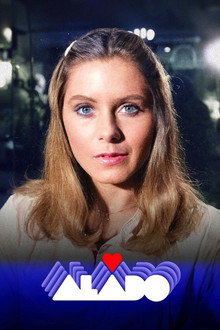
Coração Alado

Side by Side
Winner of the International Emmy Award for Best Telenovela, "Side by Side" focuses on two women of different origins and social classes. The brave Isabel, daughter of a former slave and in love with the capoeira player Zé Maria; and Laura, descendant from a wealthy family and destined to an undesired marriage to Edgar. In addition to an unshakable friendship, the two share the same purpose in life: the conquest of freedom in the conservative society of Rio de Janeiro of the early 20th century.