Personal Info
Known For
Gender
Birthday
Place of Birth
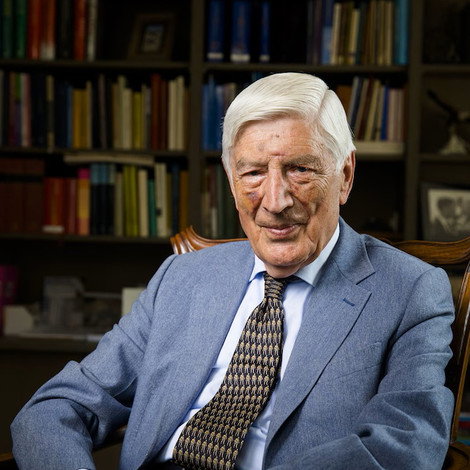
Dries van Agt
Biography
Known for

Knevel & Van den Brink

Prins Bernhard
Experts and people who knew him attempt to get to the heart of his character. Their stories are visually supported by unique and never-before-seen footage from Bernhard's private collection.

SPLINTER, in de politiek
The 22-year-old Splinter guides the viewer through the Hague jungle. From the Little Tower to the secret corridors of the Binnenhof, Splinter opens doors that normally remain closed. He also visits politicians precisely at moments when they are truly being themselves. For instance, he reads newspapers in the café with Mark Rutte, jogs with Rob Jetten, and practices yoga with Sylvana Simons. During his expedition, he speaks with political heavyweights, cunning spin doctors, celebrated journalists, and well-known activists. What does power do to you? Can you be yourself in politics? And does the Binnenhof still have idealists?

Molukkers in Nederland: 70 jaar op weg naar huis
Moluccans in the Netherlands: 70 Years on the Way Home. In 1951, the first Moluccans came to the Netherlands. Through interviews, Coen Verbraak tells the stories of different generations of Moluccans about their involuntary exile.

Beatrix
Insiders, close friends, and experts talk about the impressive life of Princess Beatrix: the powerful woman, friend, and mother behind the office.
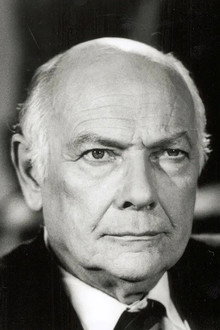
De illusie aan de macht - 1412 dagen kabinet Den Uyl
Based on inside interviews, a picture is painted of one of the most discussed government teams in the Netherlands: the Den Uyl cabinet between 1973 and 1977.

Frits Bolkestein: De weg van de wil
KRO documentary about VVD parliamentary group leader Frits Bolkestein and his life and work.
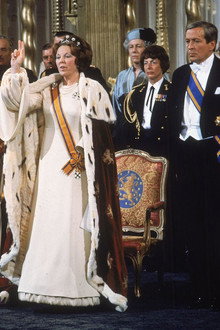
Inauguration of Queen Beatrix
During the succession to the throne in the Netherlands on April 30, 1980, the abdication of Queen Juliana took place in Amsterdam, followed by the inauguration of Beatrix as Queen of the Netherlands.

Hart van de democratie
This documentary was shot in 2018 and 2019 within the walls of The Hague Binnenhof and examines how our democracy works and shows that it is under considerable pressure. The Binnenhof now looks different in the corona era. It has also become quieter there and people keep their distance, but the question whether and how our democracy will survive is just as important as before.
25 kroonjaren, koningin Beatrix 1980-2005
On the occasion of Queen Beatrix's twenty-fifth anniversary of her reign. In conversations with Professor of Legal Philosophy Dorien Pessers, the Queen reflects on her role in office and discusses the various aspects of her position. The conversations are interspersed with interviews by Pim van Galen with Dries van Agt, Ruud Lubbers, Wim Kok, and Jan Peter Balkenende, the four prime ministers with whom the Queen has worked since 1980, and with archival material from the past twenty-five years. The broadcast is produced by NOS Actueel and hosted by Maartje van Weegen.
Aankondiging aftreden Koningin Juliana
Transmission recording by the NOS. On January 31, 1980, Princess Beatrix's birthday, Queen Juliana announced via radio and television at the stroke of 8:00 PM that she was abdicating. In warm words, she asked the Dutch people for support and trust for her daughter Beatrix, the new queen. Prime Minister Van Agt subsequently offered his congratulations and wished Queen Juliana and Crown Princess Beatrix health and blessings. In a special broadcast of the NCRV program *Hier en nu*, former Prime Ministers Biesheuvel and De Jong discussed the succession to the throne.
25 jaar Beatrix
Live broadcast on the occasion of Queen Beatrix's twenty-fifth anniversary of her reign. In the Knight's Hall in The Hague, members of the First and Second Chambers and members of the Cabinet gather for a Special Joint Session of the States General. The Queen and her family are present at the meeting. Subsequently, an aubade is performed for the Queen at the Binnenhof. The presentation is hosted by Maartje van Weegen, who speaks in the studio with historian Jan Bank, interspersed with reports on the celebration of Queen's Day in various locations and well-known figures congratulating the Queen. The broadcast is provided by NOS Actueel.

Alsof ik Palestina heb gestolen
Criticism of Israel is often labeled as antisemitism, particularly by a segment of the Jewish community. To what extent is this the case? Frans Bromet asks people with differing viewpoints on this complex subject.

Het Bijbels Openlucht Museum
Documentary about the Biblical Open-Air Museum Nijmegen and its director Pieter-Matthijs Gijsbers, who, among other things, allocated a place to Islam in the originally Catholic museum.