Personal Info
Known For
Gender
Birthday
Place of Birth
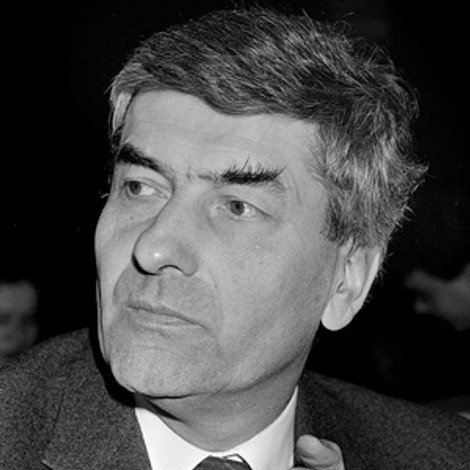
Ruud Lubbers
Biography
Known for

De Wereld Draait Door
Talk show hosted by Matthijs van Nieuwkerk containing a mixture of news, information, television bloopers and general entertainment.

Fortuyn: On-Hollands
What does Pim Fortuyn's legacy mean for the Netherlands today? How have his rise and his assassination changed the political and societal debate on migration? And what does that say about Dutch views on tolerance and diversity? In the eight-part KRO-NCRV documentary series Fortuyn: Un-Hollands, producer mint film office gives a voice to people who were barely heard at the time, but who were right at the center of the Fortuyn debate. Critics, political allies and opponents, men and women, with a bicultural background and white, tell how they experienced the Fortuyn revolt and what influence Pim Fortuyn had – and still has – on their lives and positions in the Netherlands.

Willem-Alexander & Máxima
The marriage between Willem-Alexander and Máxima reads like a fairy tale, but one in which love, duty, and public opinion constantly clash. Insiders, close friends, and experts explain how the relationship comes under pressure as soon as private choices have public consequences.

Molukkers in Nederland: 70 jaar op weg naar huis
Moluccans in the Netherlands: 70 Years on the Way Home. In 1951, the first Moluccans came to the Netherlands. Through interviews, Coen Verbraak tells the stories of different generations of Moluccans about their involuntary exile.

Beatrix
Insiders, close friends, and experts talk about the impressive life of Princess Beatrix: the powerful woman, friend, and mother behind the office.

De zware jas van Beatrix

Frits Bolkestein: De weg van de wil
KRO documentary about VVD parliamentary group leader Frits Bolkestein and his life and work.
De illusie aan de macht - 1412 dagen kabinet Den Uyl
Based on inside interviews, a picture is painted of one of the most discussed government teams in the Netherlands: the Den Uyl cabinet between 1973 and 1977.

Under the spell of the bomb
Documentary about whistleblower Frits Veerman, who in the 1970s exposed the nuclear espionage at Urenco in which his Pakistani colleague Abdul Khan smuggled nuclear data out of the country. He was fired and fought for 40 years for rehabilitation. Frans Bromet examines the moral compass of the headstrong whistleblower in the politically shadowy and high-profile espionage scandal. Bromet wants to understand what underlies years of backroom politics, an intelligence agency that refuses to grant access to the file, and international interests that apparently prevail over the protection of an observant citizen by his government. The fact that the Dutch State takes no responsibility in this matter weighs heavily, literally and figuratively, on Veerman. The threat of a nuclear bomb remains real. Will a potential rehabilitation offer the satisfaction he has been waiting for forty years?

Hedy D'Ancona: Het Persoonlijke is Politiek
Documentary about the work and life of Hedy d'Ancona (1937) and the issues she has always championed: women's rights, the right to self-determination, and a dignified end of life. Interviews with D'Ancona are interwoven with scenes of women who, in 2022, are committed to the same themes, such as abortion activist Eva de Goeij, PvdA alderwoman Marjolein Moorman, and euthanasia advocate Adrienne Buschmann. The fight for equality remains relevant, and D'Ancona's ideas are still worth fighting for.

Het Gedoogdrama
Documentary about the formation and fall of the Rutte 1 cabinet, which was supported by the PVV. Insiders speak candidly about how the tolerance agreement came about, how the CDA split in two, what went on within the coalition, and how the cabinet's downfall unfolded. Moreover, this documentary gives us the opportunity to look ahead, with the knowledge of the time, to what could soon become reality again after the elections in March.

Hans van Mierlo, What I Still Dream of Writing
"It was a kind of flywheel that you set in motion; I couldn't turn back at all," says Hans van Mierlo in the film about his political career. That career began in 1966 when he founded the political party D66 with a number of like-minded individuals. Clearly visible from the editorial office of the Algemeen Handelsblad on the Nieuwezijds Voorburgwal in Amsterdam, the unrest was crowing, fueled by Provo. The pillar society, which had kept the Netherlands afloat for so long, was no longer adequate. That was his analysis, and a much more direct democracy would have to take its place.

25 kroonjaren, koningin Beatrix 1980-2005
On the occasion of Queen Beatrix's twenty-fifth anniversary of her reign. In conversations with Professor of Legal Philosophy Dorien Pessers, the Queen reflects on her role in office and discusses the various aspects of her position. The conversations are interspersed with interviews by Pim van Galen with Dries van Agt, Ruud Lubbers, Wim Kok, and Jan Peter Balkenende, the four prime ministers with whom the Queen has worked since 1980, and with archival material from the past twenty-five years. The broadcast is produced by NOS Actueel and hosted by Maartje van Weegen.

Het geheim van Ruud Lubbers
Ruud Lubbers was the longest-serving Prime Minister of The Netherlands. For twelve years, he was a defining force in Dutch politics. Elusive and influential. How did he manage to stay in power for so long?
25 jaar Beatrix
Live broadcast on the occasion of Queen Beatrix's twenty-fifth anniversary of her reign. In the Knight's Hall in The Hague, members of the First and Second Chambers and members of the Cabinet gather for a Special Joint Session of the States General. The Queen and her family are present at the meeting. Subsequently, an aubade is performed for the Queen at the Binnenhof. The presentation is hosted by Maartje van Weegen, who speaks in the studio with historian Jan Bank, interspersed with reports on the celebration of Queen's Day in various locations and well-known figures congratulating the Queen. The broadcast is provided by NOS Actueel.