Personal Info
Known For
Gender
Birthday
Place of Birth
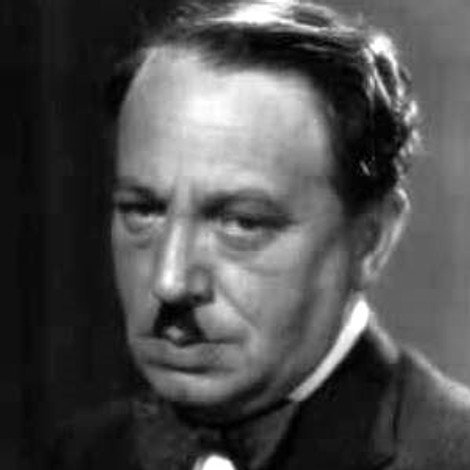
Gyula Gózon
Biography
Known for

Yesterday
October, 1956. Colonel lieutenant Szabó sends a platoon with the mission of calming the people demonstrating in the town. The platoon is lined up under the command of Lieutenant Csendes and the soldiers aim at the demonstrators. Szusza Kis changes sides, and Csendes is unable to shoot at his childhood mate. They withdraw.

Villa for Sale
The villa in the story of László Vadnai is for sale. The owner goes away and leaves the house to his butler, who also entrusts its safekeeping to an old friend. The friend immediately moves in with his niece, and two swindlers appear. But who is the seller and who is the buyer, and why the villa has to be sold at all, is a question that is only answered satisfactorily at the end of the film, after a lot of wall-crawling humour.

A Strange Marriage
Count János Buttler rushes home to his parents and his beloved for the school holidays. On the way, they stop at Baron Dőry's house, where János is deviously trapped. In the presence of false witnesses, he is forcibly married to Baron Dőry's pregnant daughter. The swearing priest is the father of the unborn child. Although Buttler, his family and friends do their utmost to have the marriage annulled, the Church and the court, fearing for his authority, will not allow it. John Buttler and his lover therefore choose another way to divorce.

Sweet Stepmother
The child's must have a mother! - This is the doctor's instructions, and a young widow will do everything so that little girl's mood will change.

Rosewood Cane
After having spent 22 months in prison, Viktor Pálos returns to his homeland, where he is going to be involved in the robbery committed by his relatives.

The School-Mistress
The protagonist of the story is Flora, a teacher who wants to teach in the village, in accordance with her vocation and her oath. Her beauty and purity bring her into conflict with the local authorities and with the landowning family of the countryside. Aware of her truth, she defies them, but can only count on the sympathy of the old priest. István Nagy Jr., the idle, dissolute landowner's son, falls in love with Flóra, and love changes him: he takes her side, exposing the lecherous hypocrites.

The Golden Kite
The film is put at the beginning of the century in Sárszeg, following the humiliation and collapse of a high-school teacher.

Semmelweis
Ignác Semmelweis is 18 and is in Vienna, training to become a judge-advocate, to comply with the wishes of his family. He is, however, attracted by the medical science, and joins the team of Professor Rokitanszky.

Spring Shower
It tells the story of Marie, an austerely beautiful young peasant girl played by the French star, Annabella. She is seduced beneath a flowering tree by the admirer of one of the daughters of the prosperous family for whom she works, becomes pregnant and is cast out.
Segítség, örököltem!

Ida regénye

The Dream Car
A light hearted comedy, from the thirties. One of the most successful ones in Hungary. The ever enchanting story of a beautiful girl falling in love with a rich man.

A Night in Venice
A Hungarian-language film loosely based on the 1883 operetta Eine Nacht in Venedig (A Night in Venice) by Johann Strauss II. The film was shot simultaneously while making the German film A Night in Venice (1934). The Hungarian version was co-directed by Robert Wiene and Géza von Cziffra and used a separate cast of Hungarian actors. From Wikipedia.

Erdélyi kastély

Purple Lilacs
Tóth Manci, a milliner turned dancer, meets Pali, a handsome banker, and falls madly in love. But she waits in vain for a word of encouragement from him, because he loves Lili, the belladonna. So Manci, in her grief, goes to Russia. By the time Pali realizes that he loves Manci too and wants to follow her, war breaks out, and he can only follow her as a soldier.