Personal Info
Known For
Gender
Birthday
Place of Birth
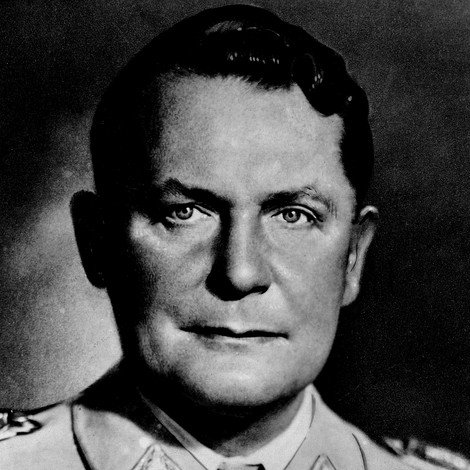
Hermann Göring
Biography
Known for

American Experience
TV's most-watched history series brings to life the compelling stories from our past that inform our understanding of the world today.

Terra X History
The spectrum of topics ranges from political history with a focus on contemporary history (especially National Socialism and post-war history) to cultural history and social history. In addition, ZDF-History also regularly deals with pre-modern history, art and cultural history.

Apocalypse: The Second World War
A six-part French documentary about the Second World War composed exclusively of actual footage of the war as filmed by war correspondents, soldiers, resistance fighters and private citizens. The series is shown in color, with the black and white footage being fully colorized, save for some original color footage. The only exception to the treatment are most Holocaust scenes, which are presented in the original black and white.

Apocalypse: The Rise of Hitler
Adolf Hitler (1889-1945) was a mediocre who rose to power because of the blindness and ignorance of the Germans, who believed he was nothing more than an eccentric dreamer. But when the crisis of 1929 devastated the economy, the population, fearful of chaos and communism, voted for him. And no one defended democracy. As the dictatorship extended its relentless shadow, the leader claimed peace, but was preparing the Apocalypse.

Greatest Events of World War II in Colour
Using highly advanced colourisation techniques, critical moments from World War II, from Stalingrad to The Battle of Britain, are shown in a whole new light.

Hitler's Museum
One and a half years before the begin of the Second World War during the annexation of Austria in March of 1938, Hitler conceived the megalomaniac idea of creating the largest European art center in his home town of Linz. At the beginning of the war on the 1st of September 1939, not only did his armies advance but also his art thieves began to fan out in their great foray of art plundering; an expedition on a previously unheard of scale began. Not only did the task forces of diverse National Socialist organizations pillage the occupied countries; Nazi bigwigs like Goering also took whatever they felt was valuable. This documentary includes the long and eventful journey of an exceptional masterpiece of European art: the Ghent Altar, created by van Eyck.
Sverige och kriget
In 2025 it will be 80 years since the end of World War II. What was it like to live in Sweden during the war? How were people affected by everything that happened so close to home? SVT has asked the Swedish people to send in their memories: letters, films, photographs and diaries and several thousand responses were received from all over the country.

Secrets of the Nazi Criminals
Documents the major trial of the Nazi war criminals and the violent acts that they were accused of.

Apocalypse: The Fall of Hitler
Summer 1943: Hitler engages in a decisive battle in Kursk to win the war in the East. This is without counting on the pugnacity of the Red Army and the Allied intervention in the West. Month after month, the noose tightens on the Nazi tyrant who refuses to admit defeat and precipitates his country in its fall.

Distant Journey
Prague, during World War II. Hana Kaufmann, a Jewish ophthalmologist, marries Dr. Antonín Bureš, a Christian man. When her family is sent to the Theresienstadt concentration camp, their romance turns into a struggle for survival.

Corridors of Power: Should America Police the World?
No easy answers? Decision-makers from Kissinger to Rice revisit how the US responded to conflicts from Rwanda to Iraq. Faced with human suffering - who has responsibility to act?

Festive Nuremberg
Said to pick up where "Triumph of the Will" left off, this film showcases highlights of the Nazi Party rallies in Nüremberg in 1936 and 1937. The main focus of the film begins with extended footage of the Gothic splendor of Nüremberg from the air, Hitler's arrival at the airbase, his motorcade into the city, and the ensuing ceremonies. Other, much more propagandistic elements, are edited in; they include: past Nazi party marches and rallies, parachute drops, Wehrmacht exercises in the Zeppelin fields, random military formation night rallies and random shots of massed crowds, fireworks, torch lit marches, even live explosions.

Hitler's bodyguard
Adolf Hitler caused the deaths of fifty million people. An entire nation followed him to ruin. Over a tumultuous 12 years Adolf Hitler went from being a minor rabble-rousing politician, to supreme leader of Nazi Germany. He was hated by those he persecuted, and even by some of his own commanders - yet in twenty-five years no one managed to kill him. This program shows how Hitler's bodyguards helped him cheat death on many occasions. They expanded from a handful of thugs recruited to protect political meetings and fight opponents on the streets, to many thousands - including some of the most fearsome secret police and paramilitary forces the world has ever known.

Загадки века с Сергеем Медведевым
