Personal Info
Known For
Gender
Birthday
Place of Birth
Sergio Rossi
Known for
Majakovskij
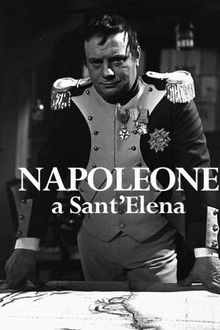
Napoleone a Sant'Elena
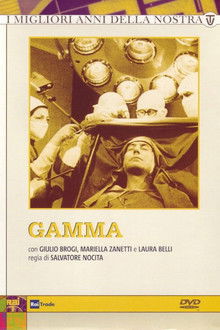
Gamma
The story of a brain transplant on a young race car driver and of its ethical implications in this Italian science fiction-drama television miniseries.
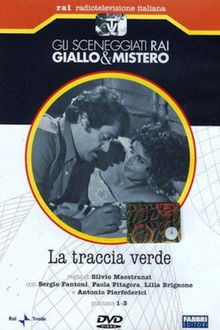
The Green Trail
Set in the USA, the plot concerns Thomas Norton, a researcher in the field of lie detection, who provides his services to courts and private industry. One day he idly attaches electrodes to a plant in his office, and is surprised to find it responds with recognisable emotional reactions to the stimuli he gives it. He pursues this research, and keeps a plant wired up in his lab. When a woman who lives in his building is mysteriously murdered in his lab, the plant is the only witness to the crime.

Birth of the Republic
A 1971 three-part miniseries about the birth of the Italian Republic, directed by Sandro Bolchi, Vittorio De Sica, and Ermanno Olmi
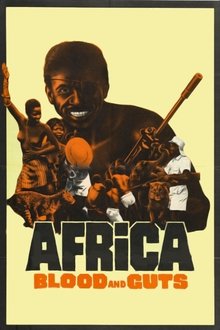
Africa Blood and Guts
A chronicle of the violence that occurred in much of the African continent throughout the 1960s. As many African countries were transitioning from colonial rule to other forms of government, violent political upheavals were frequent. Revolutions in Zanzibar and Kenya in which thousands were killed are shown, the violence not only political; there is also extensive footage of hunters and poachers slaughtering different types of wild animals.
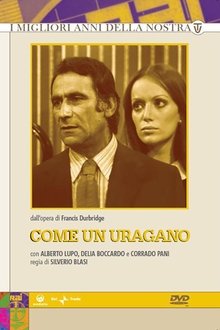
Come un uragano
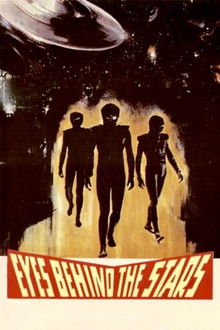
Eyes Behind the Stars
A photographer and his model are on a photo shoot in a forest when they get the feeling they are being watched. The feeling becomes so strong that they decide to cut their session short and leave. Later, when they develop the photos they took, they discover what looks like alien creatures in the background.
The Wings of the Dove
An Italian adaptation of Henry James's 1902 novel of the same name. The series is a dramatic interpretation set in Italy, exploring themes of love, morality, and betrayal, as in the original novel, set against the backdrop of early 20th-century Europe.
Napoleone a Sant'Elena
A reconstruction of Napoleon Bonaparte's years after Waterloo, from his exile to St. Helena until his death under mysterious circumstances: between hopes of escape and illness, the former emperor dictates his memoirs. Directed by Vittorio Cottafavi, the film is based on a story by Roberto Mazzucco, with a screenplay by Cottafavi and Giovanni Bormioli.
Philo Vance
Italian miniseries starring the famous detective Philo Vance, which narrates the events that occurred in the first three books: "The Benson Murder Case", "The Canary Murder Case" and "The Greene Murder Case"
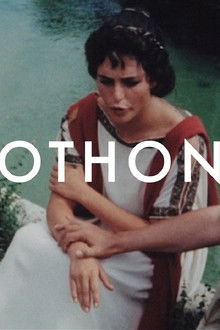
Othon
Straub-Huillet’s first color film, adapts a lesser-known Corneille tragedy from 1664, which in turn was based on an episode of imperial court intrigue chronicled in Tacitus’s Histories. The costuming is classical, and the toga-clad, nonprofessional cast performs the drama’s original French text amid the ruins of Rome’s Palatine Hill while the noise of contemporary urban life hums in the background. Their lines are executed with a terrific flatness and frequently through heavy accents; the language in Othon becomes not merely an expression but a thing itself, an element whose plainness here alerts us to qualities of the work that might otherwise be subordinated.
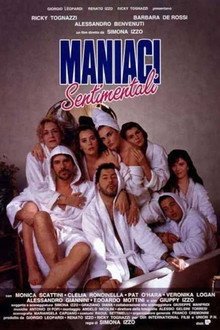
Maniaci sentimentali
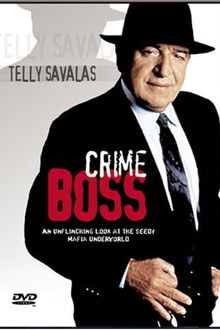
Crime Boss
Hit man Antonio Mancuso travels to Italy to make the big time. He meets and befriends Mafia boss Don Vincenzo. Mancurso becomes part of the organization and the more he gets to know Vincenzo the more he wants his job but Mancurso will learn that success can come at a severe cost.