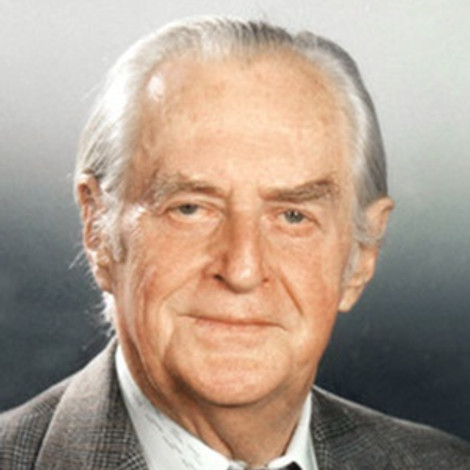
Personal Info
Known For
Gender
Birthday
Place of Birth
Attila Tyll
Known for

Mézga család
The family consists of Géza, the father, a comical and inept figure, his wife Paula who actually dominates family affairs, pubertal daughter Kriszta and 12-year-old son Aladár, a child prodigy. The cat Maffia and a dog, Blöki accompany the family. Dr. Máris, their cynical neighbour, is regularly and unvoluntarily involved in disasters surrounding the family.
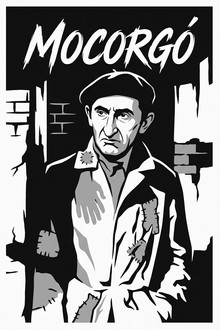
Mocorgó
Mocorgó, the well-meaning worker boy, is a tough guy. In his 40s he is still a mechanic's apprentice, but he is disappointed by his family, women and friends, and becomes a criminal. He goes to prison several times and tells the story of his life to the writer, who follows his story until 1956, until Mocorgó's death.

Abhorrence
Nelli, the icy, introverted farm girl, needs to find a husband following her father's death. She accepts the attentions of the noisy Takaró Sanyi, although she is more attracted to his silent and modest younger brother.

Burok
A successful architect meets a university student 30 years younger than him. They start a complicated, whirlwind relationship.

Au nom de tous les miens
Martin Gray, whose life has been marked by tragedy and who has overcome terrible hardships, has decided to share his story.

Whoops
Ede (Dezso Garas) is in his sixties, and he is full of uncertainty about how he and his wife Kati (Mari Torocsik) will fare in the new post-communist regime in Hungary. At least before, he had some idea what he needed to do to get by, and even if he never made much money with his myriad schemes, they got by. Kati has got a real bug in her ear about their livelihood, and is hounding him to get into the spirit of the new system. This is troubling enough for the old gent, but when he runs into an old mistress (Kati Lazar) and discovers that he has a grown son he has never met or knew about, his life becomes even more confusing. His slimy ex big-shot brother-in-law (Istvan Avar) is a major player in the new entrepeneurial risk-taking, and he beseiges poor Ede with advice as well. In this topical comedy, all these worrisome things, and more, come to a head at a big family celebrtion.
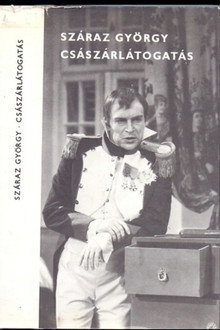
The Emperor's Visit
Napoleon's army besieges Győr. Mr. Léner, the grain merchant, is deeply hoping for the French emperor's victory, hoping an alliance with him could assure Hungary's independence from the Habsburg rule.

Late Season
Against the backdrop of the Adolph Eichmann trials, an elderly paraplegic pharmacist is summoned to the police station, where he believes that his hidden wartime guilt has caught up with him, unaware that it is all in fact an elaborate practical joke.

Cat's Play
Karoly Makk's heartbreaking story of two unmarried sisters who cast wistful glances back at their lives, but still believe in hope and love, earned an Academy Award Nomination for Best Foreign Language Film in 1974. In this follow-up to the director's internationally acclaimed Love, Makk once again exhibits his extraordinary skills at drawing emotionally compelling performances from his talented female leads. Makk's film opposes the bleakness of the outside world with passion, love, and loyalty.

Darkness in Daytime
In 1963 in Tihany, somebody addresses the writer Gábor Náday. He is reminded of a night drive in 1944 that saved his life. Painful memories start coming to Náday.

Őrjárat az égen

Utazás a Holdba

Gréti...! (egy kutya feljegyzései)
Gréti, a German shepherd, searches for her missing puppy.
Én, Strasznov Ignác, a szélhámos
The elderly Mikola Menyhért, former imperial and royal master detective, talks about the great criminals of a bygone era on television. He considers Ignác Sztrasznov to be the uncrowned king of swindlers, the greatest swindler of the Monarchy. To describe him, suffice it to say that at the age of 23, he sold the entire Vérmező to a Bulgarian horticulturalist, swindled money from lords, industrialists, and businessmen while dressed in a smart military uniform, and did not spare even the higher circles of the church. Mikola's narration brings Strasznov's adventures to life.

A Hungarian Nabob
On the novel by Mór Jókai. The first half of the XVIII century. Several decades of life of a noble family Karpati.