
Personal Info
Known For
Gender
Birthday
Place of Birth
Aliki Vougiouklaki
Biography
Known for

You Can’t Take From One Who Does Not Have
You Can’t Take From One Who Does No Have (Ouk an lavois para tou mi ehontos) is a Greek animated mini-series that aired in the 2010-2011 season on Mega. Ouk an lavois para tou mi ehontos develops in modern Athens where Charos goes, wanting to withdraw from his obligations. However, he is short an obolus on his books, what Menippus owes since he died. Hermes, as the carrier of souls and responsible for Menippus not having the obolus, together with Charus try to help Menippus make money to pay him the obolus. The series was scheduled to begin in the 2009–2010 season, but was eventually rescheduled for the following season’s schedule. The series consists of a total of one cycle with 14 episodes.


I theatrina


Και Εύθυμη και Χήρα
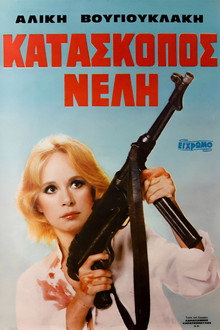
Nelly, the Spy
Against the backdrop of the Nazis' rapid rise to power, a Greek music student arrives in 1936 Berlin and becomes a cabaret singer. In Europe, WWII rages on, and joining the Resistance is the only way to fight back. Will Nelly do her part?

Paraskinio
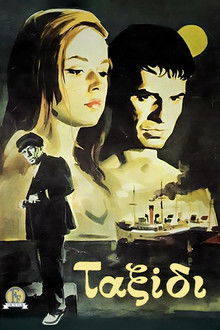
The Trip
This film is a social comment of the times, exploring issues that centre around relationships and what was allowed and what was not allowed at the time (early 60s) in Greece. There are sub-plots also, mainly relating to the life of the poor city dwellers, social injustice and seeming double standards. Aliki Vougiouklaki is a poor young girl dreaming of a better life and the "handsome prince on a white stallion" who will deliver her from her miserable existence. She meets and falls in love with a young man (Nikos Kourkoulos) who also falls in love with her, but things are not as simple as they first seem. His past comes to haunt them with tragic consequences. Vassilis Diamantopoulos is excellent as the half-crazed old captain whose life strangely echoes that of young Aliki.

The Underdog
A young woman asks from a ship magnate to help her immigrate to Australia but he falls in love with her.
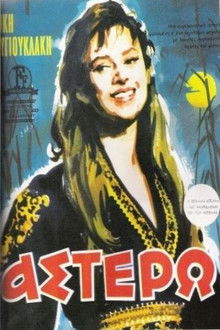
Astero
This immensely successful remake of the 1929 foustanella classic was directed by Dinos Dimopoulos and quickly established its stars (Dimitris Papamichael and the beautiful Aliki Vouyouklaki) as the Greek cinema's top box-office draws. The story itself rigidly follows the conventions of its subgenre, although because Greek filmmakers were still churning out foustanellas for decades afterward, it hardly seems more dated than the original. Once again, it tells the tale of Mitros (Titos Vandis), a wealthy herd owner with a foster daughter named Astero (Vouyouklaki) whom he marries off to another herd owner, despite the fact that she and his son Thimios (Papamichael) are desperately in love. The other herd owner dies and Astero loses her mind a bit (although she doesn't wig out quite as spectacularly as Aliki Theodoridou in the silent original), but Mitros finally comes to the right decision and allows the children to marry.
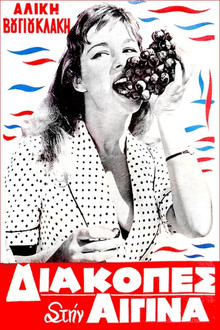
Holidays in Aegina
Journalist Jonis comes to Aegina with his daughter Alice for work, but also for vacation. At the port, Aliki meets Jean, a descendant of a prominent aristocratic family on the island, who does not reveal his true identity to her, but introduces himself as Giannaros, the island's drunkard. At some other point, they will meet again and he will introduce himself as Jean. Alice will think she has discovered Giannaros' twin brother...
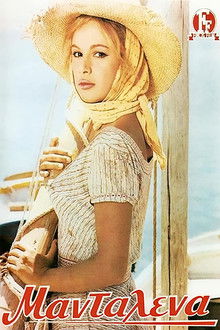
Madalena
Madalena is a tough seventeen-year-old who is forced to take on her father's ferry business after he dies. She has her many brothers and sisters to support, and there is no one else to do the job. So she rallies her defenses and sets out to give her rival in the ferry business a run for his money. But at the same time, the rival's handsome son is starting to look better and better. Madalena refuses to acknowledge her feelings for him -- though how long she can sustain that denial is the question.

The Daughter of the Sun
The plain of Thessaly, 1910. The tenant farmers suffer untold hardships, both from the Arvanites invaders who ravage and seize their possessions and from the chief landlord of the area Stratos Karatzas, who claims the lion’s share of their harvest. The dynamic daughter of one of the tenant farmers, Maya, who is about to get married to a young farmer, Lefteris, leads their struggle for better conditions and confronts Karatzas – as well as his niece Vgenio, who also wants Lefteris. The latter plots and succeeds to separate them. Lefteris leaves for the army and Karatzas persuades Maya to marry him. Lefteris is captured during an ambush set by the Turks, but in the end he is set free and returns to Maya’s arms forever.
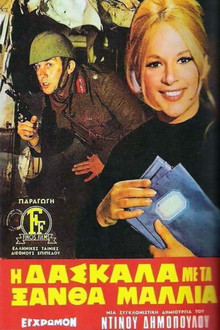
The Teacher with the Golden Hair
Amid blinding prejudice, a vivacious blonde teacher gets married to an honest man, only to see him leave for the Greco-Italian Front, a few hours after their wedding ceremony. Will she cope with her loss, when there's no one to turn to?
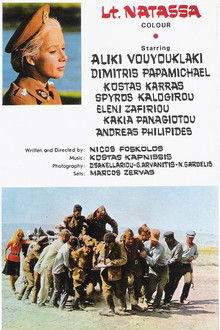
Lieutenant Natassa
The year is 1965. Natasa Arseni visits Dachau, the place where she was found by the Americans at the end of the World War II. She returns to Greece, and during the train ride she recalls those past events. Before the beginning of the Greek-Italian war, she met Orestis . With the German invasion, Orestis, who was an officer in the Greek army, left for the Middle East. She followed him and accompanied him back to occupied Greece on a mission. She was arrested, interrogated and tortured and was finally sentenced to execution.